
The mistake almost everyone makes on their first day in Budapest goes like this. You spot a Lime or Bolt scooter on the pavement, scan the QR code, and roll off toward the Chain Bridge. Within ten minutes the app has either kicked you off in a no-ride zone or quietly slow-throttled you to walking speed because you’ve crossed into central Pest. The free-rental scooters that work fine in Berlin or Lisbon are restricted across most of the parts of Budapest you actually want to see, and that’s before we get to the Castle District, which is essentially closed to private e-scooters altogether.
This is why guided e-scooter tours exist here in a way they don’t in other capitals. You ride a beefier MonsteRoller chopper-style scooter (different vehicle category, different rules), a guide handles the route around the no-go zones, and you actually get up Castle Hill instead of pushing your rental in defeat. Below is how to book one, plus the specific tours I’d pick depending on whether you’ve got 90 minutes or half a day.

In a Hurry? My Top 3 Picks
Best overall: Small-Group MonsteRoller Tour. Three hours, both sides of the river, around $72.
Best value: Small-Group MonsteRoller (GetYourGuide). From $59, choose 90 minutes to 4 hours.
Best after dark: MonsteRoller Night Ride. Around $60, 1.5 hours, all the lit-up sights.
- In a Hurry? My Top 3 Picks
- Why Guided, Not Free-Rental
- What “Guided E-Scooter Tour” Actually Means in Budapest
- The Tours I’d Actually Book
- 1. Small-Group Electric Scooter Tour of Budapest: from
- 2. Small-Group MonsteRoller E-Scooter Tours (GetYourGuide): from
- 3. Night Tour on MonsteRoller e-Scooter: from
- The No-Go Zones (and How Tours Get Around Them)
- What You Actually See on a 3-Hour Loop
- Booking Tips That Actually Save Money
- What to Wear (Genuinely Important Here)
- Age, Weight, and Mobility Limits
- Solo E-Scooter Rentals: When They Actually Work
- Combining With Other Budapest Activities
- Pricing and What’s Included
- Where to Meet
- Weather Calls
- Common Questions I Get Asked
- The Bigger Picture
- Other Budapest Guides Worth Reading
Why Guided, Not Free-Rental
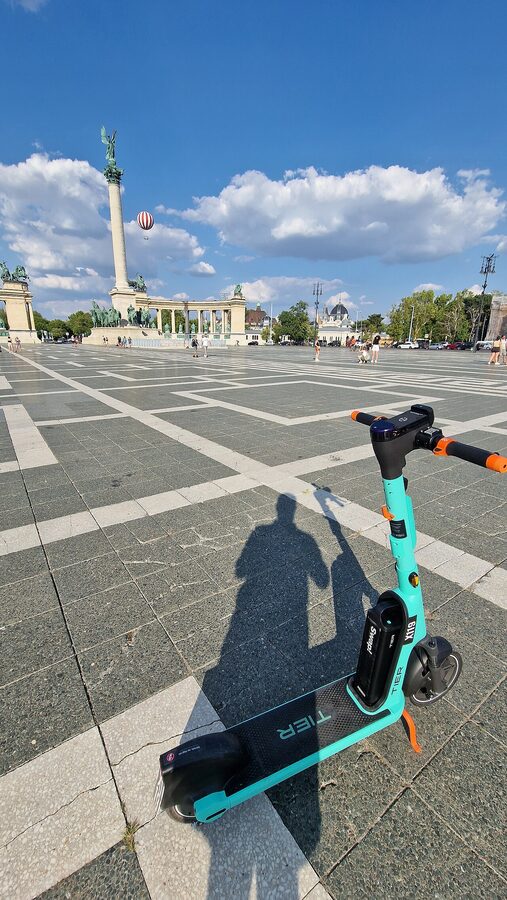
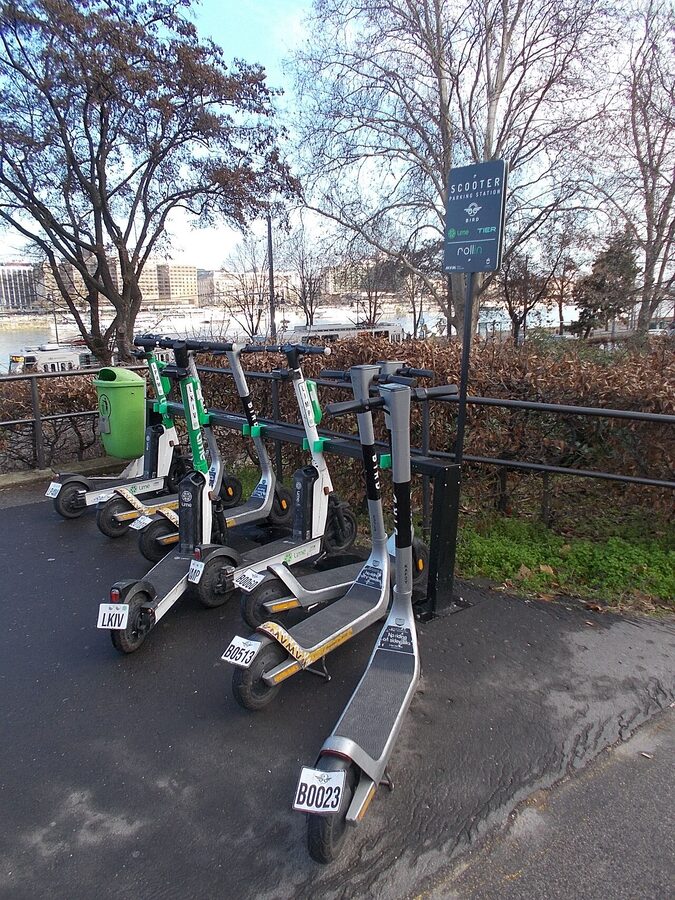
I’ll be blunt about the rules because almost no one explains them properly until you’re already standing in a Lime app screaming at a “no parking zone” pin. Budapest has been quietly clamping down on private e-scooters for a couple of years now. The free-floating rental fleet (Lime, Bolt, formerly Tier) is restricted in central Pest, banned outright in the Castle District above, and forbidden on the actual Chain Bridge deck. You can ride them, sure, but the routes you’re imagining, riverside Pest from Margaret Bridge down to Liberty Bridge, then up to the castle, almost none of that works on a free-rental.
The guided MonsteRoller tours sidestep all of this. The scooters they use are classified differently (heavier, with foot decks and a bigger battery), the operators have route permits for the castle area, and you ride with a guide who knows which lanes are bike-priority versus pedestrian-only. The result: you actually get to Buda Castle on wheels rather than pushing your rental up the funicular ramp.

If you’ve already booked a Budapest bike tour, you’re probably wondering whether the scooter version is worth a separate booking. Short answer: it’s faster, gentler on the legs, and the route options on a scooter tend to cover more ground because the operators don’t have to worry about pedalling fatigue. If you’re choosing between the two, I’d say bikes for the slow detail of Margaret Island, scooters if you want both sides of the river plus the castle in one shot.
What “Guided E-Scooter Tour” Actually Means in Budapest
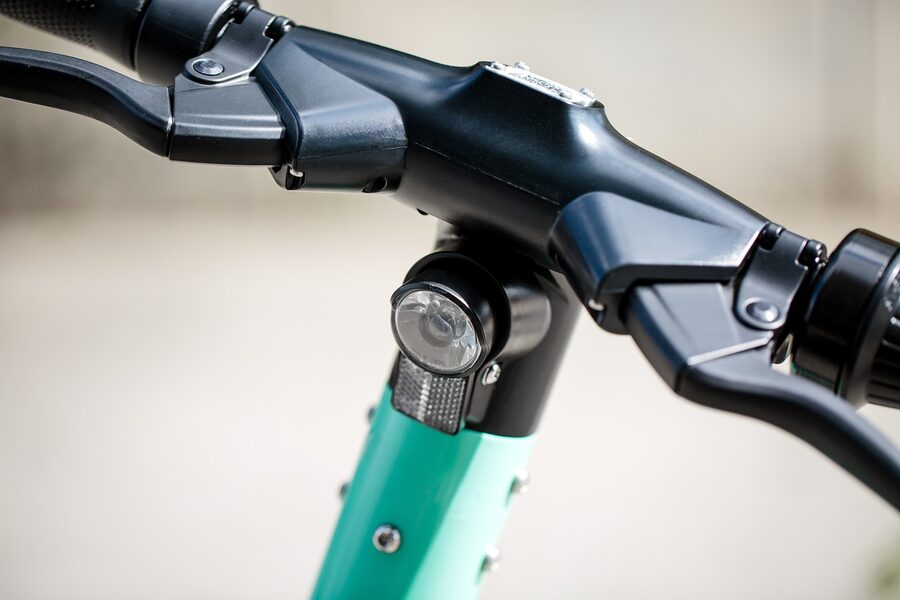
Three things bundle into the price. The scooter itself, helmet and gloves (yes gloves, even in summer for hand grip on bumpier sections), and a small group of 8 to 12 riders led by a local guide. Most start with a fifteen-minute parking-lot training session where you learn the throttle, the brake, and most importantly the eye-line trick: look where you want to go, not at your front wheel. People who stare at the deck wobble. People who look ten metres ahead glide.
The training session is genuinely the difference between a fun tour and a stressful one. Don’t skip it even if you’ve ridden a Lime in another city. The MonsteRoller weighs about 25 kilos and behaves more like a heavy bike than a kick scooter. You won’t fall off, but you’ll appreciate the warmup before you’re rolling past trams.
Group sizes matter. The Viator-sold MonsteRoller tour caps groups at 10 to 12 with one guide. GetYourGuide’s variant runs slightly bigger but with a sweeper guide at the back. If you’re nervous (and most first-timers are for the first ten minutes), look for the smaller cap. The 4-hour private option exists if you want zero co-riders.
The Tours I’d Actually Book
I’ve ranked these by how well they match the most common visitor brief: “I’ve got one afternoon, I want to see both sides of the river without exhausting myself.” All three use MonsteRoller scooters. All three start within walking distance of the Pest waterfront.
1. Small-Group Electric Scooter Tour of Budapest: from $72
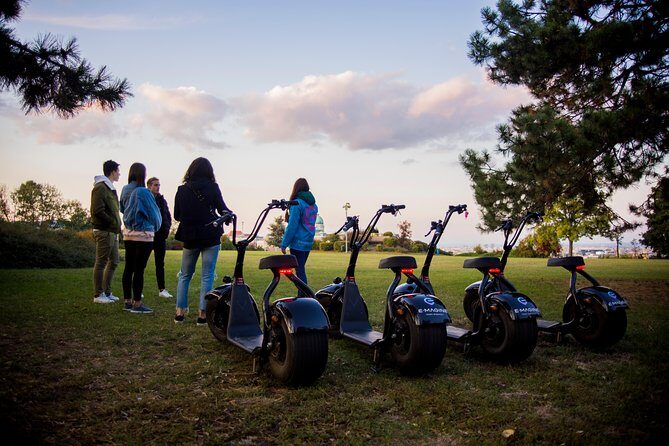
This is the workhorse. Three hours, small group, the most balanced route I’ve seen. Our full review walks through the photo stops at Fisherman’s Bastion and the loop back via the Citadel, but the headline is that it covers more ground than a walking tour without the cycling fatigue. Guides are split between Attila and Bálint depending on the day, both excellent.
2. Small-Group MonsteRoller E-Scooter Tours (GetYourGuide): from $59
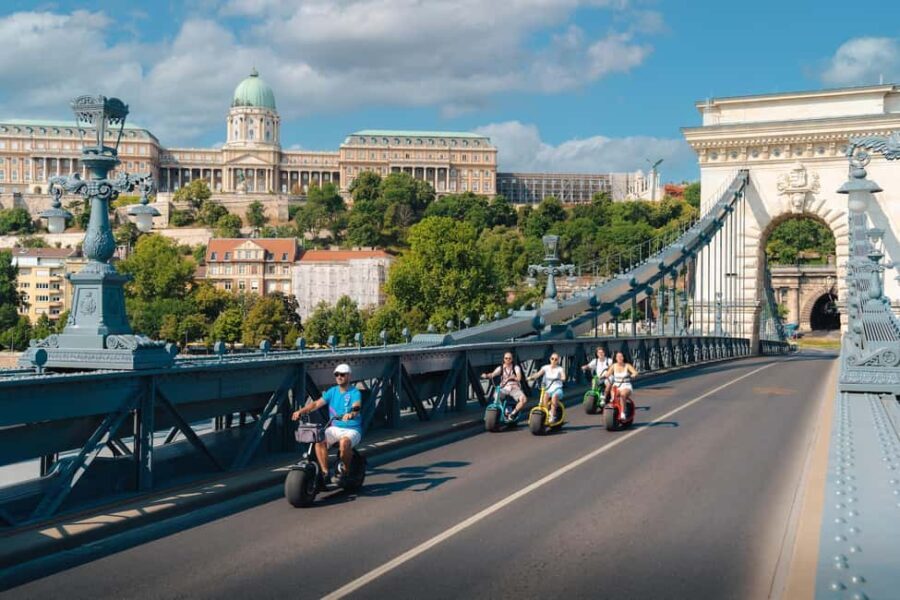
Same operator (E-Magine Rides), different distribution. Our review of this listing covers why the flexible duration matters: shorter tours are tempting if it’s your only afternoon free, but you genuinely lose half the route if you skip Buda. Pay the extra for the 3-hour unless you’re physically tired or short on time.
3. Night Tour on MonsteRoller e-Scooter: from $60
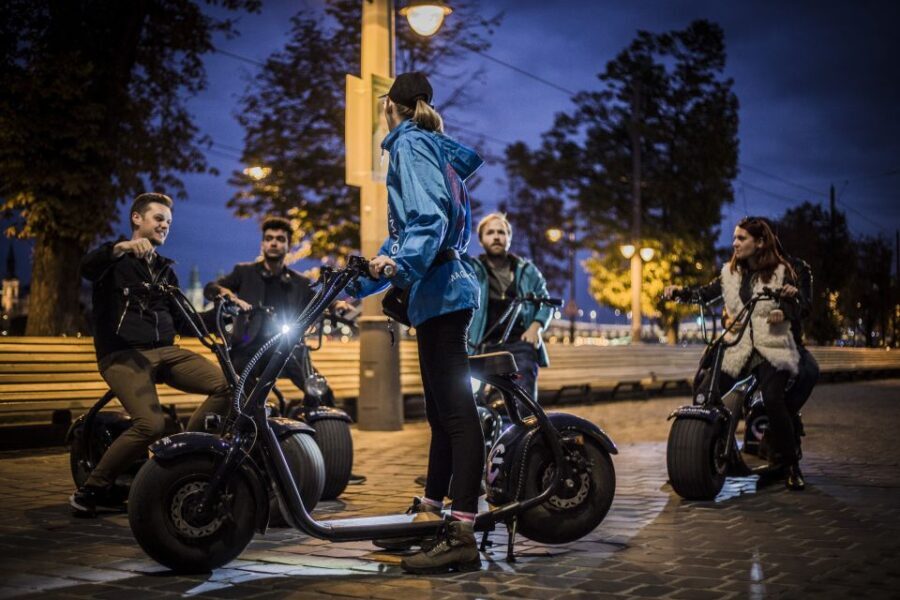
Ninety minutes, sunset start. My write-up covers the trade-off: you see less ground than the 3-hour, but the lighting is genuinely better and the air is cooler if you’re booking in summer. Pair it with a Danube dinner cruise after if you want to make a full evening of it.
The No-Go Zones (and How Tours Get Around Them)
This is the part most blogs skip and it’s the most useful thing I can tell you. Budapest has three categories of restriction for e-scooters, and the lines are getting tighter every year:
- Pedestrian-only zones covering most of the central Pest tourist area: Váci utca, the Astoria-to-Deák stretch, Vörösmarty Square. Your free-rental will refuse to start or will throttle to 6 km/h here.
- Castle District (Várnegyed), the entire hill on the Buda side. Free-rental scooters are blocked from entering. Guided MonsteRoller tours have permits to ride the perimeter and enter via the Hunyadi János út approach.
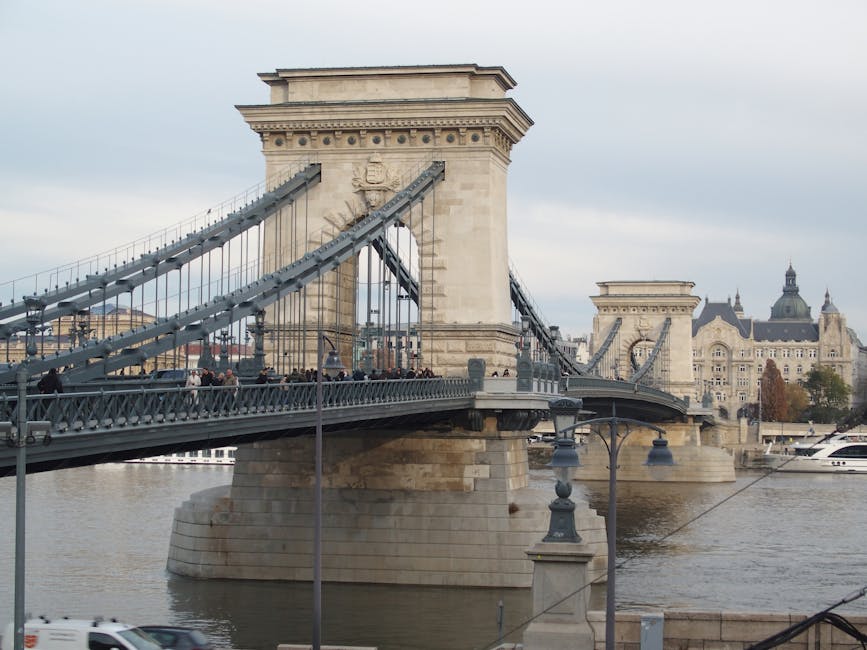
- Chain Bridge deck, currently closed to all motorised micro-mobility regardless of category. Tours cross via Erzsébet híd (Elizabeth Bridge) or Margaret Bridge instead.
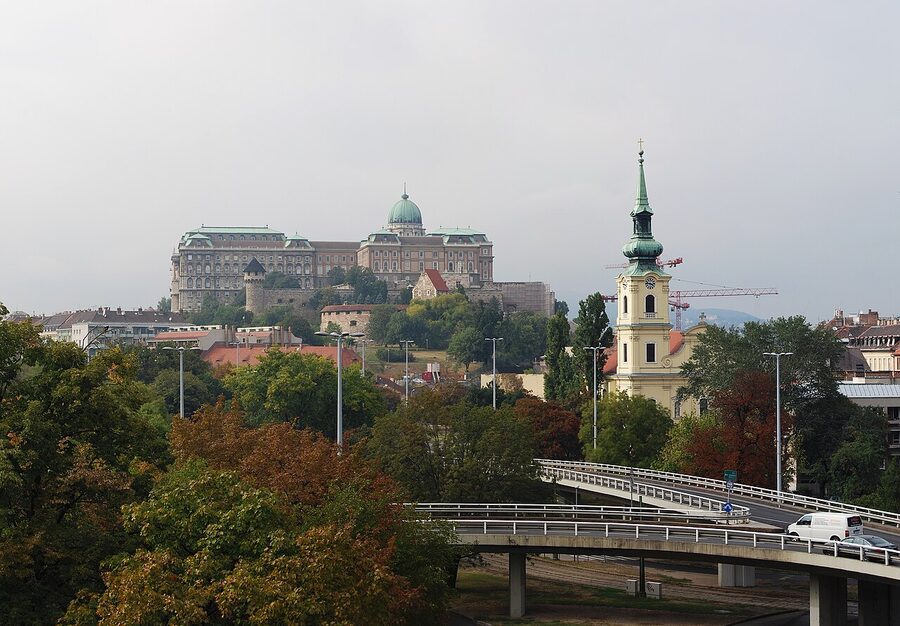

What this means in practice: if you want to glide past Fisherman’s Bastion, snake along the castle walls, and stop at the Royal Palace courtyard for photos, you cannot do that on a Lime or Bolt. The guided scooter tours are the only way short of walking up there yourself, and the walk is steeper than it looks on a map.
If you’re piecing together a longer Buda day, the Buda Castle walking tour covers the same ground in detail, and the Buda Castle cave tour handles the underground tunnels. The scooter tour is the speed-run version: you cover the territory but don’t go inside any single building.
What You Actually See on a 3-Hour Loop
The standard MonsteRoller route in Budapest covers between 12 and 16 kilometres depending on your group’s pace. Here’s roughly what you’ll pass, in order, on the most common version of the tour:


The Pest waterfront first, usually starting from the meeting point near Vörösmarty Square. You’ll roll up to Parliament for photo stops, then loop east via the Liberty Square area before heading down Andrássy.
Andrássy Avenue, the wide boulevard that ends at Heroes’ Square. This is the smoothest stretch of the whole tour. Bike lanes the full length, very few crossings. Good chance to settle into the rhythm of the scooter before you hit cobbles later.

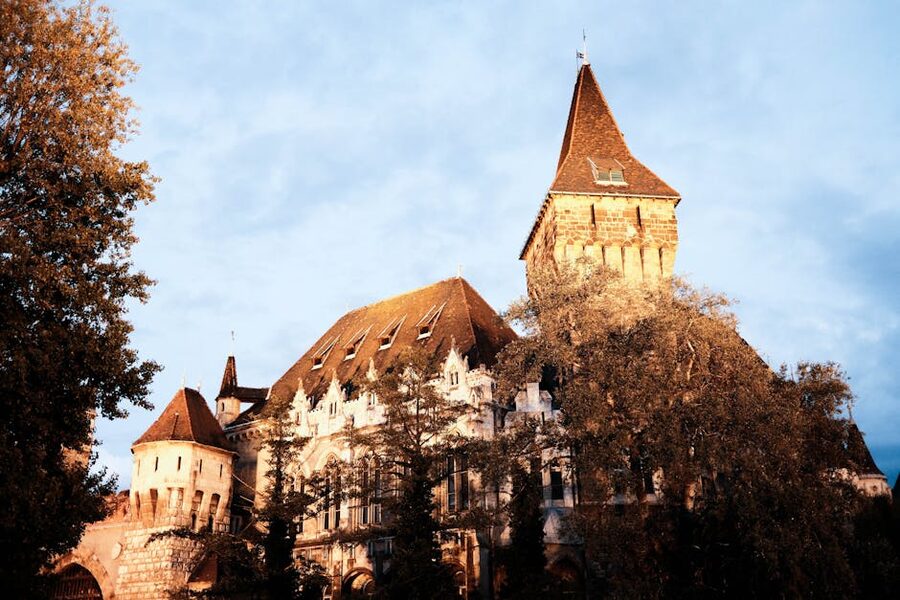
Heroes’ Square and City Park. You stop here, take photos, and most groups loop into Széchenyi Bath territory before swinging back. If you want to see Vajdahunyad Castle, this is your one shot on the route.
Cross to Buda via Margaret Bridge. The Chain Bridge is closed to scooter traffic regardless of operator, so groups detour north. This adds about 800 metres to the route but gives you the best Parliament-from-the-water angle on the way over.


Castle Hill ascent. The route climbs from Clark Ádám tér up the back of the castle via Hunyadi János út, which is gentler than the funicular line. The motors handle the gradient without you breaking a sweat. This is the “I’m so glad I’m not on a bicycle” moment of the tour.


Fisherman’s Bastion and Matthias Church. Photo stop, usually 10-15 minutes off the scooter. The guide will gather everyone at a specific spot for a group shot, then you’ve got time to wander to the railing for solo photos. The view of Parliament across the river is the best photo of the entire tour.

Descent and return crossing. Most groups come back via Erzsébet híd (Elizabeth Bridge) for the variety of approach. Then a short final leg along the Pest riverbank to the meeting point. Total moving time is about 1.5 to 2 hours; the rest is photo stops.
Booking Tips That Actually Save Money
A few practical things I’d tell my own friend before they booked.
Book the morning slot if it’s a hot summer day. Scooter motors run hotter in afternoon heat, the cobbles around the castle are radiating, and the queues at Fisherman’s Bastion thin out before noon. The 9am or 10am tours are noticeably more pleasant than the 2pm ones in July.
Skip Saturday afternoons if you can. Local cyclists pack the riverside lanes on weekend afternoons and tour groups have to ride more cautiously, which means less time at speed and more stop-and-go. Sunday mornings are the opposite (almost empty), Friday morning slots are also good.

The “with food tasting” upsell. A few operators offer a 4-hour version that includes street food stops (chimney cake, lángos). Honestly, it’s not great value: you’re paying about 50% more for a 30-minute food break that you could replicate yourself for €8. If you want both, do the 3-hour scooter tour and book a separate chimney cake workshop on a different afternoon. You’ll spend less and learn more.
Cancellation windows. GetYourGuide gives you free cancellation up to 24 hours before. Viator’s policy varies by operator. Always cancel via the platform’s app, not by emailing the operator directly: the platform refunds within minutes, the direct route can take a week.
What to Wear (Genuinely Important Here)
Budapest has more cobblestones in its tourist core than almost any European capital except Lisbon and Prague. You want closed-toe shoes with a slight grip. Sandals are technically allowed but I’ve seen riders almost lose them on the cobbles around Buda Castle. Trainers are perfect.
For everything else, layer. Even in August the wind off the Danube cools you noticeably at 25 km/h. A light jacket or windbreaker over a t-shirt is the right outfit eight months of the year. From November to March, gloves are non-negotiable: hands grip the throttle for two to three hours and they’ll cramp without them. Most operators provide gloves; bring your own pair if you have skin sensitivities.
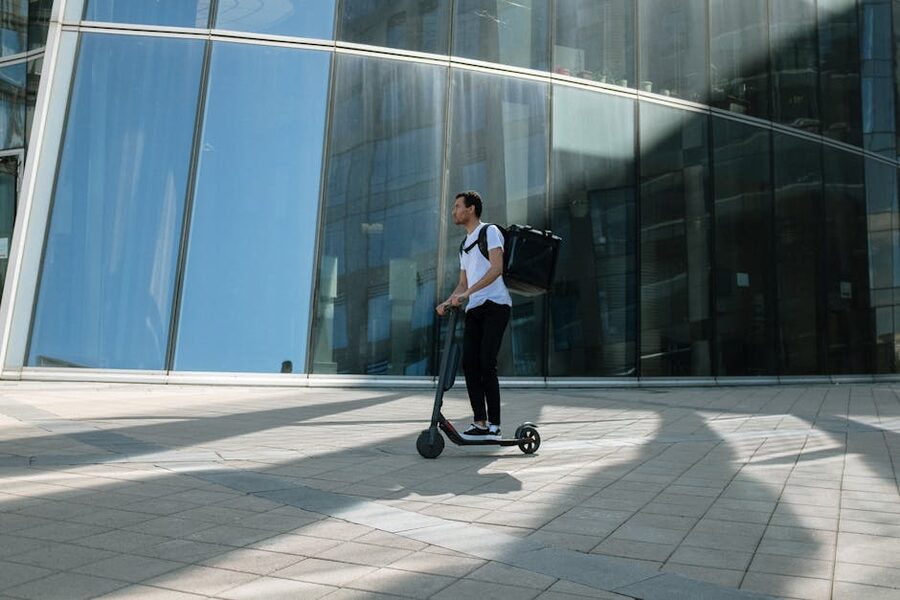
Helmets are provided. The MonsteRoller helmets are the standard skate-style closed-shell with adjustable straps. They sit a bit higher than a bicycle helmet, which takes a minute to get used to. Don’t refuse one. The cobbles are unforgiving and a fall at scooter speed is closer to a bike fall than a walking trip.
Age, Weight, and Mobility Limits
The hard rules that operators don’t always lead with:
- Minimum age typically 14, with under-18s requiring an adult on the booking. A few operators allow 12-year-olds on private tours but never on group ones.
- Weight limit usually 130 kg (287 lb). The motors handle weight up to that without struggling on the climbs. Above 130 kg the operators will refund you politely on arrival.
- No previous scooter experience required, but you do need a basic sense of balance. If you can ride a bicycle, you can ride a MonsteRoller.
- Pregnancy and reduced-mobility riders aren’t accepted. If that’s a concern, the tuk-tuk tour covers a similar route without the active riding.
If you’re nervous about the balance side, ask for the 90-minute option as your first booking and see how you do. You can always upgrade to the longer tour the next day if you’ve got the time. I’ve seen plenty of self-described “non-scooter people” love the 90-minute version and immediately rebook the night ride.
Solo E-Scooter Rentals: When They Actually Work
A fair question: are the free-rental Lime and Bolt scooters ever the right choice? Yes, in two specific scenarios.
One, you’re staying in outer Pest (say District XIV around City Park, or District XIII near Margit híd) and want to get into the centre quickly. The geofencing on the apps lets you ride to the edge of the centre, then you finish on foot. This works for commute-style trips. It does not work for sightseeing.
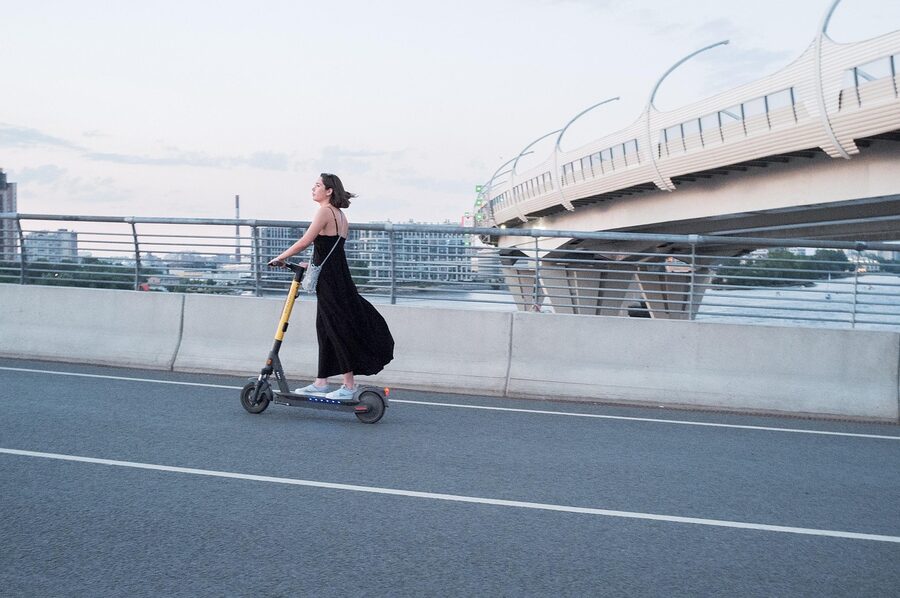
Two, you’ve already taken the guided tour, you’ve internalised the no-go zones, and you want to revisit a specific neighbourhood at your own pace the next day. This works because you now know which streets allow scooters at speed and which throttle you down. People who try the rentals on day one without context end up frustrated. People who try them on day three after a guided tour generally have a good time.
For everything in between, the guided tours win on simplicity, route quality, and your ability to actually reach Buda. They cost more than a solo rental, but the per-hour value works out similar once you factor in the free-rental fees, the failed attempts to ride into restricted zones, and the photos you actually get from Castle Hill.
Combining With Other Budapest Activities
The scooter tour fits nicely either on your first or second day in Budapest. On day one, it gives you a fast geographic overview that pays off when you walk the same routes later. On day two, it lets you fill in the parts of the city you missed on a first walking circuit.
Pair it with a relaxed afternoon at the baths if you’ve done the 3-hour morning ride. The combination of two hours on the scooter, a long lunch, then a thermal soak is the ideal Budapest first-day formula. The Széchenyi Bath sits inside City Park, which you’ll have just ridden past, so the geography is convenient. Or go in the opposite direction: Gellért Spa is on the Buda side near where some tours end.
For evening pairing, the scooter night tour and a Danube cruise are made for each other. Both run between roughly 7pm and 9pm in summer. Stack the scooter first, dinner cruise second, and you’ve got a full evening of Budapest from every angle in about four hours.

If you’ve got a full week, the scooter tour pairs surprisingly well with a day trip out of the city. Riding both sides of Budapest in three hours gives you the geographic confidence to leave town for a day without feeling like you’ve shortchanged the capital. The Danube Bend day trip works particularly well as the scooter tour’s natural follow-up: you’ve seen the Danube within Budapest, now you see it leaving the city.
Pricing and What’s Included
Expect to pay between $59 and $80 per person for a group tour, between $190 and $220 for a private 4-hour version. What’s typically included:
- Helmet, gloves, scooter, and battery for the duration of the ride
- Insurance against damage caused during the tour (not theft)
- Bottled water at the meeting point
- Group photos taken by the guide on your phone
What’s not included: food and drinks beyond the starting water, entry tickets to anything you stop at (Fisherman’s Bastion upper deck, Parliament tour), and tips. Tipping the guide €5 to €10 per person is standard if you enjoyed the tour.

Watch out for “deposit not refunded if you don’t show photo ID” clauses on a few operators’ fine print. Bring your passport or driving licence to the meeting point. They won’t keep it, they just need to verify the booking name. A digital photo of your ID on your phone is not always sufficient.
Where to Meet
The two main meeting points are both in central Pest, within walking distance of most hotels in District V or VI. The MonsteRoller depot near Erzsébet tér handles most GetYourGuide bookings. The Viator-sold tours often meet near Vörösmarty Square or, for some variants, on the Buda side near the funicular base.
Confirm the exact meeting point in your booking confirmation, and arrive 15 minutes early. The training session starts on schedule and groups don’t wait for stragglers. If you’re in the wrong place, the operator will message you via the platform’s chat, but only if your phone is on data roaming.

Weather Calls
Light rain: tours run, you get a bit wet, the scooters are designed to handle it. Heavy rain or thunderstorms: tours cancel and you get a full refund. The line between the two is set by the operator and they’re conservative, which is good. Don’t book a tour for the only afternoon you have free in Budapest if the forecast is iffy. Have a Plan B (museum, baths, walking tour with covered sections) ready.
Winter tours run November through March on dry days. The scooters handle cold fine; the riders less so. If you’re booking December to February, pick a day with no rain and a forecast above 5°C. Below freezing the cobbles can ice up and operators usually cancel preemptively.

_at_night_from_Gell%C3%A9rt_Hill_(39952751541).jpg)
Common Questions I Get Asked
Can I do this with kids? 14 and up only on group tours. Some private tours go down to 12. Younger than that, take the floating bus tour or the hop-on hop-off bus instead.
Do I need a driving licence? No. The scooters are classified as motorised personal mobility devices, not motorbikes. No licence required, no minimum-rider permit. You will need photo ID for the booking confirmation.
Will I get tired? Probably not. The scooters do all the work. You’ll be standing for two to three hours, which can fatigue your legs more than expected, but the cardio load is essentially zero. Take a sip of water at every photo stop.

What if I’m scared at the start? The training session exists for this reason. Tell the guide before you start, and they’ll keep you at the front of the group where they can watch your line. The first ten minutes are the worst; after that you’ll be wondering why you were nervous.
How does this compare to a Segway tour? Segways have been mostly phased out in Budapest. The few remaining operators charge more and offer less ground covered. The MonsteRoller has won here on simplicity and route flexibility.
Do guides speak English? Yes, all major operators have English-only and English-Spanish-German bilingual guides. Confirm at booking if you specifically want, say, a German guide; they’re not always available on the day you want.
The Bigger Picture
Guided e-scooter tours have quietly become the most efficient way to see central Budapest. Cheaper than a private taxi tour, faster than walking, gentler than a bike, and unrestricted in places where the rental apps lock you out. The first time I rode one I wished I’d booked it on day one rather than day four.
If you’ve only got a single afternoon in the city, this is what I’d do with it. If you’ve got longer, do the 3-hour as your first activity and use the geographic awareness it gives you to plan the rest of your trip more efficiently.
Other Budapest Guides Worth Reading
If you’re stitching together your itinerary, the scooter tour pairs well with a few other Budapest favourites I’ve reviewed in detail. For a slower-paced first morning, the main walking tour of Budapest covers the same Pest streets you’ll cover by scooter, in much more detail. The Buda Castle interior tour handles the building you’ll only ride past on the scooter route. And if you want a fuller evening after your night ride, the vampires and myths night tour picks up where the scooter drops you off, on foot in the dark Castle District. For something completely different the day after, the ruin bar pub crawl shows you the side of Budapest that doesn’t fit on a scooter route, and the St Stephen’s Basilica visit is a 15-minute walk from most scooter meeting points.

Budapest rewards visitors who give it a second look. The first time you ride past Fisherman’s Bastion you’ll want to come back on foot. The first time you cross Margaret Bridge at speed you’ll want to walk it slowly. That’s the right reaction. The scooter tour is the appetiser; the rest of your trip is the main course.
Affiliate disclosure: Some links in this article are affiliate links. If you book through them we may earn a small commission at no extra cost to you. This helps us keep the site running and the reviews honest.