Meiji Jingu is a place of quiet in the middle of Tokyo’s modern city, and this walk helps you see more than its famous gates and towering trees. Your guide explains the shrine’s history and customs as you move through a broad forested approach to the sacred grounds.
I like two things in particular: the guide-led explanations give the visit meaning, and the route includes small details such as the consecrated sake barrels and the shrine’s pair of camphor trees. You can also choose a food-tasting version with a snack available only at Meiji Jingu and a drink.
One consideration: the historical tour does not include that snack, and even the food option is a short walk rather than a long meal. The ground is covered on foot, so comfortable clothes and shoes matter.
- Key points
- Why Meiji Jingu makes a good guided walk
- Following the forest path to the first torii
- At the south gate and the camphor trees
- Reaching the main worship area
- The Treasure Museum and Kaguraden
- Choosing between history and the food tasting
- What the guides add
- Timing, meeting point and booking details
- Who should book this walk?
- Should you book the Meiji Jingu walk?
- FAQ
- How long does the tour take?
- What departure times can I choose?
- What is included in the tour price?
- Does the historical tour include a snack?
- Where does the tour end?
- Is there an age limit?
- What should I wear?
- The Best Of Tokyo!
- More Walking Tours in Tokyo
- More Tours in Tokyo
- More Tour Reviews in Tokyo
Key points
 1 / 10
 2 / 10
 3 / 10
 4 / 10
 5 / 10
 6 / 10
 7 / 10
 8 / 10
 9 / 10
 10 / 10
- A city sanctuary: Meiji Jingu’s forested grounds offer a striking change from the modern streets around the shrine.
- History with a guide: Learn about the shrine, its traditions and the people enshrined there, rather than simply following the path.
- Two packages: The historical walk is listed from US$25.25; the food-tasting option is from US$37.85.
- Small details along the route: See consecrated sake barrels, a large torii, the south gate and a pair of camphor trees.
- Guide examples: Masa has led tours in English, while Karina has guided a group in Japanese at their request.
- Short, practical outing: Departures are offered at 10:00 or 12:30, with a listed return time about 90 minutes later.

👉 See our pick of the Our Picks For The 11 Best Workshops & Classes In Tokyo
Why Meiji Jingu makes a good guided walk
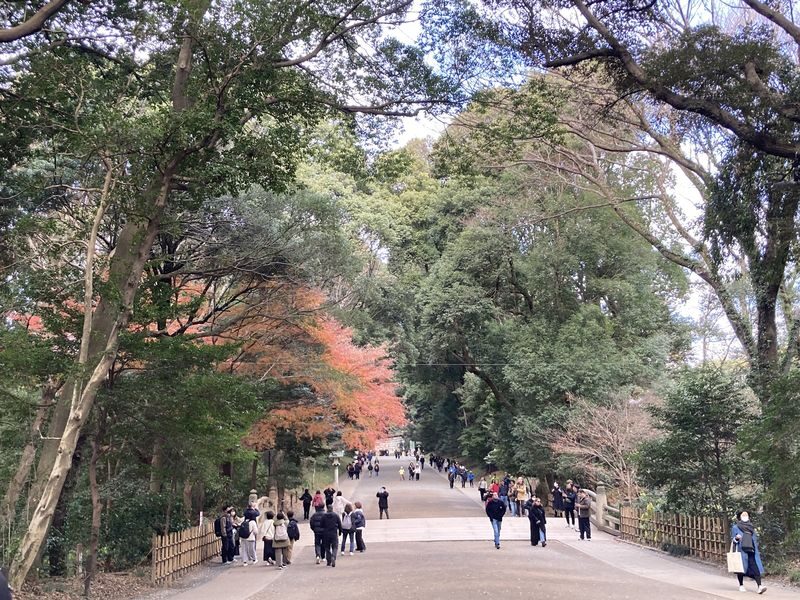
Meiji Jingu sits in central Tokyo, yet the approach through its expansive forest can make the city feel far away. That contrast is the first reason I think a guided walk works well here: the setting is memorable on its own, but a guide can explain why the shrine matters and what you are seeing along the way.
The shrine enshrines former Emperor Mutsuhito and Empress Shoken. It is associated with good luck and marriage, and more than three million people visit and pray for good fortune. Those facts help explain the shrine’s place in contemporary life, not just its past.
This is a Shinto site, so the visit is also a chance to encounter customs and traditions in their setting. Your guide is there to explain the place and its history, while you take in the atmosphere and follow the route through the grounds. The stated tour language is English.
The strongest reason to book is the chance to connect individual features to the larger story. A torii gate, a line of sake barrels and a pair of trees can all look like photo stops if you do not know their place in the shrine. The guide’s explanations make them part of a coherent visit.
You can also read our reviews of more walking tours in Tokyo


Following the forest path to the first torii
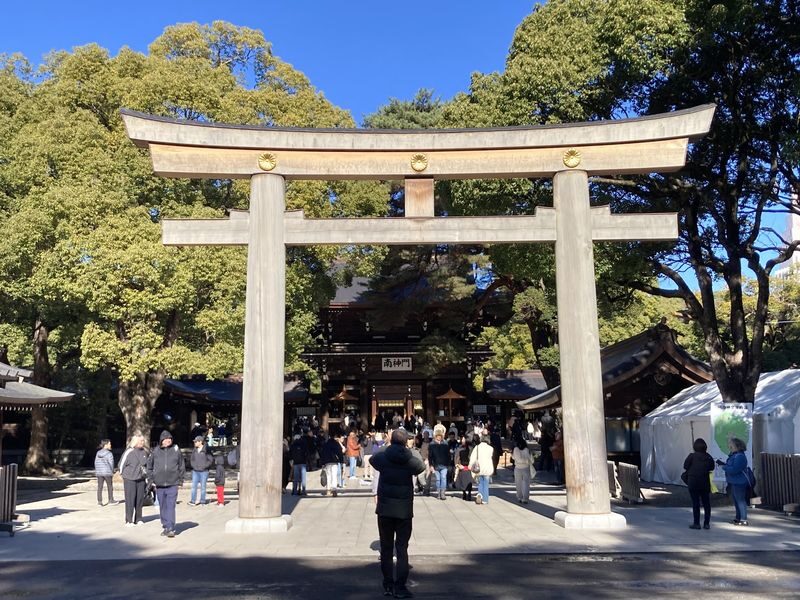
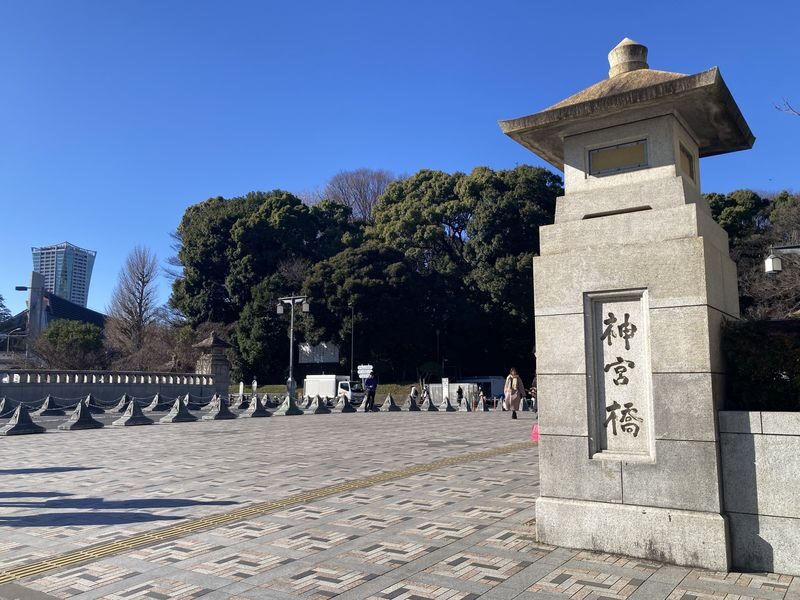
The walk begins at Meiji Jingu Ichino Torii, the first torii on the route. A torii marks the entrance to a Shinto sacred space, so it is a fitting place to start thinking about the transition from city streets to shrine grounds.
The schedule allows about 10 minutes here for a guided introduction. That is enough to establish the context, though it is not a long pause. If you like to take many photographs or linger, you may need to keep an eye on the group’s pace.
Next come the consecrated sake barrels, with another 10 minutes set aside. Their presence offers a visible way into the relationship between the shrine and traditional offerings. This is one of the route’s more distinctive details: instead of only looking at architecture, you see an object that connects ritual and everyday Japanese culture.
The big torii follows, also with about 10 minutes of guided time. It gives you another chance to appreciate the scale of the shrine’s entrance and the path’s change in character. Together, these early stops set up the visit gradually. You begin with the threshold, then encounter offerings and a larger gate before reaching the inner grounds.
At the south gate and the camphor trees
The south gate is another 10-minute stop. Gates are practical markers as well as architectural features, and your guide can help you understand how this entrance fits into the shrine visit. You are not simply walking toward a building; the sequence of gates and paths shapes the approach.
After the gate, the route pauses at the couple camphor trees. The pair is a particularly personal point along the walk, as Meiji Jingu is known as a place associated with marriage and good luck. The tour description connects the shrine’s reputation with these trees, but it does not promise a specific ritual or activity at the stop. Expect an explanation and time to take in the setting, rather than a hands-on ceremony.
The schedule gives the gate and trees 10 minutes apiece. These short intervals keep the walk moving and make the tour suitable if you have a packed Tokyo day. They also mean this is not a slow, open-ended visit. If you prefer to spend a long time at each feature, you may want to return to the grounds on your own after the tour.
Reaching the main worship area
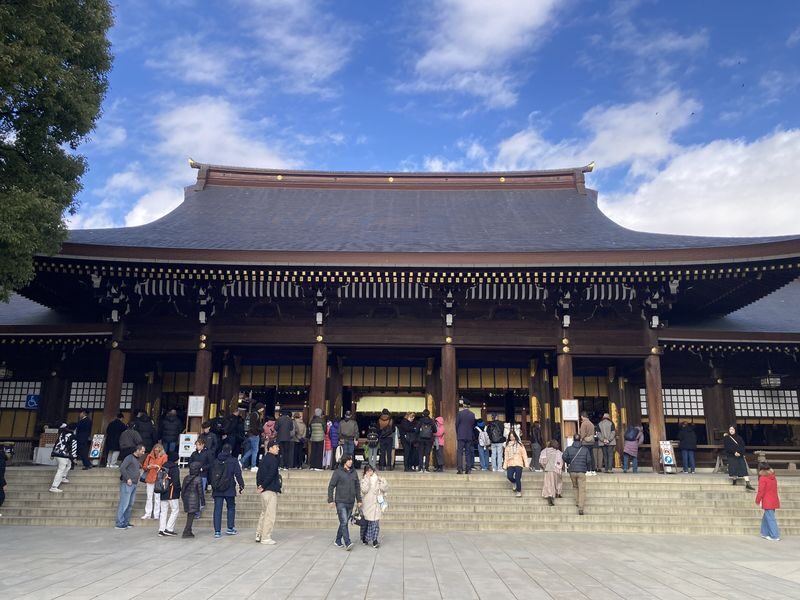
Meiji Jingu Gehaiden is the route’s main worship-area stop, with about 10 minutes of guided time. Here the experience shifts from the approach to the heart of the shrine visit. The site’s sacred atmosphere is part of its appeal, and a guide can help you understand the traditions behind the place while you observe respectfully.
The former emperor and empress enshrined here are central to the shrine’s identity. The site’s popularity for prayers for good fortune and marriage also shows how history and present-day practice meet. If you have wondered what people are doing at a shrine, this is a useful point to ask your guide about the customs you see.
The stop is brief, so treat it as an introduction rather than a full visit at your own pace. You should follow your guide’s instructions and be mindful of people who have come to pray. A guided walk gives you context, but the shrine remains an active sacred place, not simply a museum.
The Treasure Museum and Kaguraden
The Treasure Museum appears as a 10-minute stop, but the schedule does not specify a guided tour there. The museum adds another layer to the visit, though the short time listed means you should not expect an extended museum session. If museum displays are a priority for you, check what is open and included when you book.
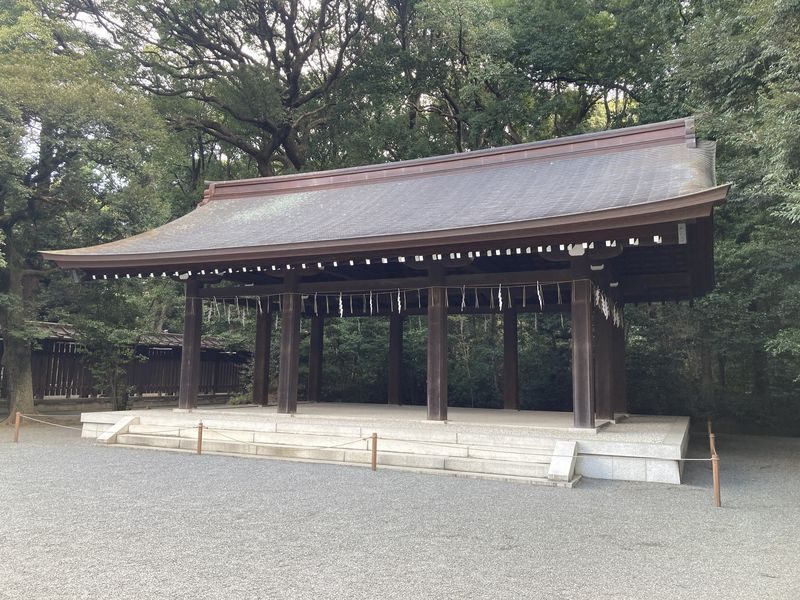
The final named stop is Meiji Jingu Kaguraden, with 15 minutes of guided time. The longer allowance gives the guide a little more room to explain this part of the shrine and its traditions. It is also a natural point to gather the ideas from the walk: the shrine’s history, the sacred setting and the practices that continue there.
The route ends at CAFÉ Mori no Terrace. The posted departure and return choices suggest a compact outing: the 10:00 departure returns at 11:30, and the 12:30 departure returns at 14:00. The listed stops add up to about 85 minutes, while those return slots span 90 minutes. Weather and traffic can affect the schedule, so use the return time as a guide rather than planning a tight connection immediately afterward.
You can also read our reviews of more guided tours in Tokyo


Choosing between history and the food tasting
The historical tour is listed from US$25.25. The food-tasting version starts at US$37.85, and includes a stop at a cafe for a traditional snack that is available only at Meiji Jingu, plus a drink. It also gives you time to talk more about the shrine’s history.
The snack is the clearest reason to pay the higher price. If you want a focused history walk and are happy to find your own refreshment afterward, the historical package is likely the better fit. If a shrine-specific food experience appeals to you, the extra cost buys a distinct ending rather than a longer route.
The overall experience is advertised from $18.95, while the named package prices are higher. Since the historical and food options have their own starting prices, check the exact package and date before you book. The guide is included; personal expenses and tips are not.
For value, consider what you would otherwise do at Meiji Jingu. You can walk through the grounds without a guide, but you would miss the explanations that connect the sake barrels, gates, trees and shrine customs. If learning is important to you, the guided format offers more than a sequence of photo stops. If you mainly want a quiet walk, you may prefer to explore independently.
What the guides add
The guide is the heart of this experience. The tour is designed to explain the shrine’s history and traditions, and the most useful feedback about the experience centers on guides who can answer questions and make the site understandable.
Masa has led an English-language tour, and Karina has guided a group in Japanese at the group’s request. Inoki-san assisted on that Japanese-language visit. That is a useful indication that language requests may be possible, but the stated inclusion is an English-speaking guide, so contact the provider before booking if you need another language.
An especially valuable part of a guide-led walk is the chance to ask about customs and history as they come up. One guide also offered advice on where to find good ramen, a practical bonus if you are planning the rest of your day in Tokyo. Do not book solely for restaurant tips, of course, but it is a nice example of how a local guide can connect a shrine visit to the city beyond its gates.
The provider is Fantasy Travel Japan LLC. The experience has no age limit, but it is a walking tour, so you should be comfortable spending the visit on foot. The tour asks you to wear comfortable clothes and shoes.
Timing, meeting point and booking details
The meeting point is at 6 Chome Jingumae, Shibuya, Tokyo 150-0001. The exact meeting time is confirmed after booking, and you should arrive five minutes before the selected departure. Choose either 10:00 or 12:30, then make sure you attend the time selected for your booking.
The return point is CAFÉ Mori no Terrace at Meiji Jingu. Return slots depend on the departure time and itinerary duration, with 11:30 and 14:00 shown as options. The schedule may change with weather and traffic, so leave breathing room around the tour.
The voucher is valid only for the date and time specified. Changes are allowed up to 24 hours before the activity, with some booking types excluded. A full refund is available if you cancel at least 24 hours before the activity date, using destination local time.
Confirmation is expected within minutes. If it does not arrive, contact customer support. These details are worth checking before you set your day’s plans, especially if you are pairing the shrine with another timed activity.
Who should book this walk?
I would choose this tour if you want to understand Meiji Jingu rather than simply pass through it. It is a good match for first-time visitors to the shrine, anyone curious about Shinto customs, and people who like to hear the story behind the details they see.
The short format also suits you if you want a guided introduction without committing half a day. The two departure times give you some flexibility, and you can choose the food option for a shrine-only snack and drink at the end.
It is less suited to you if you want a long, leisurely exploration with plenty of time at every stop. The route is structured, the named stops are brief, and the historical package does not include the food tasting. But for a compact walk that combines the forest setting with clear historical context, it offers a practical way to make Meiji Jingu more than a pretty pause in the city.
Should you book the Meiji Jingu walk?
Book it if the shrine’s history and traditions matter to you, or if you want a guide to explain what you are seeing as you move through the grounds. The tour’s strongest value is the interpretation, especially at details such as the consecrated sake barrels, gates and camphor trees.
Choose the historical option if context is your priority. Pay more for the food-tasting tour if a shrine-only snack and drink make the ending worthwhile to you. If you would rather explore at your own pace, walk the grounds independently and save the guided tour for another part of Tokyo.
Tokyo: Meiji Jingu Historical Walking Tour with an expert guide
“Masa was a great guide. Very knowledgeable. We enjoyed our time with him. Highly recommend a tour guide to learn about the history of the site you…”
FAQ
How long does the tour take?
The listed departure and return times span about 90 minutes. The scheduled stops total about 85 minutes, and the timing may change with weather and traffic.
What departure times can I choose?
The listed departure times are 10:00 and 12:30. Your exact time is confirmed after booking, and you should arrive five minutes before departure.
What is included in the tour price?
An English-speaking guide is included. Personal expenses and tips are not included.
Does the historical tour include a snack?
No. The food-tasting package is the option that includes a traditional snack available only at Meiji Jingu and a drink.
Where does the tour end?
The listed return point is CAFÉ Mori no Terrace at Meiji Jingu.
Is there an age limit?
No. The activity has no age limit.
What should I wear?
Wear comfortable clothes and shoes for walking.