Tokyo National Museum holds more than one story at a time: its galleries trace Japanese art and history while also presenting objects from across Asia. A guided three-hour visit can help you see how the pieces connect, instead of leaving you to guess your way through a very large museum.
I like two things here. First, the guide links Japanese periods and aesthetics to specific objects, from Jomon pottery to Edo prints. Second, the focus on Chinese stone Buddhist sculpture adds a useful Asian perspective that you might miss on a quick solo visit.
The main consideration is cost: the tour starts at US$59.90, and that does not include museum admission. The route also has to fit a vast collection into three hours, so expect a selective visit rather than a full survey.
- A three-hour guided walk: Choose a 10:00 to 13:00 morning session or a 14:00 to 17:00 afternoon session.
- A Japanese history route: The Main Building may cover periods from Jomon and Yayoi through the Meiji Restoration.
- A focused Asian art stop: Toyokan’s Chinese stone Buddhist statues are a key subject, alongside other Asian collections.
- Chinese-speaking guide: A professional lecturer leads the tour, and guide devices are provided.
- Admission costs extra: Buy a separate Tokyo National Museum ticket, and check whether any special exhibition requires an additional ticket.
- A museum visit built around stories
- Starting in the Main Building
- Toyokan and the Buddhist sculpture focus
- Three hours, and what the pace means
- What the price covers, and what it does not
- Who should book this tour
- FAQ
- Is Tokyo National Museum admission included?
- How long is the guided tour?
- What language is the tour in?
- What does the tour cover?
- Is every gallery on the route guaranteed to be open?
- Where does the tour finish?
- How early should I arrive?
- Is there a minimum group size?
- Can children join the tour?
- What is the cancellation policy?
- The Best Of Tokyo!
- More Museum Experiences in Tokyo
- More Tours in Tokyo
- More Tour Reviews in Tokyo
A museum visit built around stories
 1 / 6
 2 / 6
 3 / 6
 4 / 6
 5 / 6
 6 / 6
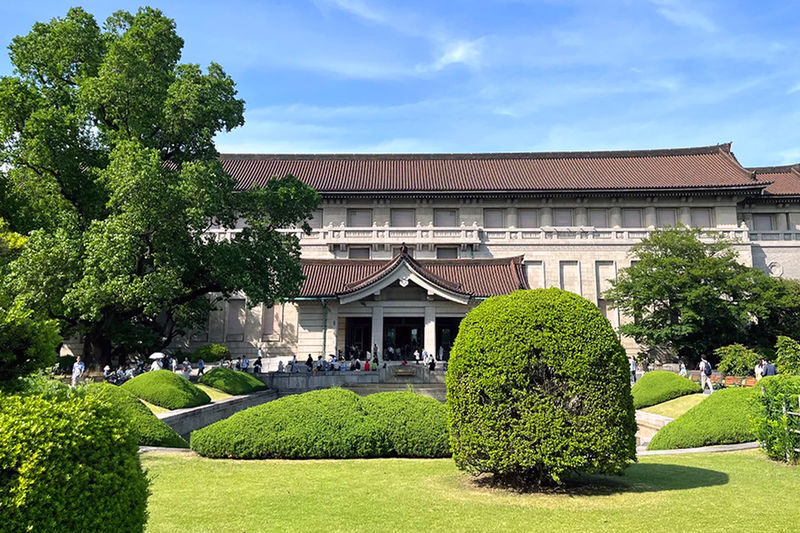
Tokyo National Museum sits at the northern end of Ueno Park and opened in 1872. It is Japan’s oldest museum and its largest, with a collection spanning Japanese art and objects from other parts of Asia. That scale is the reason a guide can be useful: three hours is enough to make sense of selected rooms, not to see every gallery.
The tour is designed to give objects a historical frame. Instead of treating a statue, print or tea utensil as an isolated item, the lecturer can explain how it fits into a period and what it tells you about changing artistic ideas. That context matters most when you are looking at unfamiliar forms or a sequence of objects from different centuries.
The tour is in Chinese. No guide’s name is provided, so you cannot choose a particular lecturer in advance. One written account singled out the guide’s professional delivery and storytelling, and wished for more time on the Japan Pavilion. That is a useful hint about the tour’s strength and its limit: expect interpretation, but not an exhaustive discussion of every room.

👉 See our pick of the Our Picks For The 11 Best Workshops & Classes In Tokyo
Starting in the Main Building
The Main Building is the natural place to follow the story of Japanese culture. The planned sequence can touch on Jomon, Yayoi and Kofun periods, then move through Asuka, Nara, Heian, Kamakura, Nanboku-cho and Muromachi, before reaching Azuchi-Momoyama, Edo and the Meiji Restoration.
That is a lot of ground, and the guide will adjust the order and emphasis to conditions on the day. Think of the historical outline as a framework, not a promise to spend equal time on every era. The value is in learning how to recognize shifts in style and subject as you move through the rooms.
Several galleries offer a more concrete way into the material. The National Treasure Gallery is a chance to focus on especially important works, while the tea ceremony utensils show how objects made for daily or ritual use can also carry aesthetic meaning. The samurai armor gallery gives the tour a direct connection to military culture, and the Edo life utensils help bring ordinary routines into view.
Ukiyo-e, the Japanese woodblock prints associated with the Edo period, are another likely highlight. A guide can help you look beyond a familiar image or famous name and notice how prints fit into city life and visual taste. But galleries and displays can change, so treat the named rooms as examples rather than guaranteed stops.
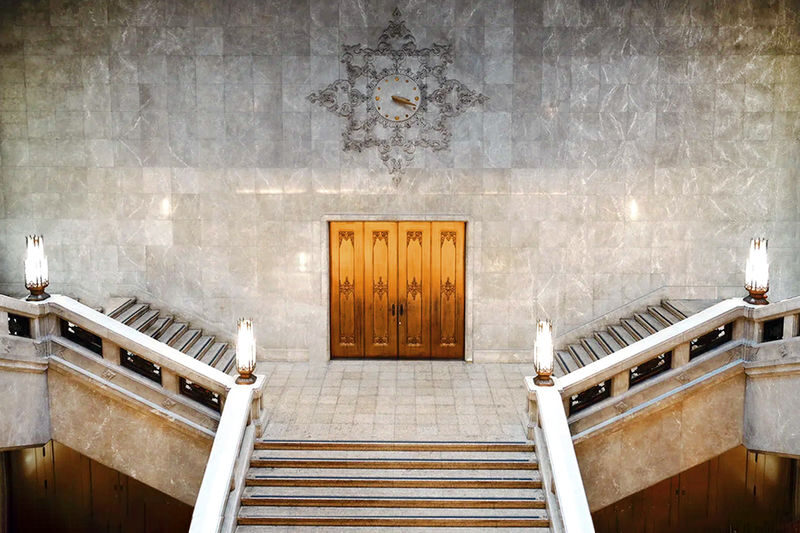
The Main Building is also where the tour’s subject of evolving Japanese aesthetics makes sense. You are not simply ticking off dates. You are looking at how ideas about beauty, use and status appear in objects made for different settings and audiences. That can make a short visit feel more coherent, even if you leave plenty unseen.
You can also read our reviews of more museum experiences in Tokyo


Toyokan and the Buddhist sculpture focus
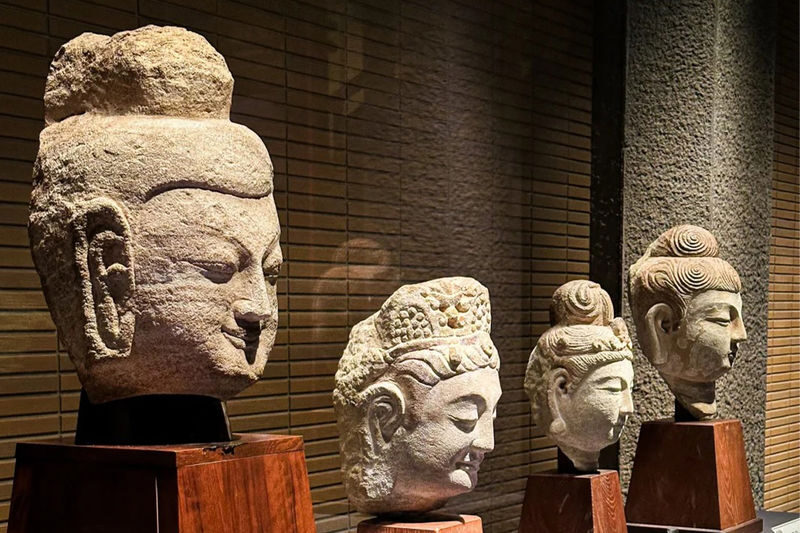
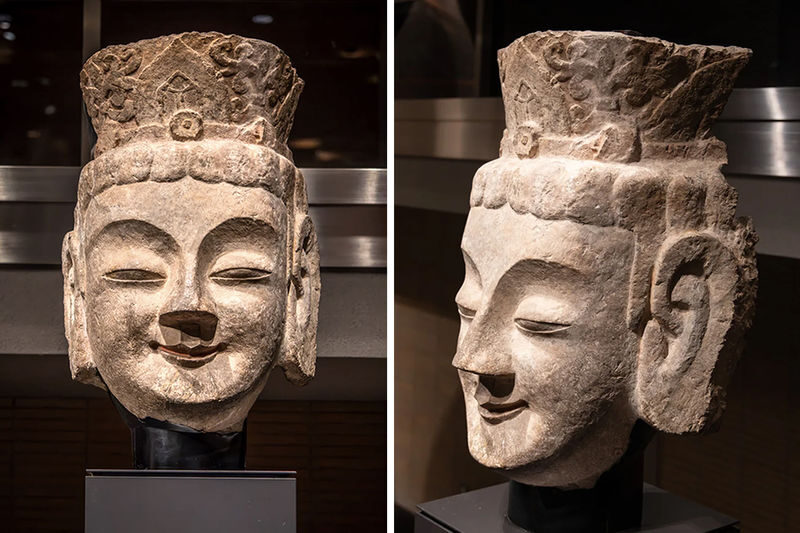
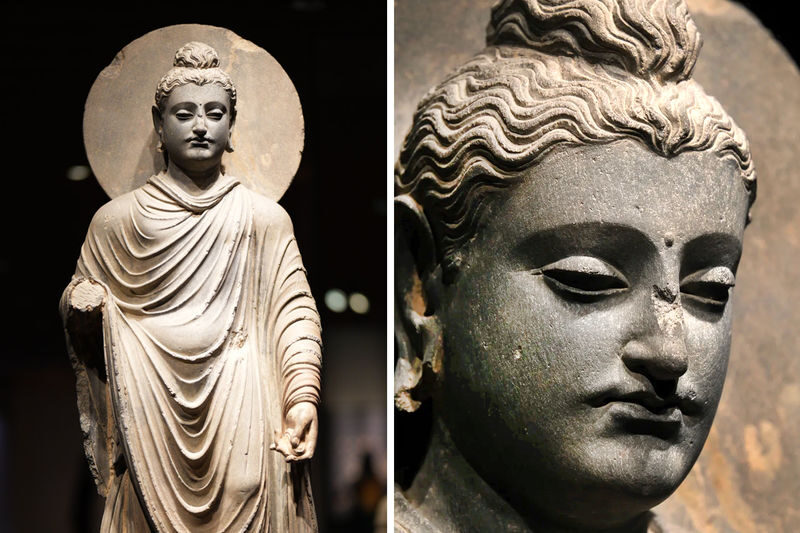
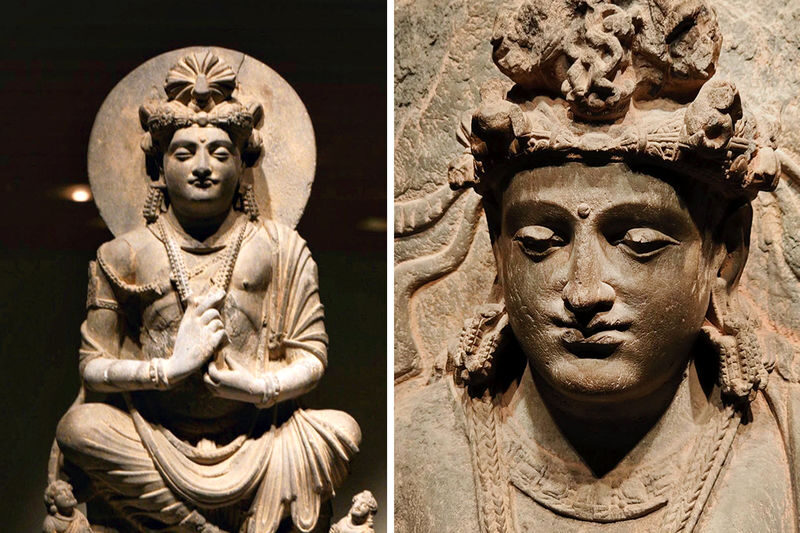
The Toyokan, or Eastern Art Gallery, shifts the focus beyond Japan. Its collections include Chinese works and objects from several other cultures. The tour gives special attention to Chinese stone-carved Buddhist statues, a topic that can help you compare religious sculpture across regions and understand how visual forms travelled.
This is the most distinctive element of the experience. If you have visited Japanese temples or seen Buddhist images elsewhere in Asia, the guide’s explanation may give you a stronger basis for comparison. Rather than treating the sculpture as decoration, you can consider its historical setting and the cultural ideas it carries.
Other possible Toyokan stops include Gandharan sculpture, material from the Otani expedition, oracle bone inscriptions, bronze ware, Tang sancai pottery, porcelain, Han dynasty stone reliefs, and Chinese calligraphy and painting. The itinerary also lists Egyptian mummies. That range is a reminder that the museum is not limited to Japanese history, but it also means the guide must make choices.
Do not plan on lingering in every one of these galleries. The museum’s displays can change without notice, and the lecturer may alter the route to match what is open and on view. If a particular room matters to you, ask about it at the start, while understanding that the group’s time and the day’s conditions may shape the answer.
Three hours, and what the pace means
The tour runs for about three hours, with morning and afternoon options. The morning session begins at 10:00 and ends at 13:00; the afternoon session runs from 14:00 to 17:00. You are asked to arrive at the designated meeting point ten minutes before departure. The exact meeting location is not specified in the details, so confirm it before setting off.
This is a walking tour inside a large museum. Comfortable shoes are sensible, and a light jacket may help because the galleries can be strongly air-conditioned. Bring water if you want it, though the museum has rest areas and cafes where you can take a break or replenish supplies.
A guide device is provided, and you are responsible for keeping it safe and returning it after the tour. Follow the museum’s instructions on photography, since some galleries prohibit it. Large luggage is best left elsewhere: coin-operated lockers are available at the museum entrance, but the tour does not provide luggage storage or delivery.
The schedule is a guided visit, not a private museum booking or a ride between sights. It ends at the museum entrance, leaving you free to continue exploring Ueno Park or nearby attractions on your own. That is a practical advantage if you want to make the museum the anchor of a larger day in the area.
What the price covers, and what it does not
The listed starting price is US$59.90 per person. It covers a Chinese-speaking guide, but Tokyo National Museum admission is separate. Meals, drinks, personal expenses and insurance are also not included. Special exhibitions may require an additional ticket, so check what you would need to pay before the visit.
For the price, you are paying for guided interpretation and a planned route through a collection that could otherwise feel daunting. That can be good value if you want an expert to connect Japanese periods and Asian objects, especially if you prefer to hear explanations in Chinese. If you are content to wander independently, or mainly want to see one or two galleries at your own pace, a guided three-hour session may be more than you need.
The experience requires at least three participants. If that minimum is not met, the stated options are to book another date or request a full refund. Children under 16 must participate with an adult, and infants and children must be included in the passenger count. Outside food and drink, smoking, alcohol and pets are not allowed.
There are two different cancellation descriptions in the booking information: one gives a full refund at least seven days ahead, 50 percent one to six days ahead, and no refund on the day or for a no-show; another says a full refund is available at least 24 hours before the activity. Check the terms attached to your selected session before paying, rather than assuming one rule applies to every package.
Who should book this tour
I would consider this tour if you want an introduction to Japanese art and history but do not want to navigate the museum alone. It suits visitors who value a Chinese-speaking lecturer, want context for objects they might otherwise pass quickly, and are especially interested in Buddhist sculpture or connections between Japanese and Chinese culture.
It is less suited to anyone hoping to inspect the entire museum in detail. The National Museum’s 43 exhibition halls are far more than a three-hour route can cover, and the actual galleries depend on what is displayed that day. If you already know which rooms matter to you, compare the guided visit with a self-guided ticket and decide whether the lecturer’s interpretation is worth the added cost.
The single written account available describes the storytelling as engaging and professional, while wishing for more attention to the Japan Pavilion. Take that as a fair expectation: the guide’s explanations are the main reason to book, but the route has to make trade-offs. If you want a structured first visit, the balance looks appealing. If you prefer to linger, browse at your own speed and follow every passing curiosity, go independently and allow more time.



Tokyo National Museum | Hall of Fame | Main Building & Asian Gallery | Star Lecturer Professional Level Explanation
“A very professional and engaging tour guide. The storytelling was excellent. I'd love to hear him share more history about the Japan Pavilion if I…”
FAQ
Is Tokyo National Museum admission included?
No. The museum ticket is not included and must be purchased separately. A special exhibition may also require an additional ticket.
How long is the guided tour?
The guided visit lasts about three hours. The available sessions are 10:00 to 13:00 and 14:00 to 17:00.
What language is the tour in?
The included guide is Chinese-speaking.
What does the tour cover?
The planned route may include Japanese history and galleries in the Main Building, as well as Asian collections in Toyokan. Chinese stone Buddhist statues are a key focus, but the route can change.
Is every gallery on the route guaranteed to be open?
No. Displays and exhibits can change, and the lecturer may adjust the route based on the museum’s actual conditions that day.
Where does the tour finish?
The tour ends at the entrance of Tokyo National Museum.
How early should I arrive?
Arrive at the designated meeting point at least ten minutes before the 10:00 or 14:00 departure. Confirm the precise meeting location before the tour.
Is there a minimum group size?
Yes. At least three participants are required. If the minimum is not met, you can book another date or request a full refund.
Can children join the tour?
Children under 16 must participate with an adult and cannot join alone. Infants and children must be included in the passenger count.
What is the cancellation policy?
The booking information gives different cancellation terms in different places. One section says full refund at least seven days before departure, 50 percent one to six days before, and no refund on the day or for no-shows. Another says full refund at least 24 hours before the activity. Check the terms for your chosen package before booking.