Sushi is easier to understand when you make it yourself. This three-hour class near Shinanomachi Station teaches several styles, from nigiri and inari to hosomaki and the California roll, then lets you eat your own work with miso soup.
I like two things in particular: the chance to compare sushi styles by preparing them, and the practical lessons in sushi rice, dashi, and Japanese rolled egg. Miki-san and Michiyo-san have been praised for patient, hands-on instruction, a useful quality when your first roll looks more like a small parcel than a neat cylinder.
One consideration: the class costs from US$86.15, and transport is not included. It also lasts three hours, so it suits you best if you want a focused cooking activity rather than a quick food demonstration.
- Key points to know before you book
- What you learn in three hours
- From sushi rice to the finished meal
- Nigiri, inari, hosomaki, and California rolls
- The instructors and the hands-on feel
- Eating what you make
- Getting to Shinanomachi Station
- Price, dietary needs, and who gets good value
- Should you book this sushi class?
- FAQ
- How long is the sushi-making class?
- Where is the meeting point?
- What kinds of sushi will I make?
- Is the class taught in English?
- What is included in the price?
- Is food included?
- Can dietary requirements be accommodated?
- Can children attend?
- Is the activity wheelchair- and stroller-accessible?
- What is the cancellation policy?
- The Best Of Tokyo!
- More 3-Hour Experiences in Tokyo
- More Tours in Tokyo
- More Tour Reviews in Tokyo
Key points to know before you book
 1 / 7
 2 / 7
 3 / 7
 4 / 7
 5 / 7
 6 / 7
 7 / 7
- Four sushi styles in one class: Make nigiri, inari, hosomaki, and a California roll.
- More than rolling rice and fish: Lessons can include sushi rice, dashi, miso soup, and Japanese rolled egg.
- English-language instruction: You can ask questions as you work through the steps.
- Your meal is part of the class: Eat the sushi you make, with traditional miso soup.
- Near two train stations: The meeting point is a five-minute walk from JR Shinanomachi Station or about ten minutes from Yotsuya Sanchome Station.
- Dietary needs need advance notice: Several adaptations are listed, but you should confirm your specific requirements before booking.

👉 See our pick of the Our Picks For The 11 Best Workshops & Classes In Tokyo
What you learn in three hours
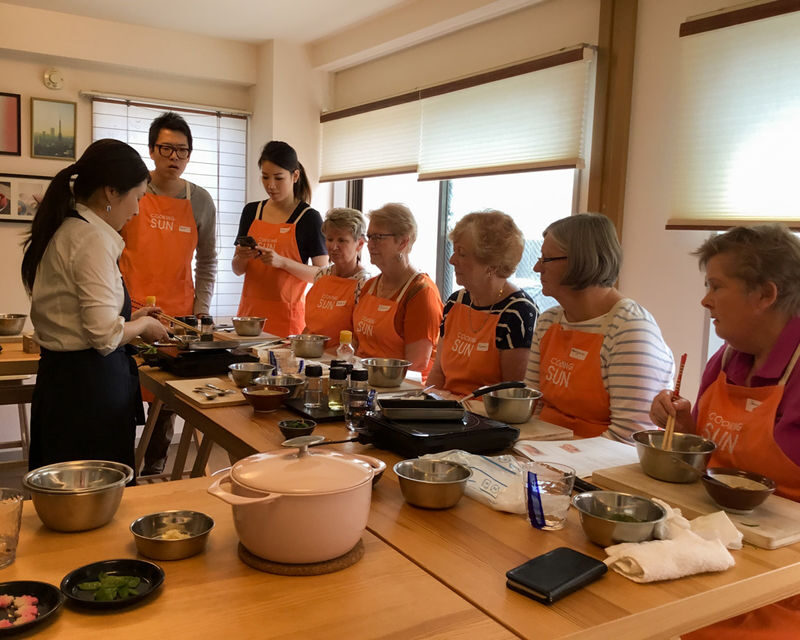
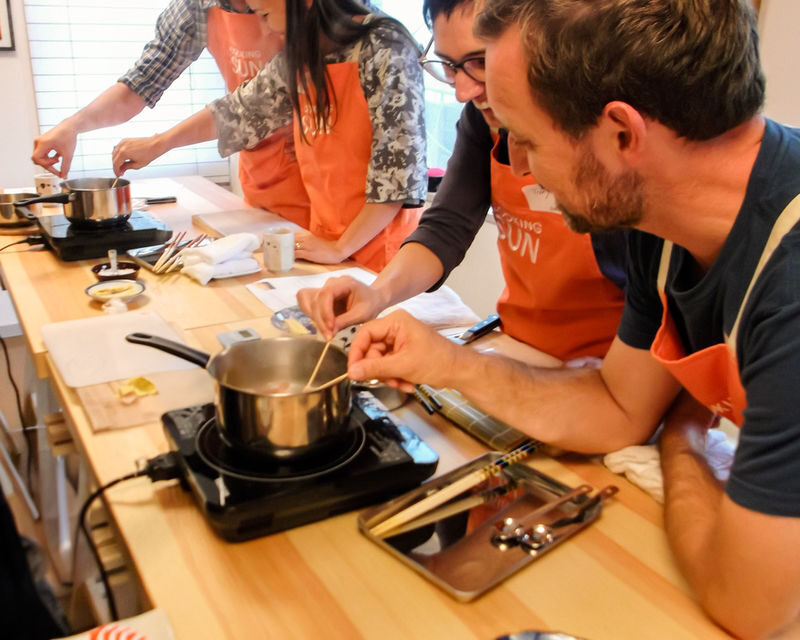
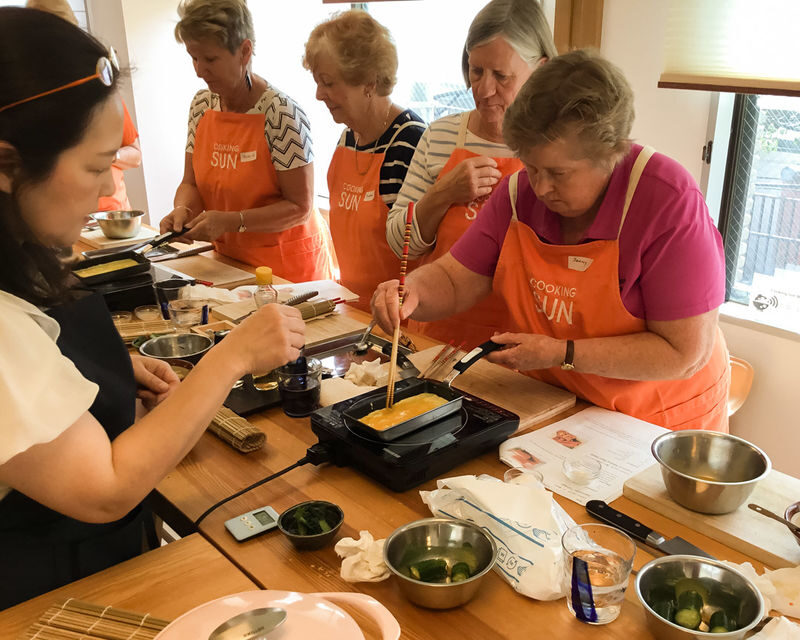
This is a hands-on cooking class, not a sushi tasting with a demonstration on the side. You work with ingredients and utensils provided for the session, following an English-speaking instructor through several forms of sushi. The aim is to understand what makes each type different, then have a go yourself.
That variety is a strong reason to choose this class over one devoted only to rolling. Nigiri, inari, hosomaki, and California rolls each handle rice and fillings in their own way. Making several styles in one sitting gives you a useful comparison: sushi is not one recipe with a different topping, but a family of preparations with different shapes and techniques.
The class also reaches beyond the finished pieces. Participants have learned about preparing sushi rice, making dashi and miso soup, and cooking Japanese rolled egg. Those are worthwhile details because they help you think about the whole meal, not just how to form a roll. If you hope to try Japanese cooking at home, a lesson in the foundations may stay with you longer than a single set of instructions.
You also get some background on sushi history and practical tips for making it at home. The available information does not specify the precise order of lessons, so expect the instructor to guide the session rather than rely on a fixed sequence of demonstrations. The class is three hours long, which gives you time for both instruction and making the food, though it is still a compact introduction rather than professional training.
You can also read our reviews of more tours and experiences in Tokyo


From sushi rice to the finished meal
Rice is the quiet workhorse of sushi. If it is prepared poorly, even fresh ingredients cannot rescue the result. The class includes instruction in preparing sushi rice, making this one of the most useful parts for anyone who wants to recreate the experience in their own kitchen.
You can also learn about dashi, a Japanese stock used in cooking, and miso soup. The soup is served alongside the sushi you make, giving the meal a familiar Japanese pairing. These details make the class more than a lesson in assembling toppings: you get a look at some of the supporting elements that help turn separate pieces into a meal.
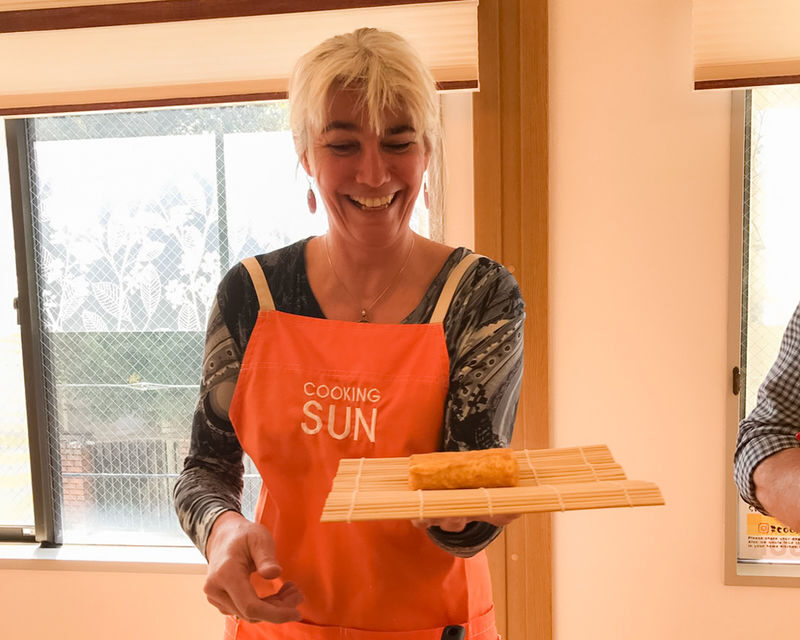
The Japanese rolled egg is another welcome part of the cooking. It adds a different skill to the session and gives you a chance to try a dish beyond sushi itself. The class’s blend of sushi, soup, stock, and egg should appeal if you enjoy understanding how a meal comes together, rather than only collecting a few flashy techniques.
The ingredients are described as fresh and seasonal. That means the exact selection may depend on what is available, rather than being identical in every class. If you are hoping to work with one particular fish or ingredient, ask before booking instead of assuming it will be included.
Nigiri, inari, hosomaki, and California rolls
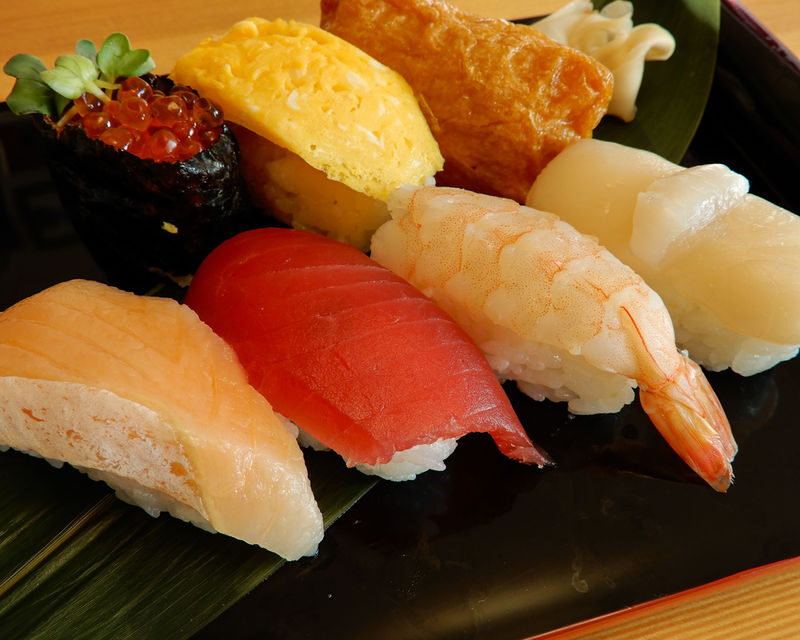
Nigiri is the compact style many people picture first: rice shaped by hand and paired with a topping. It is a simple-looking form, but the rice shape and balance matter. Making it yourself can help you see why a small piece of sushi takes more care than its size suggests.
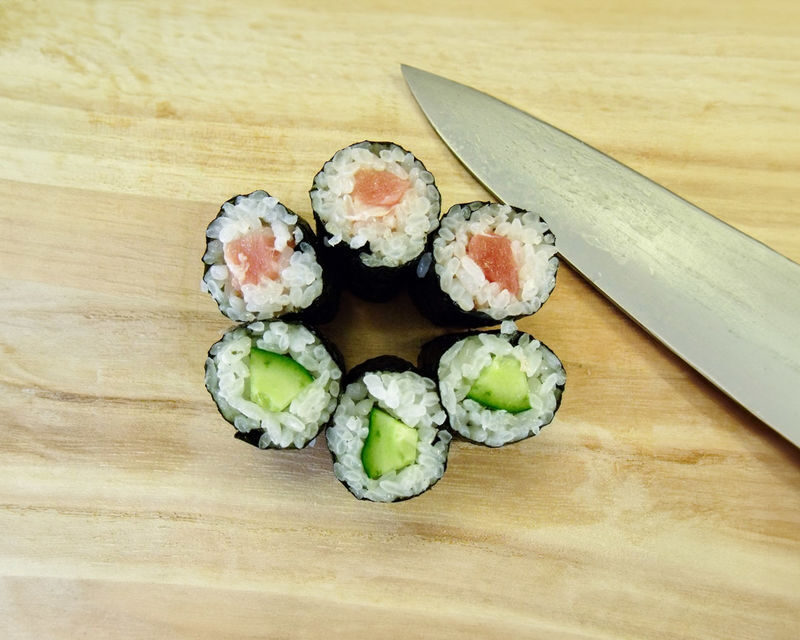
Inari offers a contrast. It is made with seasoned tofu pockets filled with sushi rice, rather than a piece of fish laid on top. Hosomaki is a narrow rolled sushi, while the California roll brings an international style into the mix. The point is not to rank them, but to compare how different ingredients, shapes, and wrapping methods change the result.
Having several types on the menu is especially useful for newcomers. You can learn the names, see the forms, and make each one rather than trying to memorize a list from a restaurant menu. If you already know sushi well, this variety may still give you a better grasp of the preparation behind familiar dishes.
The California roll is a practical inclusion too. It is a style many people recognize, even if they have not tried making it. Pairing it with Japanese styles lets you see how sushi has travelled and adapted, without making the class solely about traditional forms.
The instructors and the hands-on feel
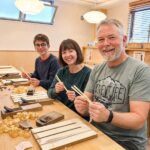
Miki-san and Michiyo-san are named as instructors, and the class is described as English-speaking. In a cooking lesson, clear guidance matters: it is easier to learn a technique when you can ask a question at the moment your rice, filling, or roll is in front of you.
The strongest praise for the class focuses on patient, helpful teaching and the fact that participants get involved. That is exactly what you want from a short cooking class. A polished demonstration can be pleasant to watch, but it will not teach your hands how to work with rice or form a roll.
There is no group-size information, so do not assume it is a private lesson or a small class. If personal attention is important to you, ask the provider about the group format before booking. Still, the practical, guided approach sounds more suitable for beginners than a session where you simply watch a chef prepare a meal.
You do not need to arrive with sushi-making experience. The class is intended to teach the process step by step, and the instructors’ patient approach should help if you are new to Japanese cooking. It is also a good fit for people who already enjoy cooking and want a structured introduction to a few specific techniques.
Eating what you make
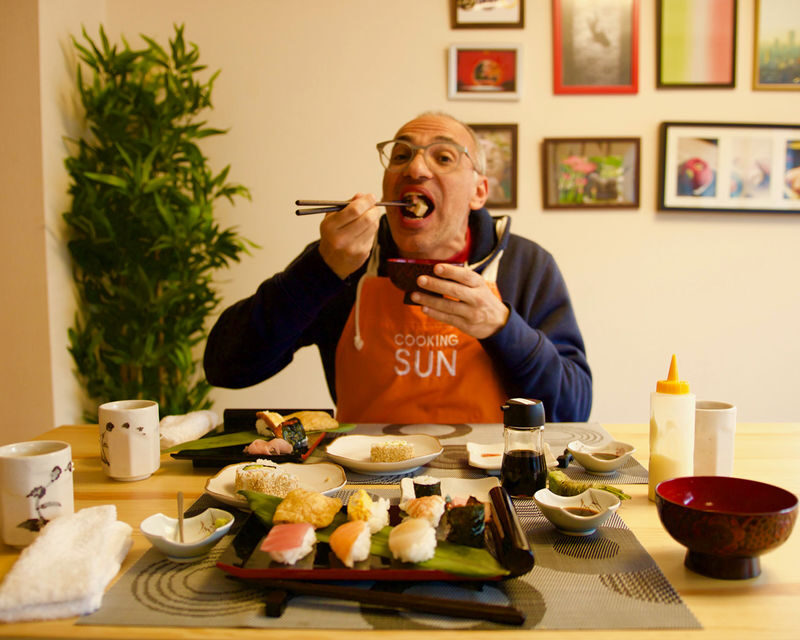
The meal at the end is part of the appeal. You eat the sushi you have prepared, with miso soup, so the cooking has an immediate reward. It is a satisfying way to finish a three-hour activity, and it gives you a chance to taste how your own work turned out.
Keep expectations sensible: this is a class meal, not a restaurant dinner with a published menu or a guaranteed set of ingredients. The selection is based on the sushi styles and ingredients used in the session, which can include seasonal items. If you have a strict dietary need, explain it in advance so the provider can confirm what is possible.
For many people, the meal is also a useful final lesson. You can compare the types you made and notice which textures and shapes you prefer. That makes the experience more memorable than leaving with a recipe alone.



Getting to Shinanomachi Station
The meeting point is Shinanomachi Station. The class location is described as a five-minute walk from JR Shinanomachi Station, or a ten-minute walk from Yotsuya Sanchome Station on the Marunouchi Subway Line. The exact location and map link are provided after booking confirmation, so check your voucher rather than setting off based only on the station name.
Transport is not included. Factor in your own train fare and time getting to the meeting point, especially if your Tokyo plans are spread across several neighbourhoods. The class is not in a location described as a major tourist attraction, but one participant who arrived early found a nearby shrine to visit. That could make a pleasant extra stop if you have time, though the shrine is not part of the class itself.
The meeting point is not stroller- or wheelchair-accessible. If you need step-free access or have mobility concerns, contact the provider before paying. Children aged six to twelve must attend with a paying adult. Children under six can attend without ingredients at no charge, but you need to book the child option if a child needs their own set of ingredients.
Price, dietary needs, and who gets good value
The three-hour class starts at US$86.15. That is more than the cost of simply ordering sushi, but the comparison is not quite fair: the price covers instruction, ingredients, cooking utensils, and a meal made during the session. If you value learning techniques you can use at home, the class offers more than a one-off lunch.
It is best value for you if you want an active, guided introduction to Japanese cooking and are curious about more than one type of sushi. It is less compelling if you only want to eat sushi, have limited time, or would rather spend the afternoon visiting Tokyo sights. Transport and other personal expenses are additional, so include those in your budget.
Several dietary accommodations are listed. Vegetarian customers can have fish replaced with vegetables and other ingredients. Pescetarian and kosher needs are also listed, as are vegetarian, vegan, gluten-intolerance, and halal requirements. For halal guests, halal meat is not used, and alcohol components or ingredients can be removed. Because these needs can mean different things to different people, tell the provider in advance and ask them to confirm that the planned menu works for you.
The activity is open to participants aged six and older. Infants and children must be included in the passenger headcount, even when a child under six attends free without ingredients. Book the correct child option if a young child needs their own ingredients.
Should you book this sushi class?
Book it if you want to do more than eat sushi in Tokyo. Three hours gives you time to work through several styles, learn about rice and other meal components, and enjoy what you make. The named instructors, English-language teaching, and patient, hands-on approach are good signs for beginners.
Think twice if you are short on time, need a fully accessible venue, or are looking for a restaurant-style meal rather than a lesson. The price makes the most sense when you value the skills and experience as much as the food. For a curious cook, a sushi fan, or a family with children aged six and up, it is a practical way to spend part of a Tokyo day.
3 Hours Sushi Making Experience in Tokyo
“We really enjoyed the class. Miki-san and Michiyo-san were very patient and helpful. We learnt the technique in preparing sushi rice, dashi, miso s…”
FAQ
How long is the sushi-making class?
The class lasts three hours.
Where is the meeting point?
The meeting point is Shinanomachi Station. The class location is a five-minute walk from JR Shinanomachi Station or a ten-minute walk from Yotsuya Sanchome Station on the Marunouchi Subway Line.
What kinds of sushi will I make?
The class includes nigiri, inari, hosomaki, and California rolls.
Is the class taught in English?
Yes. An English-speaking cooking instructor leads the class.
What is included in the price?
Ingredients for making various types of sushi, cooking utensils, and an English-speaking guide are included.
Is food included?
You make and eat your own sushi, and traditional miso soup is served alongside it.
Can dietary requirements be accommodated?
Several requirements are listed, including vegetarian, vegan, pescetarian, kosher, halal, and gluten intolerance. Contact the provider in advance to confirm what can be arranged for your needs.
Can children attend?
Participants must be at least six to take part. Children aged six to twelve must be accompanied by a paying adult. Children aged zero to five can attend free without ingredients, but must be included in the passenger headcount.
Is the activity wheelchair- and stroller-accessible?
No. The activity is not stroller- or wheelchair-accessible.
What is the cancellation policy?
You can receive a full refund if you cancel at least 72 hours before the activity date, using the destination’s local time.