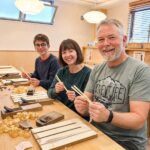
Kumiko is a quiet test of fit and patience: you press slender pieces of wood together to form a geometric pattern, with no glue or nails to hide a clumsy join. At this Asakusa class, you make a coaster from Japanese hinoki and take your finished piece home.
I like that you can choose a design and learn the logic of the craft by doing it, rather than only watching a demonstration. I also like the matcha finale: whisking tea and having it with traditional sweets gives the class a second cultural thread beyond woodworking.
One consideration is time. A turtle-pattern coaster took about 50 minutes to assemble, and the class also includes an introduction and tea, so allow room in your day rather than treating it as a quick stop between tightly timed plans.
- Key points before you book
- Kumiko turns careful fitting into the main event
- Choose a pattern, then work piece by piece
- Matcha makes a calm finish
- A compact cultural activity in Asakusa
- Is the price worth it?
- Practical details to keep your plans simple
- Should you book the kumiko class?
- FAQ
- Where is the kumiko class held?
- What will I make?
- Is previous woodworking experience required?
- Is matcha included?
- What are the available start times?
- What is the price for children?
- The Best Of Tokyo!
- More Tours in Tokyo
- More Tour Reviews in Tokyo
Key points before you book
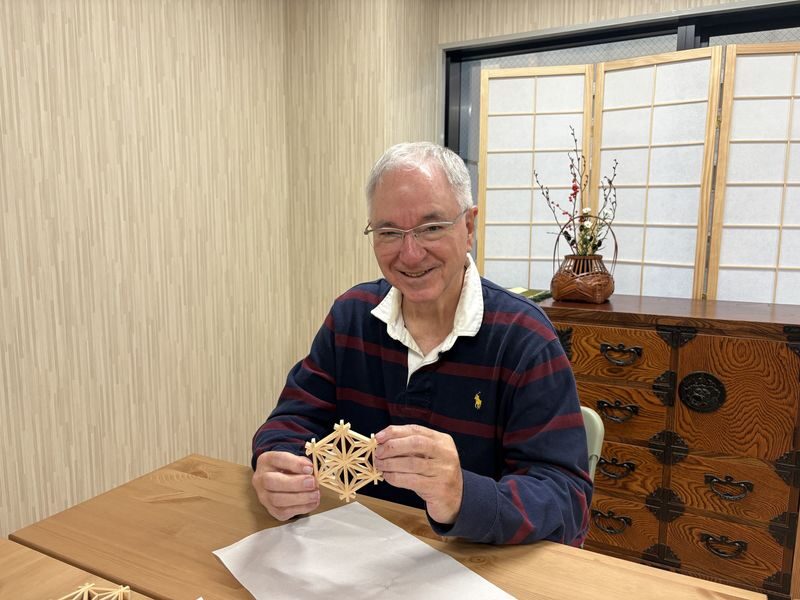
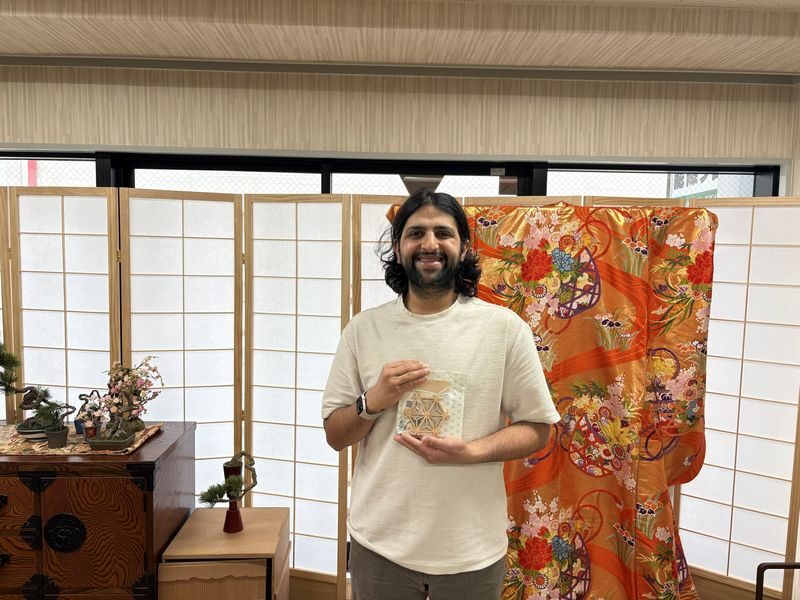
- The craft is built around precise wooden joints: Kumiko creates patterns by fitting pieces together without glue or nails.
- You make a coaster from Japanese hinoki: The wood is prepared by skilled artisans, and you bring your finished piece home.
- You can choose a pattern: Options include a sesame or turtle design, according to the studio’s available styles.
- The class suits beginners: No previous woodworking experience is needed, and English-speaking staff are included.
- Matcha and sweets close the session: You whisk your own matcha and enjoy it with traditional Japanese sweets.
- The studio is in Kotobuki, near Asakusa: Find it on the fifth floor of A Sengoku Building at 2-10-11 Kotobuki.

👉 See our pick of the Our Picks For The 11 Best Workshops & Classes In Tokyo
Kumiko turns careful fitting into the main event
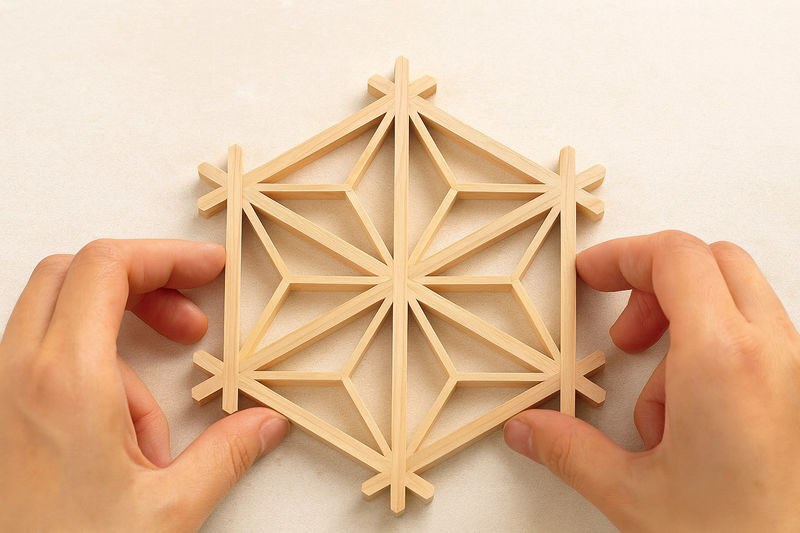
Kumiko is a traditional Japanese woodworking technique that uses carefully shaped pieces to make geometric designs. The appeal here is not just the finished coaster. You get a feel for the exactness behind the pattern as you work out how each piece should fit.
That precision is also where the suspense comes in. Push too hard and a delicate piece may break; align it well and it settles into place. One participant described the satisfying moment when a piece fitted without breaking, then found the work more enjoyable once the basic technique started to make sense. That is a useful expectation: the first few joins may feel cautious, but the process becomes clearer as you go.
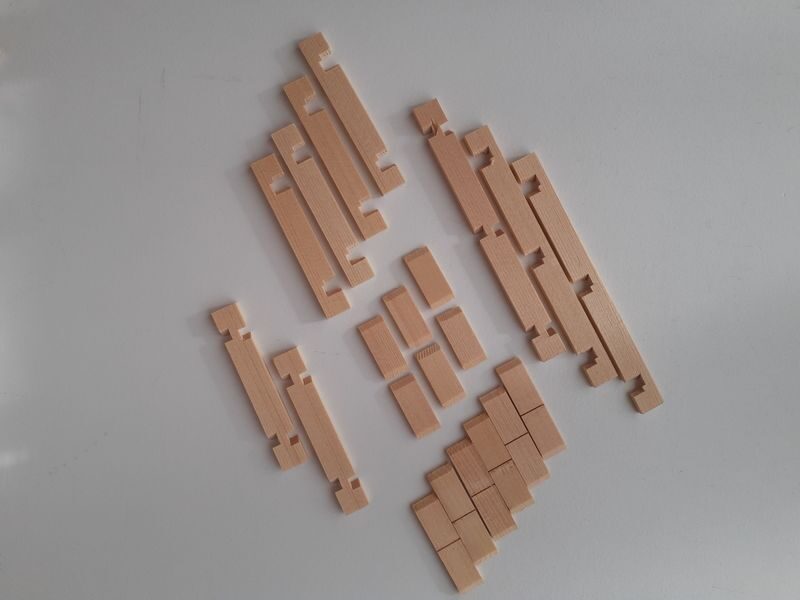
The materials are Japanese hinoki, or cypress, and cedar, prepared by skilled artisans. The class description centers on fragrant hinoki for the coaster. You are not starting with raw lumber or being asked to make every component from scratch. Instead, the work is focused on assembling prepared pieces and understanding how their shapes make the pattern possible.
That distinction matters. This is an introduction to a demanding craft, not a full apprenticeship in woodworking. You get to try the handwork and appreciate the planning behind the components, while experienced artisans handle the more involved preparation.
You can also read our reviews of more tours and experiences in Tokyo.



Choose a pattern, then work piece by piece
You can choose the kumiko style you want to make, subject to the options available at the session. A sesame or turtle pattern is one example. The choice adds a personal touch, and it gives you a reason to look closely at how different arrangements create different effects.
The class is beginner-friendly, so you do not need woodworking experience. English-speaking staff are included, and Naho is named as an instructor at Fujiiro Studio. One account describes an introductory video about kumiko and the artisan who designed and made the pieces used in class. That kind of context helps connect your small coaster to the wider craft, rather than making the activity feel like a simple assembly task.
The hands-on part can take around 50 minutes for one design, though your own pace and pattern may differ. Give yourself time to work carefully. Kumiko rewards steady hands more than speed, and the small satisfaction of a snug fit is part of the point.
Your finished piece is a practical souvenir as well as a keepsake. Unlike a mass-produced trinket, it carries a visible record of your own effort. It is still a coaster, so it can be used at home, but you may find yourself turning it over to inspect the joints before putting a cup on it.
Matcha makes a calm finish
The session ends with you whisking matcha and enjoying it with traditional Japanese sweets. This is a welcome change of pace after the concentration of fitting the wooden pieces. You move from noticing tiny joins to preparing tea, with the same emphasis on taking care over a simple action.
The tea portion also gives the class a broader cultural frame. Kumiko is a craft of measured construction; matcha preparation asks for attention to movement and rhythm. You do not need prior knowledge of either to take part. The point is to try both in a guided setting and enjoy a small moment of Japanese hospitality.
The available details do not specify the type of sweets, the tea-making instruction, or how much time is set aside for this portion. If those details matter to you, check with the operator before booking. What is clear is that matcha and traditional sweets are included as the finale, not an optional add-on.
A compact cultural activity in Asakusa
The studio address is 5F A Sengoku Bldg., 2-chome-10-11 Kotobuki, Taito City, Tokyo. The Japanese address is 東京都台東区寿2-10-11 仙石ビル5階 A. It is worth saving the exact address and checking the map before you set out, since the activity takes place inside a building rather than at a large, obvious landmark.
Departure choices are listed from 10:00 through 17:00, generally on the hour. The exact time is confirmed after booking, and the return time depends on your selected start time and the length of the session. The listed return choices range from 11:00 to 18:00. Choose a slot that leaves a little breathing room before your next commitment.
This is a studio-based activity, not a sightseeing route through Tokyo. The itinerary refers to departure, Tokyo’s 23 wards, and return, but the experience itself is the kumiko class in Asakusa. Do not book it expecting a guided neighborhood walk or transport between attractions.
Is the price worth it?
The listed price starts at US$50.45 for the coaster-and-matcha package. That is more than you might spend on a small souvenir, but the value comes from the guided activity, prepared materials, English-speaking staff, the finished craft, and the tea and sweets. You are paying for a structured cultural experience as well as an object to take home.
It makes particular sense if you want a hands-on activity and would rather leave Tokyo with something you made than another bought item. The class may be less appealing if you want a long, technically demanding workshop: the coaster is a compact introduction, and the pieces are prepared in advance.
Children aged five and older pay the same rate as adults. Children aged zero to four can attend free, though the class is described as safe for beginners rather than as a children’s program. If you are booking for a young child, consider whether they are ready to work patiently with small pieces.
Practical details to keep your plans simple
Choose your departure time when you book, and attend at that selected time. The voucher is valid only on the date specified, and you present it on your mobile device. Confirmation is usually issued within minutes; if it does not arrive, contact customer support.
Changes are allowed until 24 hours before the activity, with some exclusions, including bookings made with certain passes or vouchers that have not yet been issued. Cancellation at least 24 hours before the activity date brings a full refund. If you arrive late or miss the session, refunds or amendments are not available. In severe weather or other unforeseen events, the operator may cancel and offer a reschedule or full refund.
The best fit is a solo visitor, couple, or small family looking for a calm, indoor cultural activity in Asakusa. It also works well as a change of pace from temples, shops, and city streets. The session gives you a tangible souvenir and a short introduction to a craft whose beauty depends on details you can easily miss from a distance.
Should you book the kumiko class?
Book it if you enjoy making things, want an approachable look at Japanese craftsmanship, or like the idea of pairing a hands-on activity with matcha. The choice of pattern, the precise fitting process, and the chance to take home your own coaster make this more personal than a demonstration.
Skip it if your priority is a substantial woodworking course, a neighborhood tour, or a tightly timed visit with no room for the class to run at its own pace. For most visitors who can spare a relaxed session, the combination of craft, tea, and a useful handmade souvenir offers a thoughtful use of an hour or two in Asakusa.
Asakusa: Discover the Art of Kumiko Make Your Own Coaster
“Really enjoyed the class and could tell they were passionate about what they did. I liked being able to choose what design I wanted to build.”
FAQ
Where is the kumiko class held?
The class is at 5F A Sengoku Bldg., 2-chome-10-11 Kotobuki, Taito City, Tokyo. The Japanese address is 東京都台東区寿2-10-11 仙石ビル5階 A.
What will I make?
You will make a kumiko coaster using prepared Japanese wood, including hinoki. You can choose from the patterns available at the session.
Is previous woodworking experience required?
No. The activity is suitable for beginners, and no prior experience is needed.
Is matcha included?
Yes. The session ends with you whisking matcha and having it with traditional Japanese sweets.
What are the available start times?
Listed start times are 10:00, 11:00, 13:00, 14:00, 15:00, 16:00, and 17:00. Your confirmed time depends on your booking.
What is the price for children?
Children aged five and older are charged the same rate as adults. Children aged zero to four can attend free.