A sumo ring is one thing from the stands. Standing close enough to see wrestlers train, then testing your push against one, is quite another. This two-hour visit takes place at a sumo stable in Koto City, where you get a guided introduction, live demonstrations and a meal of chanko nabe.
I like two things in particular: you see sumo in a working stable rather than only from an arena seat, and the chance to ask questions or step into a bout makes the sport easier to understand. The meal adds a welcome pause, and gives you a taste of the hot pot associated with sumo wrestlers.
The main consideration is the price: at US$150.75 and up, this is a special-interest outing, not a cheap meal or a substitute for a grand tournament. You also need to arrive at the stable on time, so plan your trip across Tokyo carefully.
- What makes this sumo experience different
- Inside a Tokyo sumo stable
- From sumo’s origins to the training routine
- Watching matches and stepping into the ring
- Chanko nabe, the meal behind the show
- Is US0.75 good value?
- Timing, arrival and practical details
- Who should book this experience?
- FAQ
- How long does the sumo experience last?
- Where does the experience take place?
- What is included in the price?
- Can I take part in a sumo bout?
- Do children pay the adult price?
- Can I cancel for a refund?
- The Best Of Tokyo!
- More Tours in Tokyo
- More Tour Reviews in Tokyo
What makes this sumo experience different
 1 / 8
 2 / 8
 3 / 8
 4 / 8
 5 / 8
 6 / 8
 7 / 8
 8 / 8
- You enter a sumo stable: The session takes place at Tokyo Sumo Beya, at the address of Kitano Lake stable in Kiyosumi, Koto City.
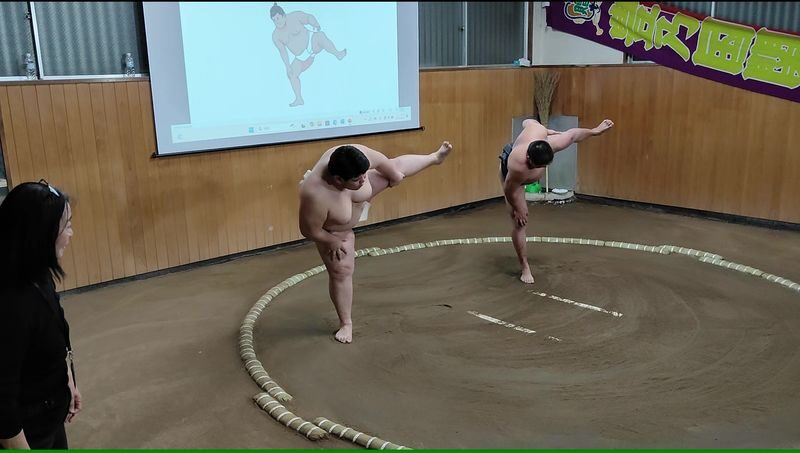
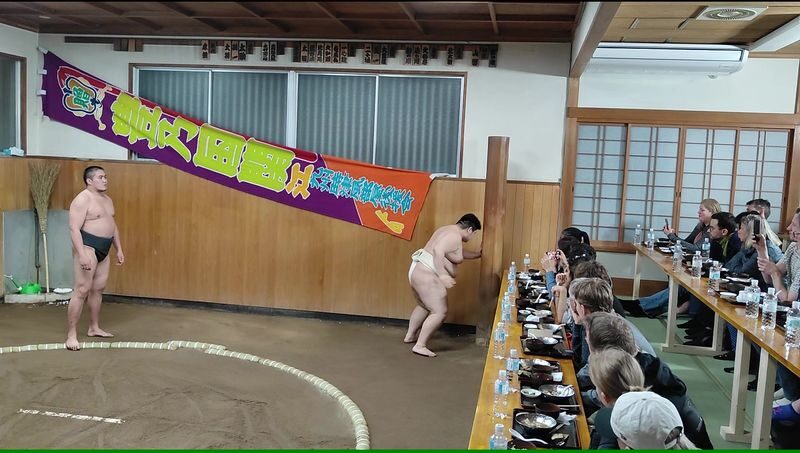
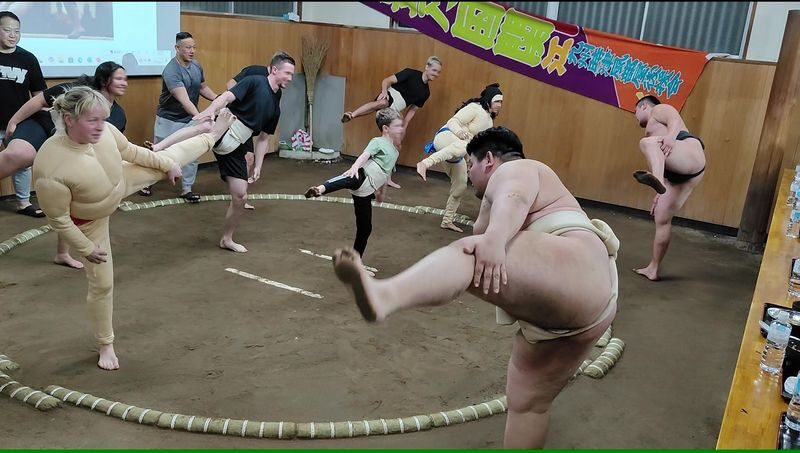
- Training and matches happen up close: You see demonstrations of sumo warm-ups and watch wrestlers compete, rather than relying on a distant view from arena seats.
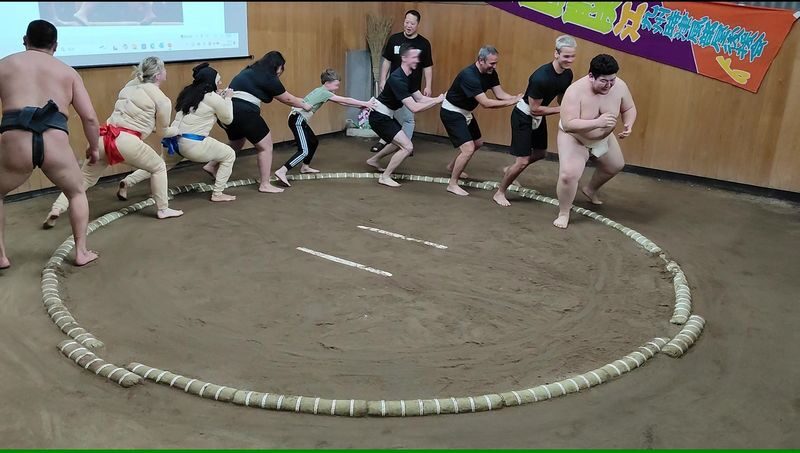
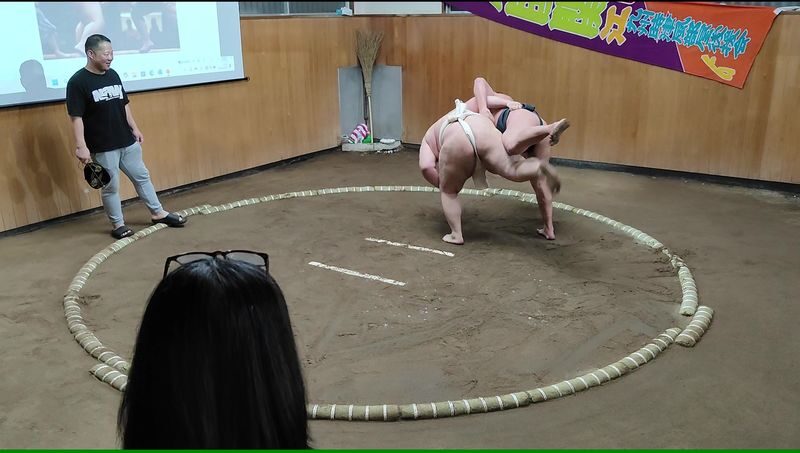
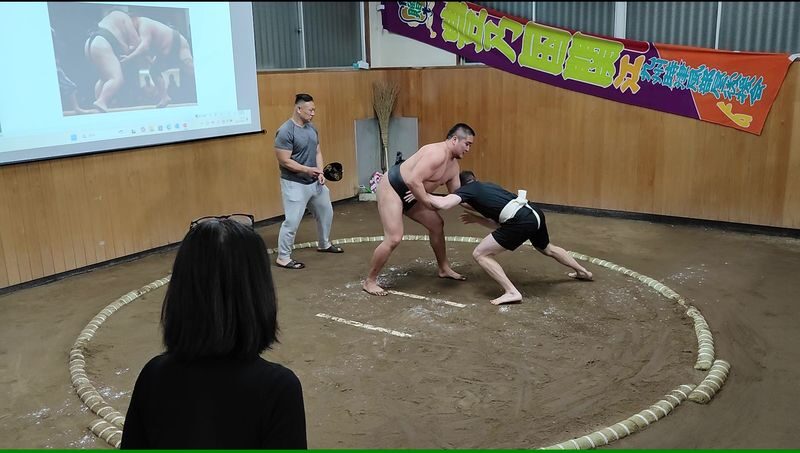
- You can test your strength: Volunteers may challenge wrestlers in a friendly bout. It is a lively way to feel how much size and balance matter in sumo.
- Questions and photos are part of the visit: You have a chance to speak with wrestlers and take pictures with them.
- Chanko nabe comes with the show: The meal is a sumo-style hot pot, described as chicken hot pot, served while you watch.
- The visit fits into two hours: Choose an 11am or 7pm session, with the return at the same stable around 1pm or 9pm.

👉 See our pick of the Our Picks For The 11 Best Workshops & Classes In Tokyo
Inside a Tokyo sumo stable
The address is Tokyo Sumo Beya, 2-chome-10-11 Kiyosumi, Koto City, Tokyo 135-0024. The Japanese address is 北の湖部屋. It is not an arena or a restaurant built to look like one. The draw is the chance to see sumo in a stable setting, where wrestlers train and the traditions of the sport take shape.
That setting matters. A tournament gives you the drama of a full day of bouts and the scale of a big crowd. A morning practice can bring you close to the athletes, but it may be quiet and demanding to follow if you do not know the customs. This visit combines explanation, demonstrations and audience participation, making it a useful middle ground for first-time sumo fans.
The English-speaking guide and staff help bridge the gap between watching and understanding. One session featured a host named Charlie, who handled the explanations and entertainment as well as refereeing. The host may vary, but expect English-language guidance and a format designed to make the sport accessible.
You can also read our reviews of more tours and experiences in Tokyo.



From sumo’s origins to the training routine
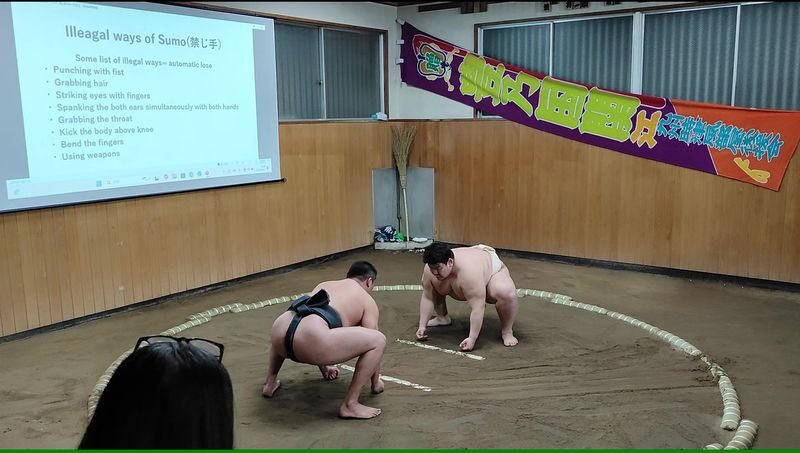
The session begins with an introduction to sumo’s history and culture. That context helps you see more than two large men pushing each other. Sumo has its own rules, rituals and training habits, and a guide can point out what to watch for before the action starts.
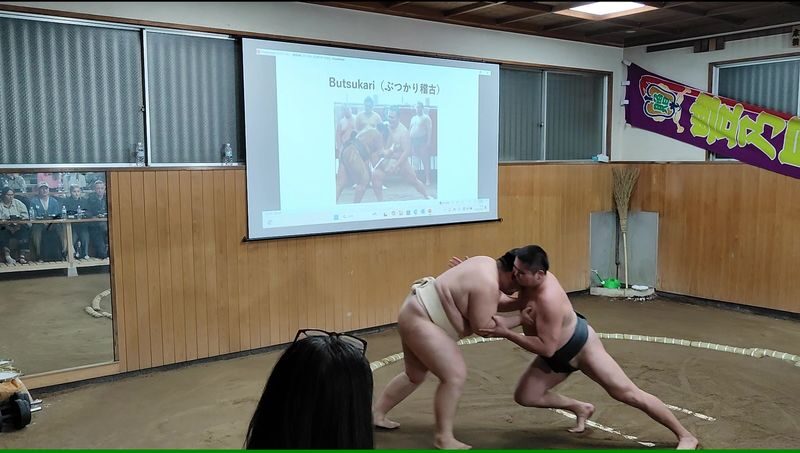
You then get to observe how wrestlers prepare. One of the most useful parts is seeing the warm-up exercises explained and performed. The movements are not filler before the main event: they show the strength, flexibility and balance that a wrestler needs before stepping into the ring.
This is also where the stable setting earns its keep. Instead of trying to make sense of the action from a distance, you can watch the routine at close range and connect it to the bouts that follow. If you have only seen sumo on television, the physical effort behind each movement can be a surprise.
The two-hour format keeps the introduction focused. You will not get a complete course in sumo, and the schedule may change with traffic or weather conditions. But the combination of history and live practice gives you enough footing to appreciate the demonstrations rather than just watch them pass by.
Watching matches and stepping into the ring
After the introduction and training, you watch wrestlers compete in actual matches. The short distance between you and the action is the key difference from a tournament. You can see the wrestlers’ balance and force at close range, and the guide helps explain what is happening.
The most memorable part for many people may be the chance to challenge a wrestler. You can volunteer, try the warm-up movements and test your strength in a bout. Do not expect your effort to move a trained wrestler easily. The point is not to win, but to feel how leverage and balance can matter as much as raw pushing power.
Participation is optional, which makes the activity workable for a mixed group. You can enjoy the demonstrations and ask questions without stepping into a match yourself. If you are travelling with children or someone who prefers to watch, the interactive element does not need to become a test of courage.
The wrestlers are presented as approachable, and there is time to ask questions and take photos. That personal exchange is valuable: sumo can seem formal from the outside, but a conversation helps make the people behind the sport more visible. Bring your curiosity, and be ready to follow any instructions from the staff around the ring.
Chanko nabe, the meal behind the show
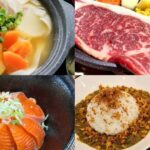
The experience includes chanko nabe, the hot pot associated with sumo wrestlers and their training diet. The meal is described as chicken hot pot, and second servings have been available. It is a substantial, fitting finish to a session built around the physical demands of sumo.
You eat while watching the show, so the meal is part of the event rather than a separate restaurant stop. That makes the two-hour visit feel complete: you hear about the sport, see the training and matches, and try a dish linked to wrestlers’ lives.
The food is a genuine part of the value, but keep expectations sensible. This is an entertainment and cultural experience with a meal, not a dedicated food tour. If your main goal is to compare several versions of chanko nabe, you will want to make other plans as well.
Is US$150.75 good value?
At US$150.75 or more per person, the price is substantial for a two-hour activity. The value depends on whether you want access and interaction, not simply a performance. The fee covers an English-speaking guide and staff, the sumo program, a chance to interact with wrestlers, and the chanko nabe meal.
Compare it with the alternatives. A tournament gives you a broader view of professional sumo and the atmosphere of a major event, but it is a different kind of outing. Watching practice can be closer to the everyday rhythm of the sport, while this session adds explanations, matches, questions and the option to challenge a wrestler. If you value all those parts, the price is easier to justify.
The activity is especially appealing if sumo is high on your Tokyo wish list, or if you want one memorable outing that combines culture, sport and food. If you are only mildly curious, the cost may feel steep for a short visit. You can get a taste of the sport without paying for an interactive session by looking for other sumo options, but you will miss the stable setting and chance to participate.
Timing, arrival and practical details
Sessions are offered at 11am and 7pm, with corresponding returns at about 1pm and 9pm. The meeting and return point is the same stable in Kiyosumi. Confirm your selected time at booking and arrive 15 minutes early. The exact time is confirmed after booking, and the voucher is valid only for the date and time selected.
Getting to the address is part of the planning. The venue is in Koto City, not central Tokyo’s best-known sightseeing district, so allow time to find it and arrive without rushing. The experience does not include transport, and personal expenses and tips are not included.
The booking confirmation should arrive within minutes. You present a mobile voucher at the venue. You can cancel for a full refund if you do so at least 24 hours before the activity date, using local destination time.
Children aged 0 to 3 can attend free if they do not need a separate seat. Children aged 4 and older pay the adult rate. That makes the outing possible for families, though the value will depend on how much each child enjoys watching and joining in.
Who should book this experience?
I would put this high on the list for anyone who wants more than a quick photo of sumo. The stable visit offers context, live action and a personal encounter, all in one compact session. It is also a good choice for families with older children, sports fans, and curious visitors who enjoy trying an activity rather than watching from the sidelines.
It suits you best if you are comfortable with an interactive format and willing to spend a premium for close access. You do not have to volunteer, but the chance to challenge a wrestler is one of the most distinctive parts of the visit. If you would rather sit quietly through a formal demonstration, or want the scale and ceremony of a full tournament, this may not be the best match.
Book it if sumo is a priority and you want to understand the sport through its training, matches and people. Skip it if price is your main concern or if you only want a brief introduction. For the right visitor, the combination of a real stable setting, a friendly bout and chanko nabe makes the two hours count.
Complete sumo experience in Tokyo
“the experercise was both entertaining and informative and the presenter and sumo's were fun and interesting”
FAQ
How long does the sumo experience last?
The guided experience lasts about two hours. The available sessions are listed at 11am and 7pm, with return times around 1pm and 9pm.
Where does the experience take place?
It takes place at Tokyo Sumo Beya, 2-chome-10-11 Kiyosumi, Koto City, Tokyo 135-0024, Japan. The meeting and return point are the same.
What is included in the price?
The experience includes an English-speaking guide and English-speaking staff, plus the sumo program and chanko nabe meal. Personal expenses and tips are not included.
Can I take part in a sumo bout?
You can challenge wrestlers as part of the interactive experience. Participation is optional, and you can also watch, ask questions and take photos.
Do children pay the adult price?
Children aged 0 to 3 can attend free if they do not occupy a separate seat. Children aged 4 and older are charged the same rate as adults.
Can I cancel for a refund?
You can receive a full refund if you cancel at least 24 hours before the activity date, based on destination local time.