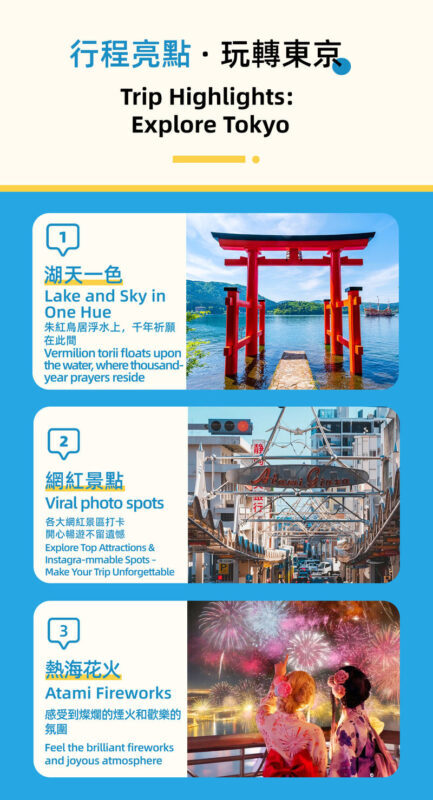
Atami’s fireworks are the main event: about 5,000 bursts light the sky above the port, close enough to make the waterfront feel like part of the show. This late-starting day trip pairs them with a Hakone stop, so you can trade a complicated evening transport plan for a seat on the ride back to Tokyo.
I like two things in particular: the choice of Hakone Shrine or Ryuguden on selected dates, and the unhurried chance to explore Atami before the display. I also value the direct transport, tolls, and parking included in the fare, especially on a crowded festival night.
The trade-off is time. Tokyo to Hakone and Atami is a long day, and traffic or festival crowds can squeeze the stops or delay the return. The tour is best for a fireworks-first outing, not a leisurely, in-depth tour of Hakone.
- At a glance
- Fireworks first, Hakone along the way
- Hakone Shrine or Ryuguden’s Lake Ashi bath
- A seaside pause in Atami
- The Atami fireworks and the journey back
- What the price buys
- Prepare for a long day out
- Who should book this tour?
- FAQ
- Where does the tour leave from?
- How long is the tour?
- Can I choose between Hakone Shrine and Ryuguden?
- Is Ryuguden admission included?
- What time are the Atami fireworks?
- Are meals and drinks included?
- What luggage can I bring?
- The Best Of Tokyo!
- More Spa & Hot Springs in Tokyo
- More Tours in Tokyo
- More Tour Reviews in Tokyo
At a glance
 1 / 8
 2 / 8
 3 / 8
 4 / 8
 5 / 8
 6 / 8
 7 / 8
 8 / 8
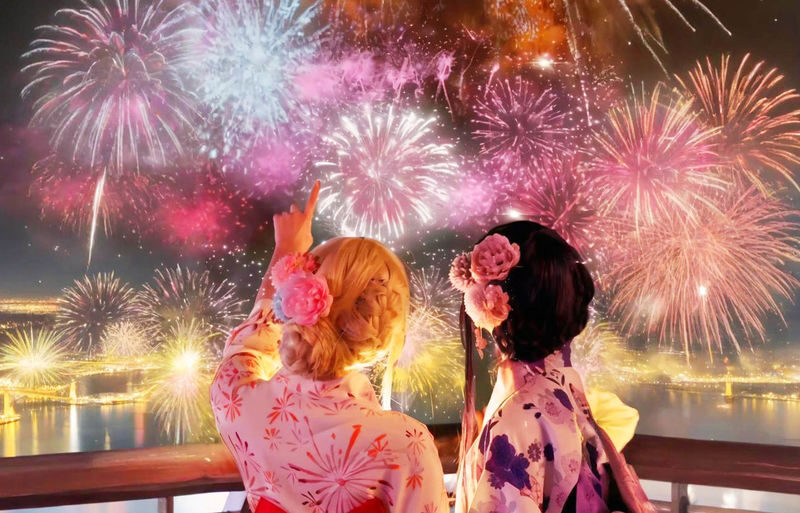
- Fireworks over Atami Port: The display lasts about 20 minutes, with roughly 5,000 fireworks. In July and August it runs from 20:15 to 20:40; on other listed dates, from 20:20 to 20:40.
- One Hakone stop: Most dates include Hakone Shrine. On November 8, November 23, December 6, and December 25, you can choose the shrine or Ryuguden hot spring.
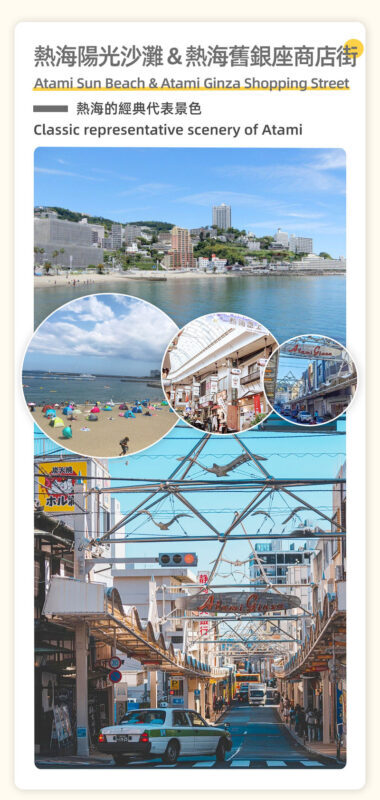
- Atami on foot: You get time at Sun Beach and Old Ginza shopping street before the show.
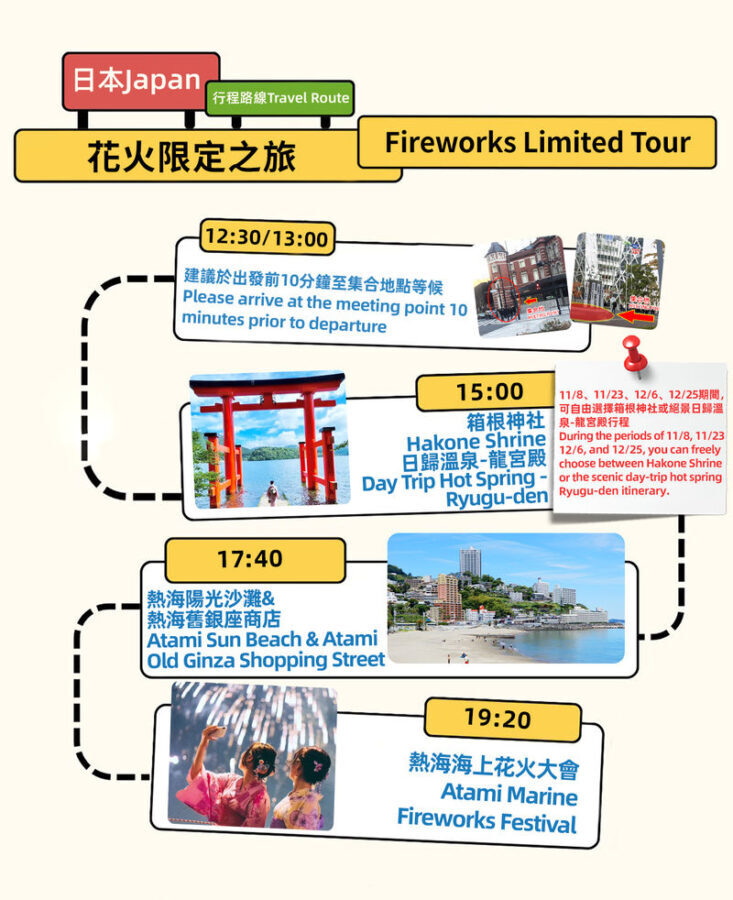
- Late departure, late return: Expect to leave Tokyo around 12:30 or 13:00 and return around 23:30, depending on the departure details for your date.
- A shared coach outing: Group size is listed as 4 to 49. Smaller groups may have a driver-guide, while larger groups may have a separate guide and driver.
- Bring extra for the bath: Ryuguden admission is not included and costs 2,200 yen. Meals and drinks are also at your own expense.

👉 See our pick of the Our Picks For The 11 Best Workshops & Classes In Tokyo
Fireworks first, Hakone along the way
Think of this as an evening spectacle with a scenic prelude, rather than a full Hakone tour. You spend much of the day on the road, but the payoff is a well-known fireworks display without having to arrange a late-night return from Atami yourself.
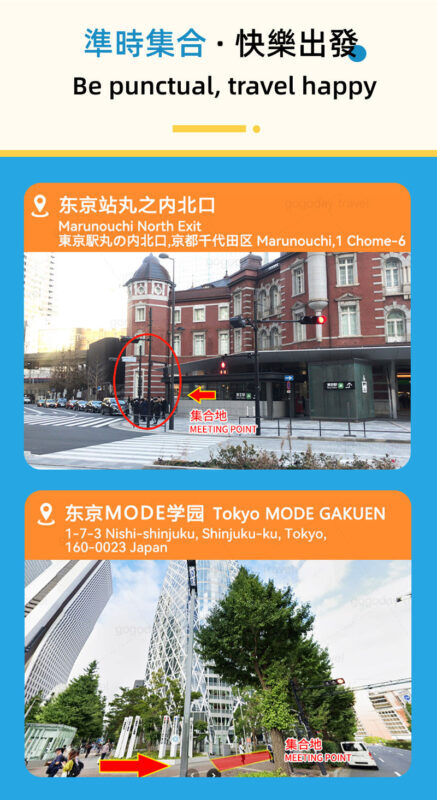
The plan begins at Tokyo Station’s Marunouchi North Exit. You should arrive at least 10 minutes before departure, and late arrivals are not accommodated or refunded. The trip runs about 11 hours, with a scheduled return to the same meeting area around 23:30.
That return time is an estimate, not a promise. Traffic, weather, holidays, and crowds can change the schedule, and the operator may adjust or shorten stops. Several people have found the transport and festival logistics helpful, but a long drive and a tight timetable are part of the bargain.
You can also read our reviews of more tours and experiences in Tokyo



Hakone Shrine or Ryuguden’s Lake Ashi bath
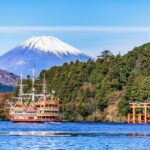
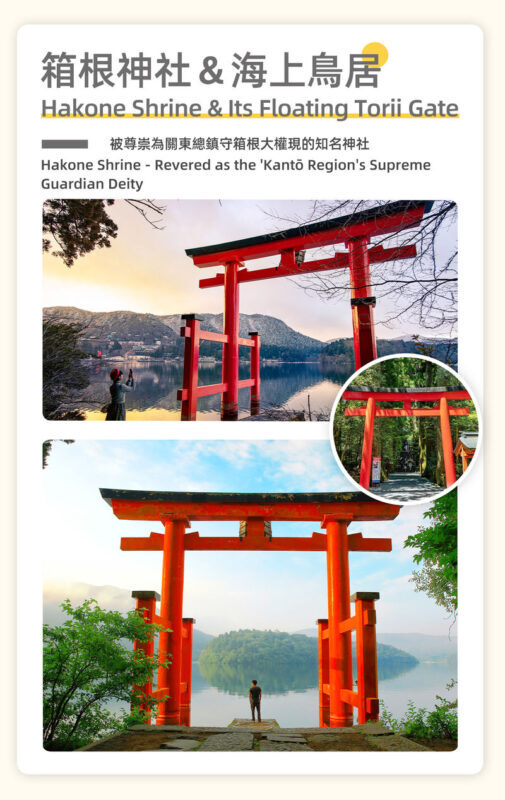
The first stop is scheduled for around 15:00, with about 90 minutes of self-guided time. On most tour dates, you visit Hakone Shrine. Its lakeside setting and the famous Heiwa no Torii, the gate in the water, make it the more photogenic choice. The approach passes beneath old cedar trees, giving the visit a quieter, more solemn feel than Atami’s busy seafront later in the day.
The shrine dates to 757 and is associated with Hakone Daigongen and the Nine-Headed Dragon God. Visitors come to pray for safe travel, good luck, and protection from misfortune. You have time to walk the approach, see the torii, and explore at your own pace, but 90 minutes is a short visit if you want a slow walk and a long photo queue.
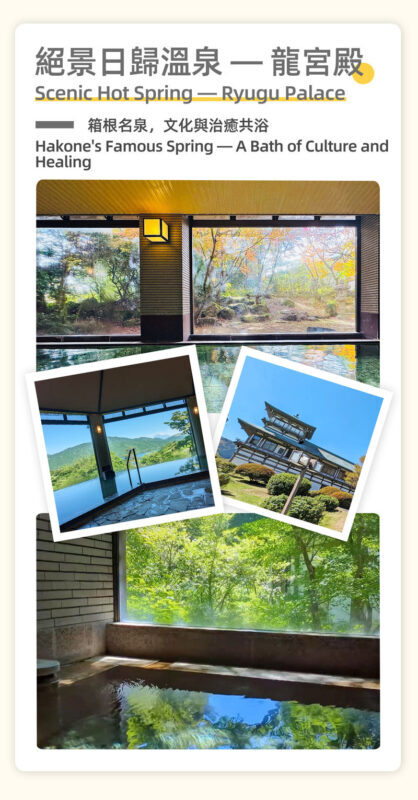
On November 8, November 23, December 6, and December 25, you can choose the shrine or Ryuguden’s day-trip hot spring. You must select one option and tell the guide on site. The bath is described as a place where you can see both Lake Ashi and Mount Fuji, weather permitting. Its building takes inspiration from Byodo-in Phoenix Hall in Uji and has a history of about 80 years.
Ryuguden admission costs 2,200 yen, paid separately. Choose it if soaking in a hot spring matters more to you than visiting the shrine. Choose the shrine if you prefer a cultural stop and want to avoid another fee. The schedule does not allow time to do both.
A seaside pause in Atami
Around 17:40, the group reaches Atami Sun Beach and Old Ginza shopping street for about 90 minutes. The beach is a pleasant change after the drive: a wide stretch of sand and a resort-town feel, with the sea nearby as the daylight fades. You can stroll, take photos, or simply sit for a while before the evening crowd gathers.
Old Ginza is the place to look for dried goods and local food. This is free time, not a forced shopping circuit, but it helps to keep expectations sensible. A few people have found it hard to get a meal when queues were long, and 90 minutes has to cover both the beach and street. If eating is important, do not leave your food decision until the last minute.
The stop is also your chance to sort out a place to watch the fireworks and confirm the meeting point with your guide. Follow the day’s instructions closely. Atami draws a large crowd for the show, and the distance between a good viewing spot and the coach can matter when everyone leaves at once.
The Atami fireworks and the journey back
The fireworks are scheduled at Atami Port from 20:20 to 20:40, with an earlier 20:15 start during July and August. The show is short, but the setting makes it feel substantial: the bursts rise above the water, and the viewing area is close to the action. The display is held regularly throughout the year and is known across Japan.
Your time at the fireworks stop is listed as about 90 minutes, starting around 19:20. That gives you time to settle in before the show, but also means the group needs to leave promptly after the final burst. Some guides have recommended waterfront viewing spots away from the tightest beach crowds and arranged clear meeting instructions. The exact spot and coach access can vary, so ask your guide where to gather before you wander off.
The return drive is listed at about 2.5 to 3 hours, with arrival in Tokyo around 23:30. Festival traffic can slow the exit, and one of the practical reasons to book a coach is avoiding the need to find your own transport after the event. Still, do not plan a close connection or assume the coach will arrive early enough for a particular last train. The timing is vulnerable to traffic, and different groups can have different experiences.
Guide service is another variable. Names praised in recent accounts include Zhan Jie and Liu Bin, with people valuing their time management, meeting-point directions, and advice on where to watch. Some accounts describe limited commentary or confusing pickup arrangements, so treat the guide as a key part of the day, but not a guaranteed personal tour. The service is bilingual in Chinese and English according to the activity details; the amount of commentary may vary.
What the price buys
The advertised price starts at $55.59. For that, you get round-trip transport from Tokyo, guide service, tolls, parking, and fuel. The main value is practical: Atami is a long way from central Tokyo, and on a fireworks night, the bus takes the strain out of planning the return.
The fare does not include meals, drinks, personal spending, or Ryuguden admission. If you choose the hot spring, add 2,200 yen per person. The lowest advertised fare may also vary by date or availability, so check the price for your chosen departure before booking.
This is good value if you mainly want to see the fireworks and prefer a bundled ride over managing connections. It is less appealing if you want a deep visit to Hakone, plenty of time to eat in Atami, or full flexibility to leave the festival whenever you like. You are paying for access and logistics, not a private guide or a slow-paced itinerary.



Prepare for a long day out
The coach departs from Tokyo Station’s Marunouchi North Exit. The departure information gives both 12:30 and 13:00, so check the time on your booking and the final email rather than relying on a general schedule. The operator says it sends guide and vehicle details by email between roughly 18:00 and 21:00 on the day before departure. If several messages arrive, use the latest one; check your spam folder if nothing appears.
One piece of luggage per person is included. An extra piece costs 2,000 yen and must be noted when booking. If you need more space, arrange it in advance; the guide or driver may refuse unannounced extra luggage, with no refund.
Wear shoes you can walk in, and carry a light layer for the evening by the water. This is practical advice for a day that includes a shrine approach, beach time, and standing outdoors for the fireworks. Bring cash or another payment method for food, drinks, and the hot spring if you select it.
The tour is not recommended for people with high blood pressure, epilepsy, heart disease, asthma, other serious medical conditions, pregnant people, or people with disabilities. Children aged 0 to 2 ride free if they do not need a separate seat. Children aged 3 and older pay the adult rate, and anyone aged 0 to 17 must travel with a paying adult.
Who should book this tour?
Book it if the Atami fireworks are your priority and you want a straightforward way to combine them with a taste of Hakone and a little time by the sea. Families and first-time visitors may especially appreciate having transport and a meeting plan on a crowded festival night. A helpful guide can make the evening easier, particularly when it is time to rejoin the coach.
Skip it if your main goal is to explore Hakone at a relaxed pace, or if a late return and possible schedule changes would cause problems. The stops are appealing, but the day is built around getting to Atami for the show. Choose the shrine on most dates, or weigh the extra bath fee against the chance to soak at Ryuguden on the four specified dates.
2026 Atami Fireworks & Hakone tour – Hot Spring or Hakone Shrine
“Great! The itinerary was well-planned, and the timing was excellent.”
FAQ
Where does the tour leave from?
The meeting point is Tokyo Station’s Marunouchi North Exit. Arrive at least 10 minutes before the departure time shown for your booking.
How long is the tour?
The tour lasts about 11 hours. The stated return to Tokyo is around 23:30, though traffic and weather can affect the timing.
Can I choose between Hakone Shrine and Ryuguden?
Only on November 8, November 23, December 6, and December 25. On those dates, choose one and inform the guide on site. On other dates, the itinerary goes to Hakone Shrine.
Is Ryuguden admission included?
No. The day-trip hot spring admission costs 2,200 yen and is paid separately.
What time are the Atami fireworks?
The display runs from 20:20 to 20:40 on the stated schedule. During July and August, it runs from 20:15 to 20:40.
Are meals and drinks included?
No. Meals, beverages, and personal expenses are not included.
What luggage can I bring?
One piece of luggage per person is free. Each extra piece costs 2,000 yen, and you should note additional luggage when booking.