The most satisfying part of this one-hour Asakusa workshop is that you leave with more than a souvenir: you leave with a kitchen knife you helped finish and sharpen. Patient, step-by-step instruction makes the hands-on work approachable, even if your knife skills begin and end with slicing toast.
I like two things in particular: you get to learn the feel of sharpening rather than just watch a demonstration, and the finished knife is useful long after your Tokyo trip. The main caveat is the short session: expect a focused introduction and hands-on finishing, not a full blacksmithing course in which you forge a blade from raw steel.
- At a glance
- What the hour is really about
- Learning to sharpen, one careful stroke at a time
- Finishing a knife that feels like yours
- Why this works well for beginners and families
- A small studio visit in the middle of Asakusa
- Is .35 good value?
- Practical details before you book
- Should you book the Asakusa knife workshop?
- FAQ
- How long does the workshop last?
- Where does the workshop meet?
- Is the workshop suitable for beginners?
- Are English-speaking staff available?
- What do I take home?
- Are handle upgrades or engraving included?
- Is there a minimum age?
- Can I pay with cash?
- What happens if I arrive more than 15 minutes late?
- The Best Of Tokyo!
- More Workshops & Classes in Tokyo
- More Tours in Tokyo
- More Tour Reviews in Tokyo
At a glance
 1 / 5
 2 / 5
 3 / 5
 4 / 5
 5 / 5
- One hour in the workshop: A compact activity that can fit between Asakusa sights.
- A knife to take home: You shape, finish, and sharpen a functional kitchen knife.
- Beginner-friendly teaching: Instructors guide each step and help you keep your technique on track.
- English-speaking staff: The workshop also has Japanese-speaking staff.
- Personal touches may cost extra: Handle upgrades and engraving are mentioned as optional additions.
- A practical souvenir: The result is designed to be used, not left on a shelf.
👉 See our pick of the Our Picks For The 11 Best Workshops & Classes In Tokyo
What the hour is really about
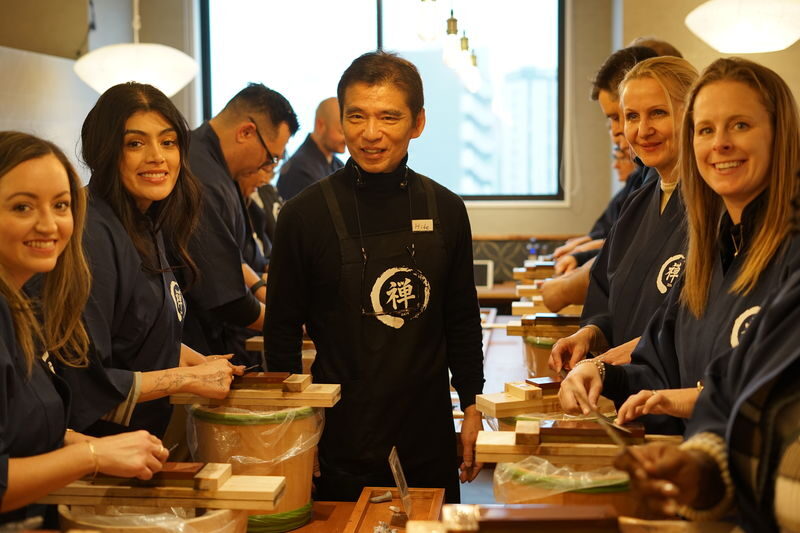
The workshop takes place at 禅 ZEN Craft Studio, on the 10th floor of the Tosei Building in Asakusa. It is a meet-up activity, not a guided walk or a transfer from your hotel. You arrive at the studio for your selected session, work with the instructor, then finish at the same address.
The experience is described as knife-making, but it helps to set the right expectation. The available details focus on choosing and refining a knife, sharpening it, polishing it, and adjusting the handle. This is hands-on craft, but the information does not promise a full forge process or the making of a blade from raw steel. If your dream is sparks, a furnace, and hammering hot metal, check with the studio before booking.
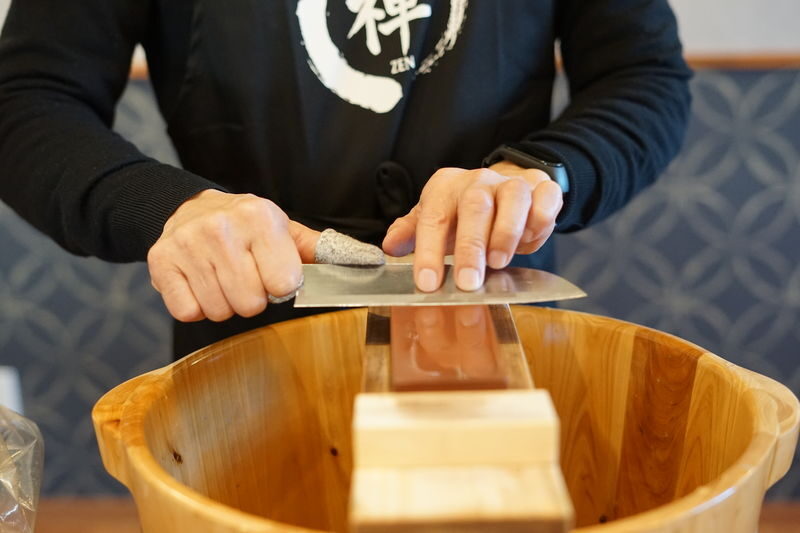
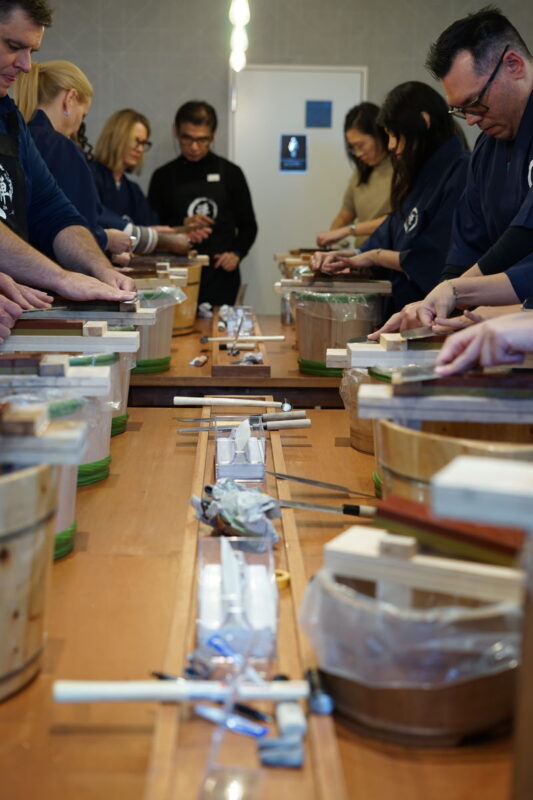
The work is practical and tactile. You are not simply handed a finished knife with a quick explanation. You take part in the process, and the instructor stays close to help you follow each step. Past sessions have included advice on sharpening and caring for Japanese knives, which gives the activity value beyond the hour itself.
You can also read our reviews of more tours and experiences in Tokyo

Learning to sharpen, one careful stroke at a time
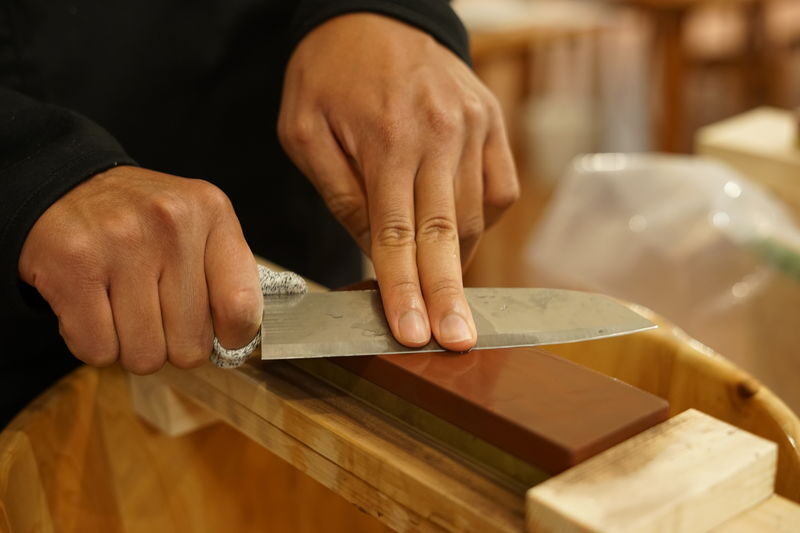
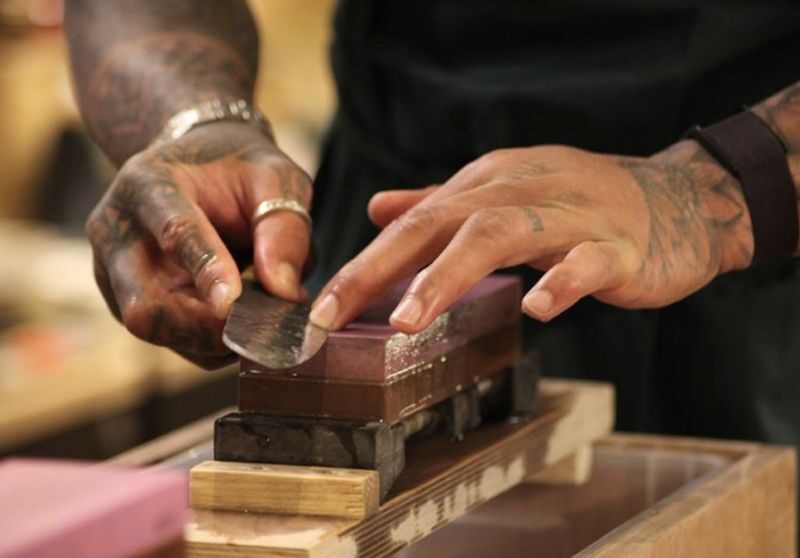
Sharpening is often the part that makes beginners uneasy. A blade is easy to damage if you rush or use the wrong angle, and that concern is especially understandable when you are working with a Japanese knife. Here, the point is to learn the basics under supervision rather than guess your way through it at home.
Expect the instructor to demonstrate and then guide you as you practise. Participants have praised teachers for being patient and clear, including when someone found the movements awkward at first. That matters: sharpening is a skill built through controlled movement, not brute force. The class is meant to help you understand what you are doing and why.
Instructors associated with the workshop include Satoru, Omar, Muto, Alberto, Krish, Hana, and others. The person teaching your session may vary, so do not book expecting one particular instructor. English is available, and the teaching style described across sessions is attentive and easy to follow. One instructor, Alberto, has also been noted for speaking Spanish, though you should confirm language availability if that is essential to your booking.
The name of the class may suggest that knife sharpening is only one small part of the activity. In practice, sharpening appears to be central to what you do. You can learn a useful technique, leave with a blade you have worked on, and gain a better sense of how to care for it. For a cook who has been nervous about using a whetstone, that lesson may be the most lasting part of the visit.
Finishing a knife that feels like yours
The workshop also gives you a chance to make choices about the knife’s final look and feel. The process includes final polishing and handle adjustments, and participants have described selecting blades and handles as part of the session. Those choices make the finished piece more personal than a standard shop purchase.
A few participants have mentioned upgrading the handle or adding engraving for an additional cost. Treat these as optional extras rather than part of the basic price, and ask the studio what is available and what it costs before you commit. If you want a personal inscription or a particular handle, allow a little room in your budget.
That hands-on finishing is what turns the knife into a meaningful souvenir. It is a reminder of time spent learning a Japanese craft, but it is also a tool you can put to work at home. The practical nature of the keepsake is a real plus, provided you cook enough to use it.
Why this works well for beginners and families
There is no age limit listed for the activity, and the teaching is designed to suit people without prior knife-making experience. Families have taken part, including with children, and instructors have been described as giving close help to younger participants. Still, a sharp blade calls for care and attention. If you are booking for a child, consider whether they can follow instructions and work calmly with a tool.
You do not need to arrive with knife knowledge. That is part of the appeal. A novice can ask basic questions, learn how to hold and guide the knife during sharpening, and get support if the movements do not come naturally right away. People who already cook may appreciate the chance to refine a skill they have been meaning to learn.
This is also a good activity for a family or pair who want to do something together without spending half a day in a class. You can work side by side, compare your finished knives, and take home a shared memory with a practical use. The one-hour format keeps the commitment modest, though it also means the class cannot cover every aspect of Japanese blades in depth.
A small studio visit in the middle of Asakusa
Asakusa is an easy area to build into a Tokyo day, and the workshop is located in the Tosei Building at 1 Chome-27-2 Asakusa, Taito City. The studio is on the 10th floor. Check the exact address and map before setting out, since the meeting point is a specific building rather than a general landmark.
Sessions are offered at selected times from 9:00 a.m. through 6:00 p.m. The return time is listed 1 hour and 15 minutes after the departure time, while the workshop itself lasts one hour. That extra quarter hour gives you a sensible buffer in your plans, but do not treat it as an open-ended visit. Arrive on time: people more than 15 minutes late may be asked to reschedule because later bookings can be affected.
The schedule makes it possible to pair the class with other plans in Asakusa. A morning session can leave you the rest of the day for sightseeing, while an afternoon booking can break up a day of temples and shopping. Just remember that the workshop is at a fixed time, so choose a slot that does not leave you racing across town.



Is $66.35 good value?
At a starting price of $66.35, this is not the cheapest way to buy a kitchen knife. You are paying for the guided experience as well as the finished item: instruction, time with the tools, hands-on sharpening, and a knife you have helped personalize. If you would otherwise buy a knife in a shop and never learn how to maintain it, the class offers a useful extra.
The value depends on what you want from the activity. For a cook, a knife enthusiast, or someone who likes learning a practical craft, the combination of instruction and a take-home tool can justify the price. For someone who only wants a polished souvenir and has little interest in the process, buying a knife may be simpler and less expensive.
Check what is included in the package before booking, especially if you are interested in a handle upgrade or engraving. Tips and personal expenses are not included. The workshop is cashless, and accepted cards include Visa, Mastercard, American Express, JCB, Diners Club, and Discover.
Practical details before you book
The activity is valid only on the date and time you select. You receive a mobile voucher, and confirmation is expected within minutes. If confirmation does not arrive, contact customer support rather than assuming the booking is complete.
You can cancel for a full refund if you do so at least 24 hours before the activity date, using the destination’s local time. The class is available to book as late as the day before, subject to availability. Since the workshop is cashless, bring a supported payment card if you plan to pay for any extras.
If you are flying home with the knife, check the rules that apply to your route and luggage before the workshop. The class provides a take-home knife, but airline and airport requirements are not specified here. It is better to sort out transport before you buy an item you will want to bring home.
Should you book the Asakusa knife workshop?
Book it if you want a short, hands-on activity that teaches a useful skill and leaves you with a personal, functional souvenir. The clearest strengths are the close instruction, the beginner-friendly pace, and the chance to practise sharpening instead of only hearing about it. It suits curious cooks, families with attentive children, and anyone who likes bringing home something they helped make.
Skip it if you are expecting a long blacksmithing session or a deep technical course in blade production. The hour is brief, and the activity centres on finishing and sharpening rather than a clearly specified forge process. For most visitors who want a practical craft experience in Asakusa, that is a fair trade: a focused lesson, good guidance, and a knife with a story attached.
Tokyo: Asakusa Japanese Knife Craft & Sharpening Workshop
“Omar was fantastic taking us through the knife making experiance”
FAQ
How long does the workshop last?
The knife-making workshop lasts one hour. The listed return time is 1 hour and 15 minutes after the selected departure time.
Where does the workshop meet?
Meet at 禅 ZEN Craft Studio in the Tosei Building, 10th Floor, 1 Chome-27-2 Asakusa, Taito City, Tokyo.
Is the workshop suitable for beginners?
Yes. The activity is described as suitable for beginners, with step-by-step instruction and supervision throughout.
Are English-speaking staff available?
Yes. English-speaking and Japanese-speaking staff are included.
What do I take home?
You leave with a handcrafted, functional kitchen knife that you helped finish and sharpen.
Are handle upgrades or engraving included?
They are not specified as included. Handle upgrades and engraving have been mentioned as paid options, so ask the studio about availability and cost.
Is there a minimum age?
No age limit is listed for the activity.
Can I pay with cash?
No. The workshop is cashless and accepts Visa, Mastercard, American Express, JCB, Diners Club, and Discover.
What happens if I arrive more than 15 minutes late?
You may be asked to reschedule, since a late arrival can affect later reservations.