Asakusa is more than a temple stop. This walk uses its river, gates, shopping street and places of worship to explain Japan’s history, from long isolation to renewed contact with the world. You finish with a clearer sense of how Buddhism and Shinto have shared this corner of Tokyo.
I especially like two things: the route links familiar sights to bigger ideas, and it gives you time at Nakamise Street to browse for snacks and souvenirs. The small group, capped at eight, should also make it easier to ask questions as you go.
The main tradeoff is the tight schedule. The tour lasts about two hours, and 30 minutes at Nakamise is the only substantial free-browsing window. If you want a long temple visit or a leisurely meal, plan extra time afterward.
- The Sumida River sets the scene: Start by the water, with views of Tokyo Skytree and the Asahi Breweries building.
- A local guide puts the landmarks in context: Expect explanations of Buddhism, Shinto, Japan’s global connections and ukiyo-e prints.
- Nakamise offers a short taste of old-school shopping: You get 30 minutes for street food and souvenirs along the approach to Senso-ji.
- Senso-ji is more than a photo stop: The route includes its gates, main hall, incense burner, fortunes and five-storied pagoda.
- The group stays small: A maximum of eight participants keeps the walk intimate; an earphone guide system applies to groups of three or more.
- It’s a useful introduction, not a full-day visit: The walk runs from 9:30 to about 11:30 and ends near Senso-ji.
- Asakusa as a key to Japan’s bigger story
- From the Sumida River to the city’s modern skyline
- Kaminarimon and the approach to Senso-ji
- Hozomon, the inner gate
- Inside Senso-ji’s main grounds
- Asakusa Shrine and the meeting of traditions
- What the guide and small group add
- Is .55 good value?
- Practical details before you go
- Who should book this Asakusa walk?
- FAQ
- How long is the Asakusa walking tour?
- Where is the meeting point?
- How early should I arrive?
- Where does the tour end?
- How many people can join?
- Is an earphone guide included?
- Is the tour conducted in English?
- Are food and drinks included?
- What is included in the price?
- Can I cancel for a refund?
- The Best Of Tokyo!
- More Walking Tours in Tokyo
- More Tours in Tokyo
- More Tour Reviews in Tokyo
Asakusa as a key to Japan’s bigger story
 1 / 10
 2 / 10
 3 / 10
 4 / 10
 5 / 10
 6 / 10
 7 / 10
 8 / 10
 9 / 10
 10 / 10
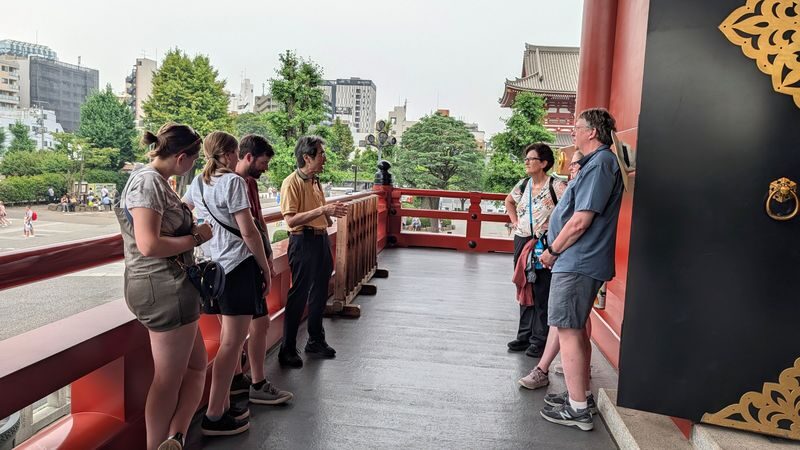
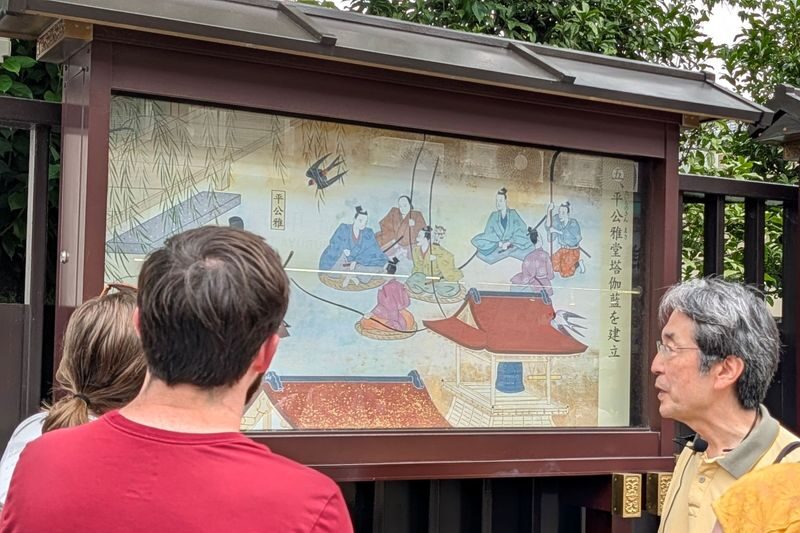
This tour’s best idea is its use of place as a guide to history. Instead of treating Asakusa as a string of photo stops, it connects the Sumida River, Senso-ji and Asakusa Shrine to wider themes: Japan’s shift from isolation to international contact, religious traditions, and cultural exchange with Europe.
That framing makes a difference if this is your first visit to Tokyo. You still see the district’s best-known landmarks, but you also get a way to make sense of them. The guide covers Buddhism and Shinto, compares Japanese and Western dragons, and explains how ukiyo-e prints influenced European art. These topics give you more to notice as you walk, and more context to carry into the rest of your Japan trip.
The outing is scheduled for two hours, from 9:30 to 11:30. It’s a brisk introduction rather than an exhaustive tour of the neighborhood. You’ll cover a good range of sights, but the value lies in the guide’s explanations, not in spending a long time at each stop.
👉 See our pick of the Our Picks For The 11 Best Workshops & Classes In Tokyo
From the Sumida River to the city’s modern skyline
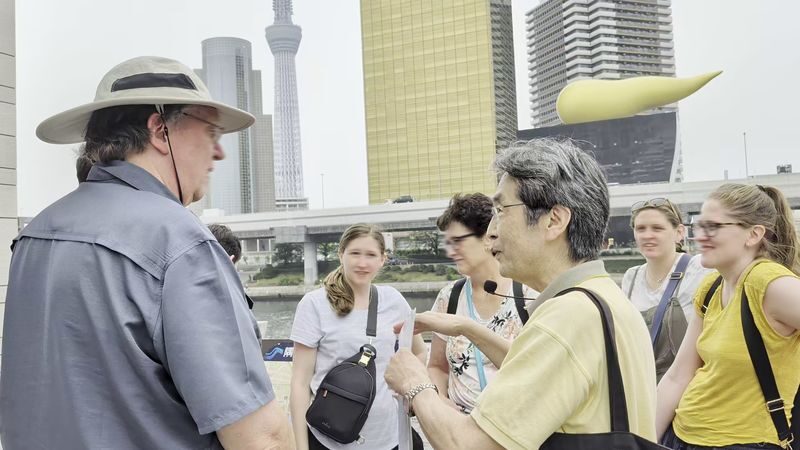
The walk starts at Sumida Park, where Asakusa’s story meets the river. You’ll cross Azumabashi Bridge and see Tokyo Skytree, along with the Asahi Breweries headquarters and its well-known golden flame object. This opening gives you a quick contrast: historic Asakusa on one side, a modern Tokyo skyline in view.
The river also sets up one of the tour’s larger themes. The guide uses it to discuss how Japan moved from centuries of isolation to reopening under pressure from the wider world. That’s a lot to cover in a short stop, so think of it as a broad outline rather than a detailed history lesson. Still, it’s a useful way to begin: the city around you becomes part of the story, not just a backdrop.
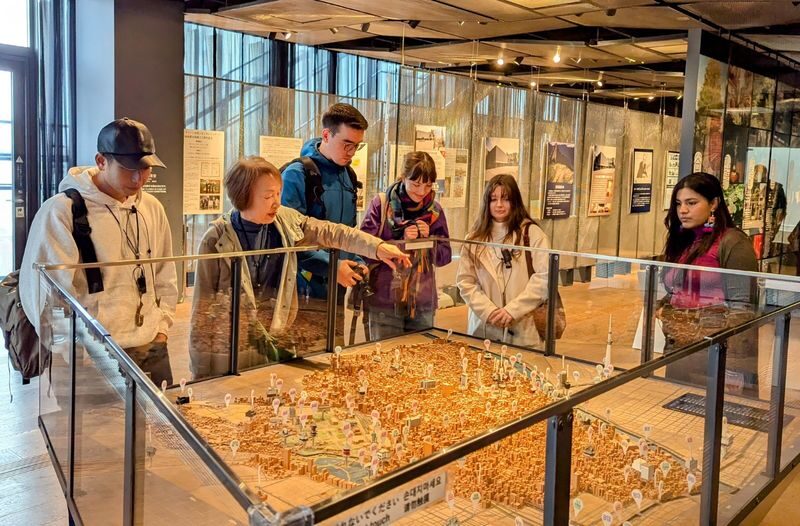
From there, you’ll walk to the Asakusa Culture Tourist Information Center. It serves as a source of sightseeing information, but the building itself is also a newer attraction in the area. This is a brief stop, so don’t expect a long visit inside. Its place on the route helps mark the transition from the riverfront toward the older temple district.
You can also read our reviews of more walking tours in Tokyo


Kaminarimon and the approach to Senso-ji
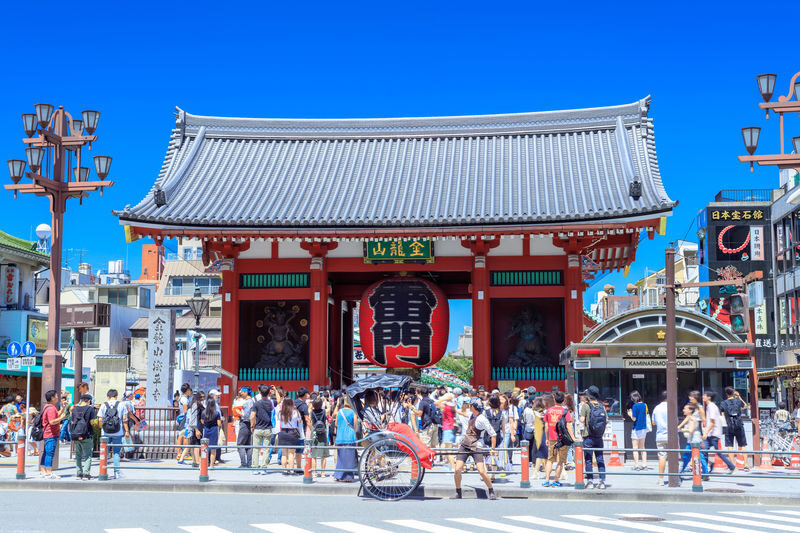
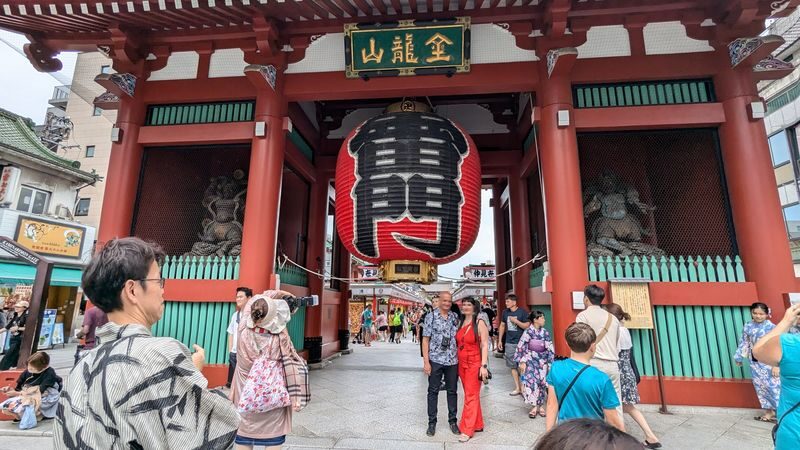
Kaminarimon, or the Thunder Gate, is one of the two large gates leading to Senso-ji. Its giant red lantern makes it one of Asakusa’s most recognizable landmarks, and it’s easy to see why people stop for photos. The guide’s job here is to get beyond the familiar image and explain the gate and lantern rather than simply ushering you through.
That added context is especially useful at a busy landmark. You’ll be standing in a place many people recognize, but a good explanation can turn a quick snapshot into a better understanding of the temple approach and its role in the district.
Nakamise-dori stretches about 250 meters between Kaminarimon and Senso-ji’s main hall. Its line of souvenir shops and food stalls makes this more than a passageway. The tour gives you 30 minutes here, which is the best chance during the walk to browse, pick up a small souvenir or try street food.
Meals and drinks are not included, so budget separately if you want to buy something. With half an hour, you’ll need to choose between a slow browse and a snack stop. If you want to linger over food or shop at an unhurried pace, return after the tour.
Hozomon, the inner gate
Hozomon is the inner of the two large gates on the way to Senso-ji. Its second story houses temple treasures, while the first story contains objects the group will see during the visit. The tour allots about 15 minutes here, enough for a guided look and a few photographs, but not a long pause.
The two gates give the approach a sense of progression. Kaminarimon announces the entrance; Hozomon brings you closer to the temple’s central grounds. If you’re used to walking straight to a famous building, this route helps you notice how the approach itself shapes the visit.
Inside Senso-ji’s main grounds
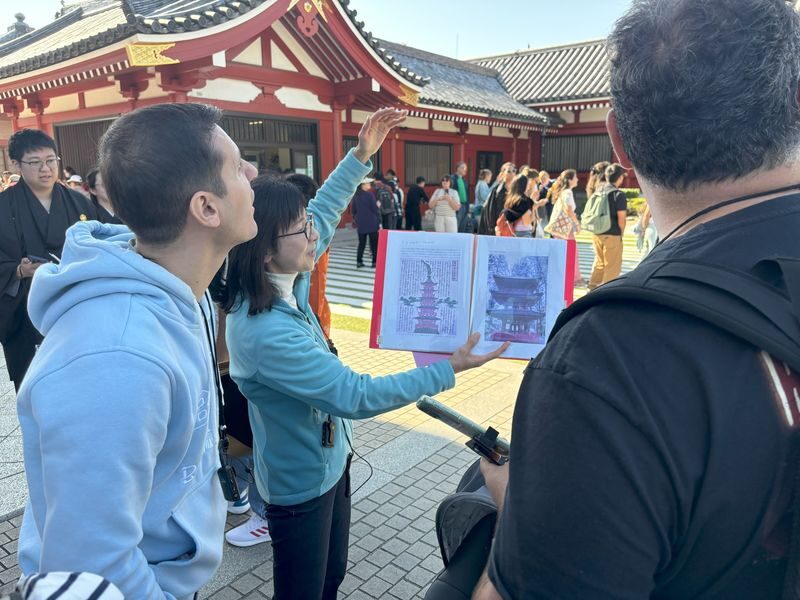
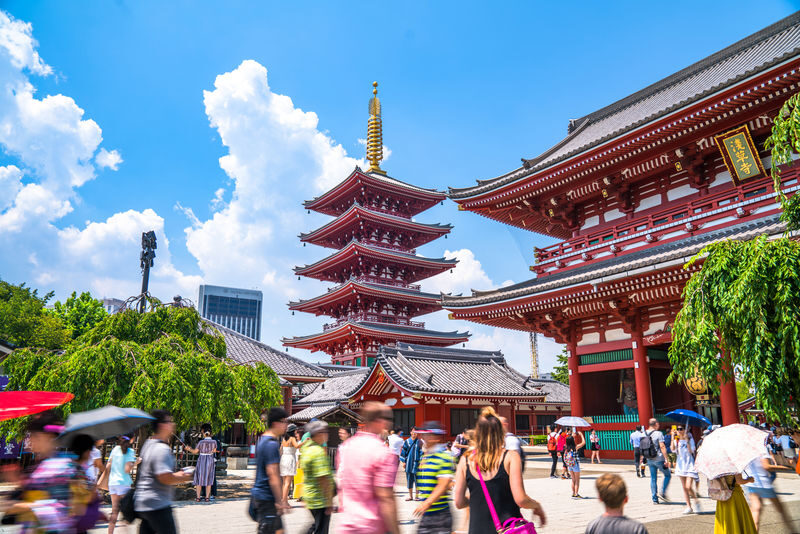
Senso-ji is Tokyo’s oldest temple, and the tour gives you about 15 minutes around its main hall. The guide points out features including paper fortunes, the five-storied pagoda and the incense burner. You’ll also step inside the main hall, where local people come to worship.
That short visit is one of the tour’s most useful parts. A temple can be visually striking but hard to read if you don’t know what you’re seeing or how people use the space. Here, the guide helps you connect the objects and practices to the Buddhist beliefs introduced earlier.
The time limit is worth keeping in mind. You’ll get an introduction to the grounds, not a quiet, extended temple visit. If you want to spend longer looking around, leave room in your day to return once the guided walk ends.
Asakusa Shrine and the meeting of traditions
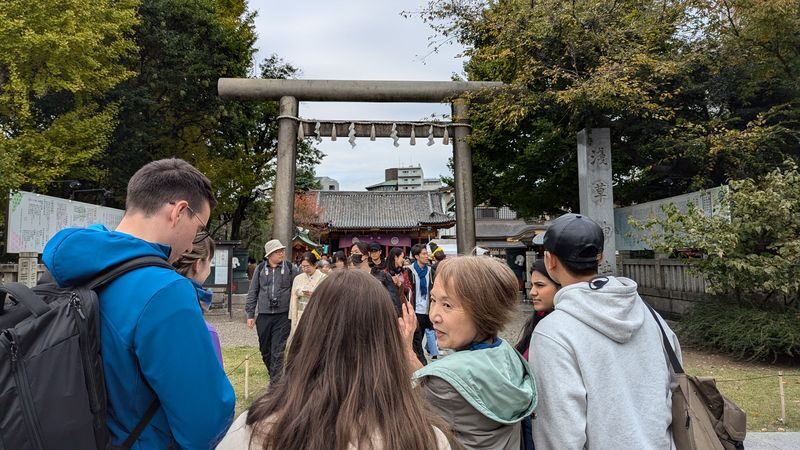
The final stop is Asakusa Shrine, located on the same grounds as the Buddhist temple. The guide explains how a Buddhist temple and a Shinto shrine came to coexist here for more than a millennium, sharing origins and worshippers. It’s a strong ending because it brings the walk’s discussion of religion into focus at a real place.
The tour also builds a basic foundation in Buddhism and Shinto along the way. You don’t need prior knowledge to follow the explanations, and the comparison helps make sense of why both traditions matter in Japan. Rather than treating them as competing labels, this stop shows how the two have lived alongside each other at this site.
The walk ends near Senso-ji at around 11:30. That’s a practical place to finish: you can stay in the temple area, return to Nakamise, or continue exploring Asakusa on your own.
You can also read our reviews of more historical tours in Tokyo


What the guide and small group add
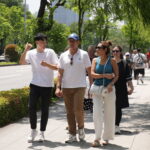
The English-speaking guide is central to the experience. The route includes several famous places you could visit independently, but the explanations are what connect them into a coherent account of Japanese history and culture. The group is limited to one to eight participants, which gives you a better chance to hear the guide and ask questions than you’d get in a large coach group.
Past guides named by participants include Kay, Taka-san and Keiko. Their comments point to the qualities that matter on a short history walk: clear explanations, patience with questions, a friendly manner and, in Taka-san’s case, help taking photos. Guide assignments can vary, so you shouldn’t expect a particular person on your date.
For groups of three or more, an earphone guide system helps you hear the guide from a little farther away. It’s a practical feature in a popular district, where the group may not always be able to stand close together. For one- or two-person bookings, the system does not apply.
Is $23.55 good value?
The tour starts at $23.55 per person. At that price, you’re paying for a guided route and interpretation, not for meals, drinks or personal purchases. The landmarks themselves are part of the walk; the main added value is having someone explain their history and cultural meaning in English.
I’d consider it especially good value if you’re new to Asakusa, want an organized introduction, or have limited time in Tokyo. The guide’s connections between local sights and larger topics can help you get more from later visits to temples and shrines. The small group is another plus at a modest starting price.
It’s less suited to someone who already knows the area well, prefers to explore at their own pace, or wants a long stop for shopping and food. In that case, you could visit the landmarks independently and spend the full morning where you like. Remember that the price is listed as a starting rate, so check the total for your chosen date and package before booking.
Practical details before you go
The meeting point is outside the Burger King next to Exit 4 of Asakusa Station on the Ginza Line. The listed location is Burger King Asakusa Azumabashi, at Cross Bil Royal Palace, 2 Chome-20-6 Kaminarimon. Arrive at least five minutes before the 9:30 departure; late arrivals and no-shows are not refundable.
The tour finishes near Senso-ji around 11:30. The schedule can change with traffic and weather, and the voucher is valid only on the date and time you book. You’ll present a mobile voucher. Confirmation should arrive within minutes; contact customer support if it doesn’t.
Meals, drinks and personal expenses are not included. The operator provides insurance. You can cancel for a full refund if you do so at least 24 hours before the activity date, using local time; late arrivals and no-shows do not qualify for a refund.
Who should book this Asakusa walk?
I’d book it if you want more than a checklist of famous sights. It suits first-time visitors, curious families and anyone who likes learning the meaning behind a place while walking through it. One family found the two-hour length manageable with a toddler, though the walk still involves moving between several stops.
The strongest reason to go is the guide’s ability to connect Asakusa’s landmarks with broader themes. The main reason to skip it is if you need lots of free time at each stop. Book the walk for a concise, well-structured introduction, then leave yourself the rest of the morning to explore at your own pace.
Asakusa: Big-picture History Walk to Know Japan
“This was a wonderful tour guided by a lovely tour guide who seemed very passionate about the history and culture. Embarking on this tour made us so…”
FAQ
How long is the Asakusa walking tour?
It runs from 9:30 to about 11:30, for roughly two hours. The schedule may change with traffic and weather.
Where is the meeting point?
Meet outside the Burger King next to Exit 4 of Asakusa Station on the Ginza Line. The listed location is Burger King Asakusa Azumabashi at Cross Bil Royal Palace, 2 Chome-20-6 Kaminarimon.
How early should I arrive?
Arrive at least five minutes before the 9:30 departure. Late arrivals and no-shows cannot be refunded.
Where does the tour end?
It ends around Senso-ji Temple, at about 11:30.
How many people can join?
The group size is limited to one to eight participants.
Is an earphone guide included?
An earphone guide system is provided for groups of three or more. It does not apply to groups of one or two.
Is the tour conducted in English?
Yes. An English-speaking guide is included.
Are food and drinks included?
No. Meals, beverages and other personal expenses are not included. Nakamise Street has food stalls and souvenir shops, with about 30 minutes scheduled there.
What is included in the price?
The package includes an English-speaking guide, an audio guide and insurance provided by the operator. Meals, drinks and personal expenses are extra.
Can I cancel for a refund?
A full refund is available if you cancel at least 24 hours before the activity date, using local time. Refunds or changes are not available for late arrivals or no-shows.