Mount Fuji shares the frame with a red pagoda, a small-town street, clear spring ponds and even a Lawson convenience store on this full-day photo circuit from Tokyo. I like the mix of classic viewpoints and everyday scenes, and the seasonal stop gives you a chance to see cherry blossoms, autumn leaves or summer flowers when conditions line up.
The trade-off is a long day with several short visits, not a slow exploration of the Fuji area. You’ll also climb 397 steps at Arakurayama Sengen Park, and Mount Fuji can disappear behind clouds, so the best photos are never guaranteed.
- The best reasons to consider this Fuji day trip
- A long loop from Tokyo, built around photographs
- Arakurayama Sengen Park: the pagoda and Fuji in one frame
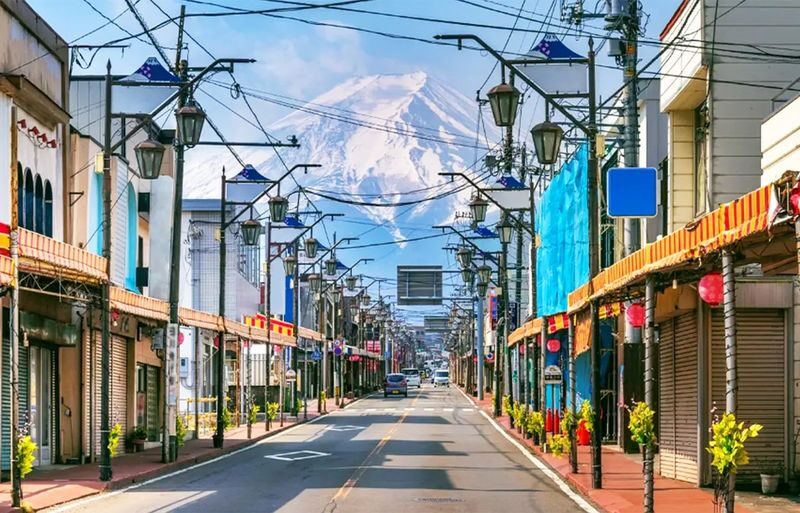
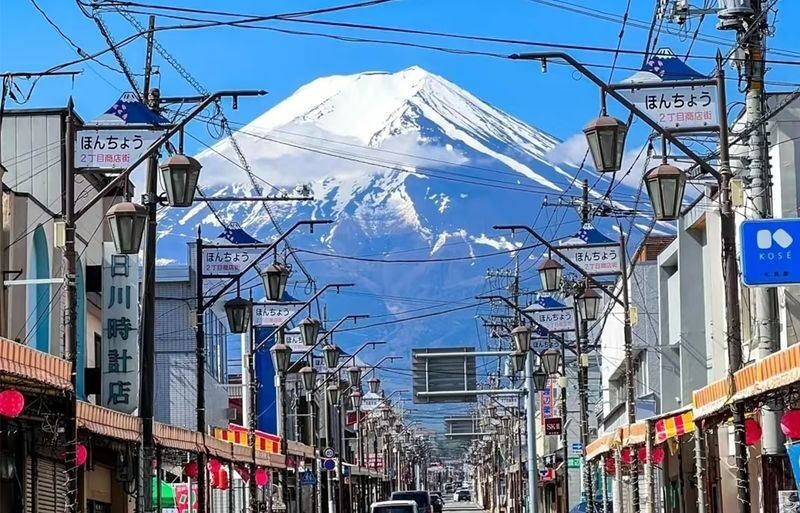
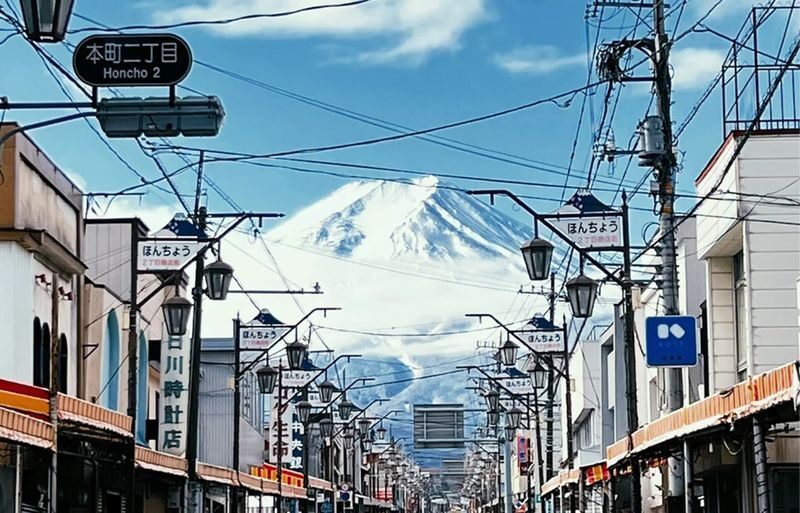
- Hikawa Clock Shop: a town street aimed at Fuji
- Oshino Hakkai: spring water and eight ponds
- The Lawson photo stop: ordinary Japan, unusual backdrop
- Lake Kawaguchiko’s seasonal finale
- What the price buys, and what it does not
- Who should book this tour
- FAQ
- What time does the tour leave Tokyo?
- Where does the tour return in Tokyo?
- Is the vehicle private?
- Are meals included?
- How many steps are there at Arakurayama Sengen Park?
- Does the Lake Kawaguchiko stop change by season?
- The Best Of Fujiyoshida!
- More Shopping Tours in Fujiyoshida
- More Tours in Fujiyoshida
- More Tour Reviews in Fujiyoshida
The best reasons to consider this Fuji day trip
 1 / 9
 2 / 9
 3 / 9
 4 / 9
 5 / 9
 6 / 9
 7 / 9
 8 / 9
 9 / 9
- 397 steps to the pagoda viewpoint: Pair Mount Fuji, the five-storied pagoda and Fujiyoshida’s rooftops in one wide view.
- Street-level Fuji photos: Hikawa Clock Shop and Lawson put the mountain into ordinary town scenes, not just postcard panoramas.
- Oshino Hakkai’s clear spring water: See eight ponds fed by water filtered through Mount Fuji’s snow and sample the spring water.
- A seasonal Kawaguchiko stop: The final park changes with the calendar, from cherry blossoms to maples and summer flowers.
- A full day without planning the route: Round-trip transport from Tokyo links the scattered stops, with a guide and multilingual staff included.

👉 See our pick of the 8 Most Highly Rated Private Driver Services In Fujiyoshida
A long loop from Tokyo, built around photographs
The tour leaves Tokyo in the morning, with departure times listed at 8:00 and 8:30. You need to arrive 10 minutes early at the meeting point assigned to your booking. This is a carpool trip, so late arrivals are not accommodated and do not receive a refund. Confirm the precise meeting point and departure time before setting out.
The return is planned for about 18:50, at either the Marunouchi Police Department Tokyo Station Police Box or Tokyo Mode Gakuen, depending on the option selected. Traffic and weather can shift the schedule, so keep the evening free rather than booking a tight connection or dinner reservation.
That day-long vehicle ride is a real part of the value. The sights are spread around the Fujiyoshida and Lake Kawaguchiko area, and arranging the same circuit yourself from Tokyo would mean coordinating transport between several places. Here, you can leave the route to the driver and focus on getting out, looking around and taking pictures.
It is not a private tour. The trip is described as a carpool, and the group size is not specified. Staff are listed for English, Chinese, Japanese, Korean and Hindi. Recent departures have had guides named Liu and Sia, but you should not assume you will have either one.
You can also read our reviews of more shopping tours in Fujiyoshida

Arakurayama Sengen Park: the pagoda and Fuji in one frame
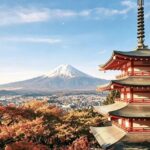
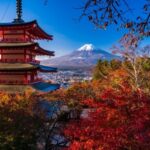
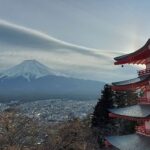
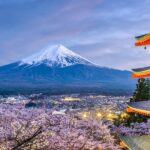
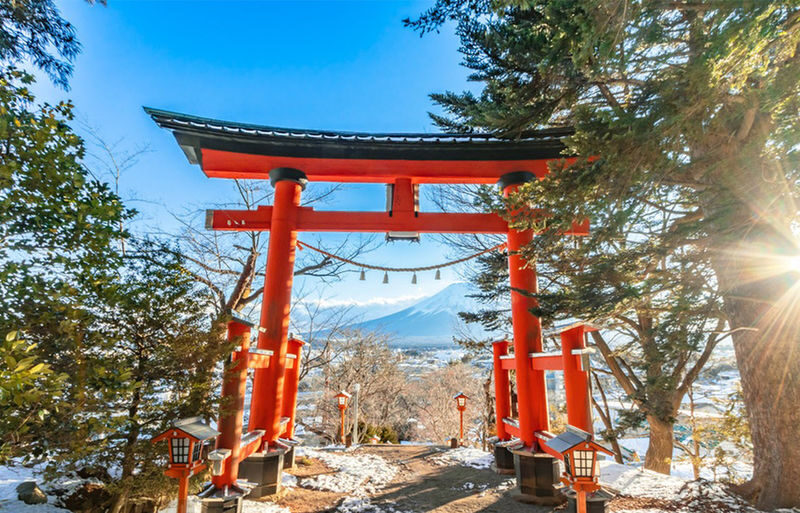
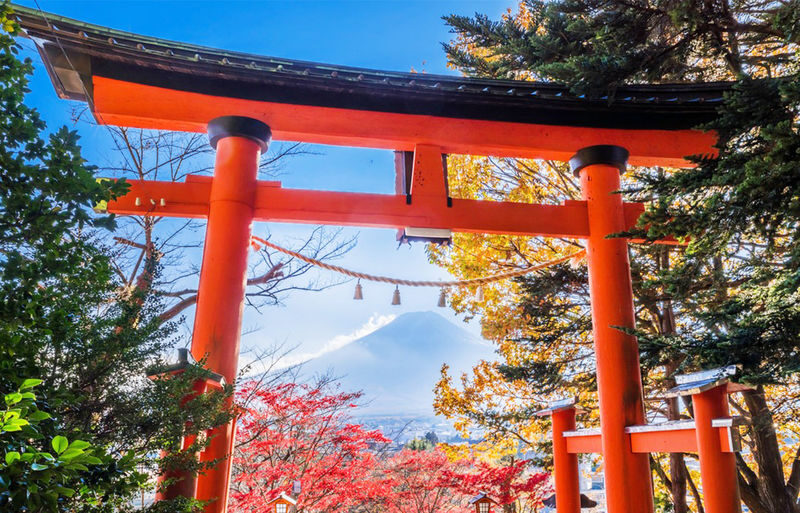
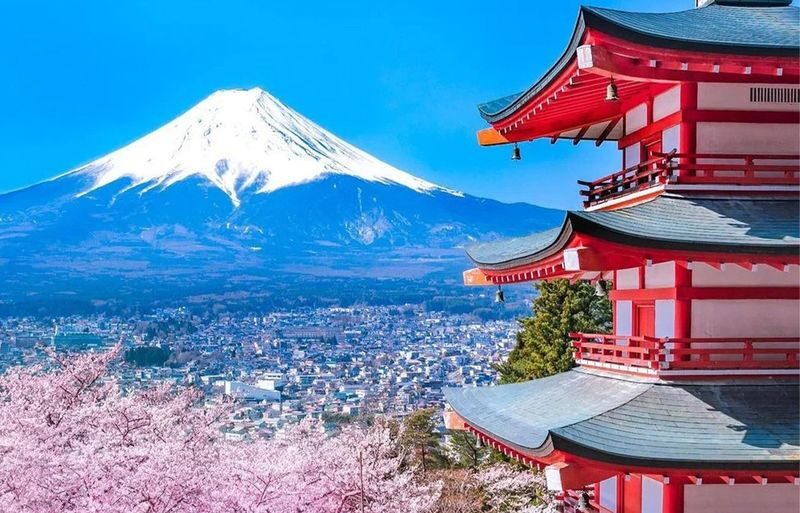
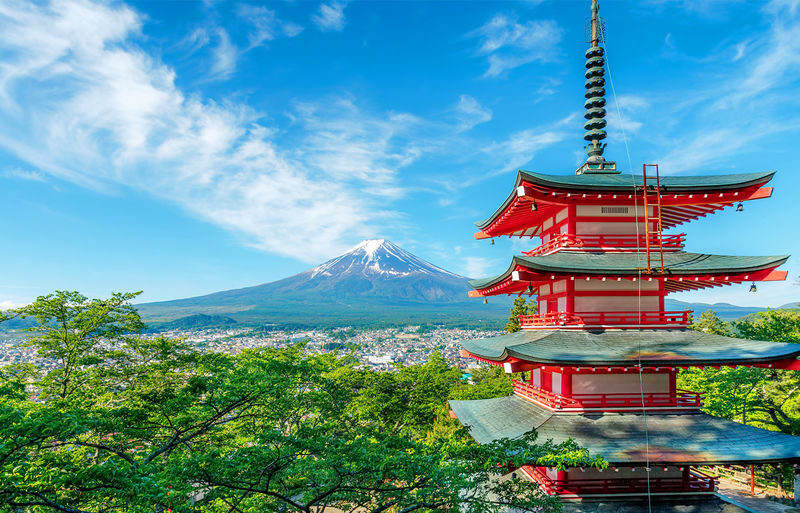
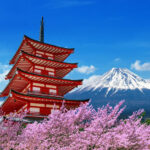
The first major stop is Arakurayama Sengen Park, reached at about 10:30, with an hour for a self-guided visit. Its famous viewpoint brings together Mount Fuji, the red five-storied pagoda and the town below. It is the image many people associate with Fujiyoshida, and for good reason: the mountain feels part of the town rather than a distant backdrop.
Getting to the main viewing platform involves climbing 397 steps. Take your time, especially if you are not used to stairs, and wear shoes you can comfortably walk in. The time allowance is about an hour, so the climb and photo stops take up much of the visit. You do not have to make the viewing platform your only reason to stop: a recent departure also offered the option of making a wish at the shrine for someone who preferred not to climb.
The view depends on visibility. On a clear day, the pagoda’s vermilion roof and Mount Fuji’s broad profile give you the classic composition. If clouds cover the summit, you still have the town and park, but the defining mountain view may be hidden. The tour cannot control that, so come for the whole route rather than treating this one photograph as a sure thing.
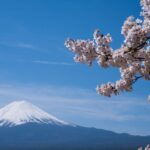
The park’s seasonal appeal changes with the calendar, too. Cherry blossoms can add color in spring, while other seasons bring different tones to the same town-and-mountain view. The park is popular for photography, so expect to share the viewpoint rather than have it to yourself.
Hikawa Clock Shop: a town street aimed at Fuji
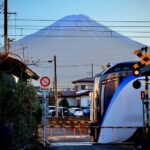
Around 11:45, you get about 20 minutes at Hikawa Clock Shop. The draw is the straight street that seems to point toward Mount Fuji, creating a strong line from the foreground toward the mountain. It is a different kind of picture from the pagoda: less sweeping panorama, more town life and perspective.
The short stop is enough to take a few frames, but not enough for a leisurely wander. This is a working street, so be considerate when you take photos and follow any local instructions. The composition also depends on the mountain being visible; if clouds settle in, the street remains, but the visual tunnel loses its main destination.
Together, the first two stops give you two distinct views of Fujiyoshida. The park looks across the city from above, while Hikawa Clock Shop puts you at street level. That contrast is part of the appeal of a photography-focused itinerary.
Oshino Hakkai: spring water and eight ponds
At about 12:30, the tour allows an hour and a half at Oshino Hakkai, the longest stop of the day. The village is known for eight clear springs fed by snowmelt from Mount Fuji. Water filters through the mountain before emerging in the ponds, which are designated a natural monument.
This is a good place to slow your pace. Look into the clear water, watch how the ponds reflect their surroundings, and taste the spring water if you wish. The setting offers a quieter contrast with the busy viewpoints and street-photo stops, though the ponds are a well-known destination rather than a secluded secret.
You are on your own during this stop, so use the time in the way that suits you. There is room to look around and take photos, and the tour notes that a lunch place is part of the stop. Meals and drinks are not included, so budget separately for lunch and any snacks or purchases. One recent visitor particularly enjoyed trying wagyu at the lunch stop, but the meal itself is not guaranteed or included in the tour price.
The Lawson photo stop: ordinary Japan, unusual backdrop
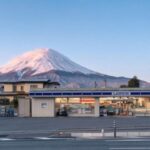
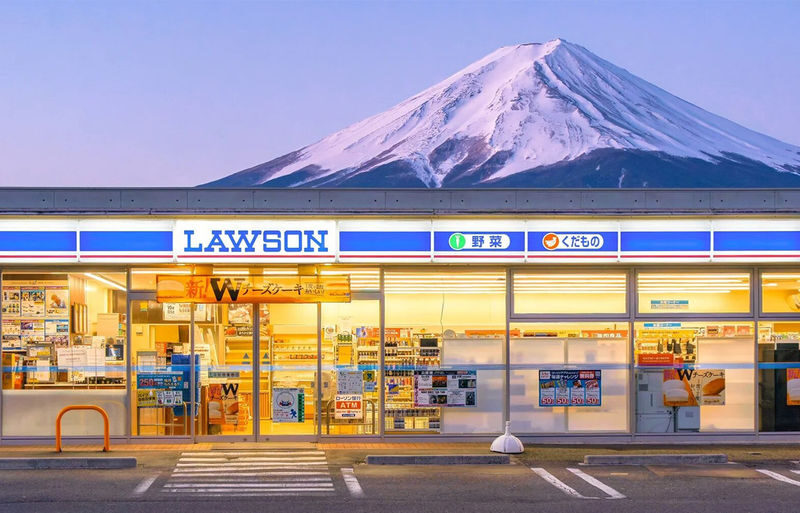
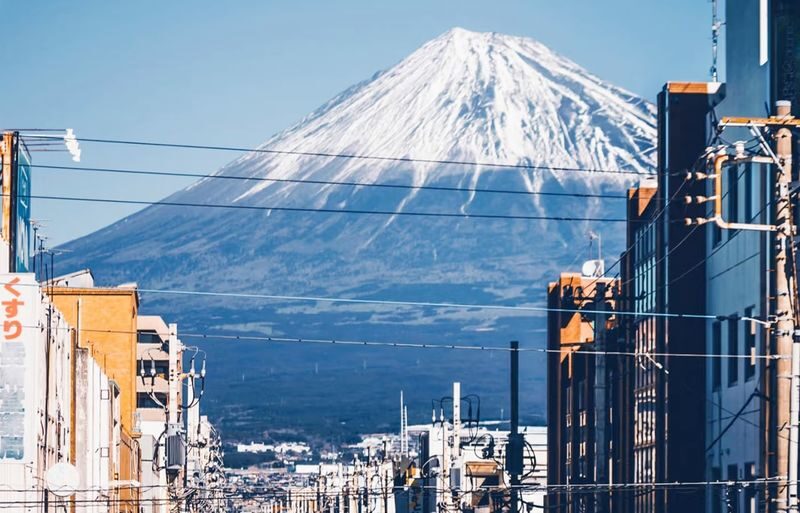
At about 14:30, you have 20 minutes at a Lawson convenience store near Lake Kawaguchi. The photo idea is simple: capture the shop sign and familiar street scene with Mount Fuji behind it. It is an amusing contrast, and a reminder that the mountain is part of daily life here, not only a wilderness spectacle.
This is a brief, self-guided stop. You will have time to take the intended photo, but not to linger or browse at length. The precise view depends on visibility and where you can safely stand. Follow the guide’s directions and local traffic rules rather than stepping into the road for a better angle.
The stop is a little different from the shrine, pond and park scenery elsewhere on the route. If you like photographs that show place through everyday details, it may be one of your favorites. If you prefer nature-only views, it may feel more like a quick novelty.
You can also read our reviews of more photography tours in Fujiyoshida
Lake Kawaguchiko’s seasonal finale
The final stop begins at about 15:20 and lasts roughly 50 minutes. The precise location changes by season, which is one of the tour’s most useful planning details. From April 1 to 13, the itinerary lists the Kawaguchiko Cherry Blossom Festival. In November, it switches to the Maple Leaf Corridor. In other months, the stop is at Oishi Park.
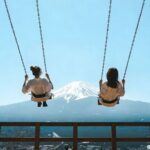
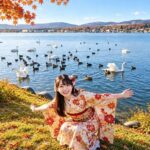
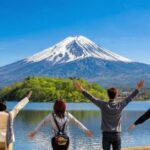
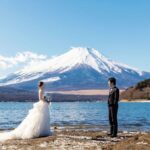
Oishi Park looks out across Lake Kawaguchiko toward Mount Fuji. From June through September, the tour highlights lavender and kochia flowers, while the winter description points to snow views in December through February. The displays and conditions vary, so think of these as seasonal possibilities rather than a promise of a particular bloom or snow-covered scene.
This calendar-based approach means the same tour can feel different at different times of year. It also helps avoid spending the final stop at a location whose main seasonal feature is out of season. Still, the schedule is subject to weather and traffic, and nature does not work to a booking calendar. If a specific flower or leaf color is your main reason to book, check its dates and typical timing close to your travel day.
What the price buys, and what it does not
The advertised starting price is $50.45, while the listed gather-and-board package is from $72.05. Check the price and package shown for your date before booking, since the figures supplied do not establish that every departure costs the same. The useful comparison is what you get for the fare: round-trip transport from Tokyo, staff in several listed languages and a route that covers five photo stops in one day.
That can be good value if you want to see the main Fuji-area sights without arranging several separate connections. You are paying for a structured circuit and the time saved, not for meals, drinks or a private vehicle. Lunch and personal expenses are extra, and gratuities are not included.
The pace is the other part of the calculation. The schedule gives you time to see each place, but the 20-minute stops are strictly for quick visits. Oshino Hakkai gets more room, while the major park viewpoint has an hour that includes the stair climb. If you prefer to linger, sketch, shop or wait for changing light, a self-planned trip may suit you better.
Who should book this tour
I’d consider this trip if you are based in Tokyo, have one day for Mount Fuji, and want a range of recognizable photo settings without managing the transport yourself. It suits photography-minded visitors, first-time visitors to the Fuji area, and anyone who likes a busy day with clear stops and some time to explore independently.
It is less suited to anyone who wants a quiet, unhurried day or a guaranteed view of the mountain. The route covers a lot, but weather can hide Fuji, and traffic can change the timing. The stair climb may also be a factor for you or someone in your party. Children aged 0 to 2 can join free if they do not need a separate seat; there is no stated age limit for the activity.
The service can make a difference when the road does not cooperate. On one recent trip, guide Liu rearranged the route after a traffic accident; guide Sia was also singled out for taking care of the group. Those examples are useful signs of what good guidance can add, though guide assignments vary and no one can promise a traffic-free day.
If you are comfortable with the early start, shared vehicle and short photo stops, this is a practical way to collect several classic Fuji views in one outing. Book it for the varied route and the convenience, not for a guarantee that the mountain will appear on cue.
Fuji Photography Tour: Arakurayama Sengen Park, Hikawa Clock Shop, Oshino Hakkai, the most beautiful Lawson convenience store, and Lake Kawaguchiko Oishi Park (Departure from Tokyo).
“Tour guide Liu was very dedicated and considerate of all passengers. When we encountered a traffic accident today, he did an excellent job of rearr…”
FAQ
What time does the tour leave Tokyo?
Departure times are listed as 8:00 and 8:30. Arrive at the designated meeting point 10 minutes before your selected departure.
Where does the tour return in Tokyo?
The listed return locations are the Marunouchi Police Department Tokyo Station Police Box and Tokyo Mode Gakuen. The expected return time is around 18:50, but traffic and the day’s progress can change it.
Is the vehicle private?
No. The trip is described as a carpool tour. Round-trip transfers to and from the meeting point are included.
Are meals included?
No. Meals, beverages, personal expenses and tips are not included. The Oshino Hakkai stop includes time for lunch, but you pay for your own food and drinks.
How many steps are there at Arakurayama Sengen Park?
The route to the classic viewing platform involves 397 steps. A recent tour also offered the option of making a wish at the shrine for someone who did not want to climb.
Does the Lake Kawaguchiko stop change by season?
Yes. The tour lists the Cherry Blossom Festival from April 1 to 13, the Maple Leaf Corridor in November, and Oishi Park in other months. The schedule may change with weather and traffic.