The appealing twist here is that a beginner’s Japanese class shares the hour with a traditional tea ceremony. You learn practical phrases for ordering food, shopping, and asking directions, then get a local introduction to the manners that help you use them with care.
I like two things in particular: the focus on language you can use right away, and the chance to ask about everyday Tokyo life rather than stick to a textbook script. Sho is praised for explaining the difference between classroom Japanese and natural street terms, while Casey is described as patient and flexible with mixed skill levels.
One consideration: this is an introductory class, not a full language course, and the tea ceremony’s format and depth are not specified. At a starting price of $23.65, it is best value if you want a friendly orientation and cultural context, not a long lesson or a formal tea ceremony.
- Practice phrases for real errands: Work on basic Japanese for ordering food, shopping, and asking for directions.
- Compare textbook and everyday speech: Sho has explained how classroom wording can differ from terms used in daily life.
- Learn manners through tea: The session pairs basic language with a traditional tea ceremony and etiquette.
- Ask local questions: The class can leave room for Tokyo tips, train navigation, and other practical topics.
- Meet in Shibuya: The classroom is at 雑煮屋鳥居, on the B1 floor, to the right of a hair salon.
- Keep expectations modest: This is a basic, join-in lesson, with no stated duration or guaranteed group size.
- A language class built for your first days in Tokyo
- Learning classroom Japanese and everyday speech
- The tea ceremony adds a lesson in manners
- A local perspective beyond the phrase list
- Finding the classroom in Shibuya
- What .65 buys you
- Who will get the most from this class
- Booking details to keep in mind
- Should you book this Japanese class?
- FAQ
- What is included in the class?
- Where does the class meet?
- What will I learn?
- Is a tea ceremony part of the activity?
- How much does the activity cost?
- What is the minimum age?
- Is English-speaking help available?
- How do I present my booking?
- Can I change or cancel my booking?
- The Best Of Tokyo!
- More Workshops & Classes in Tokyo
- More Tours in Tokyo
- More Tour Reviews in Tokyo
A language class built for your first days in Tokyo
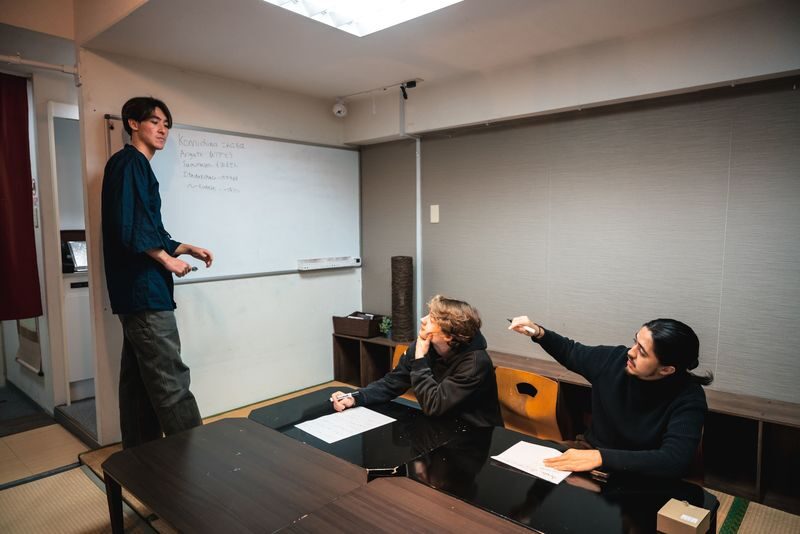 1 / 5
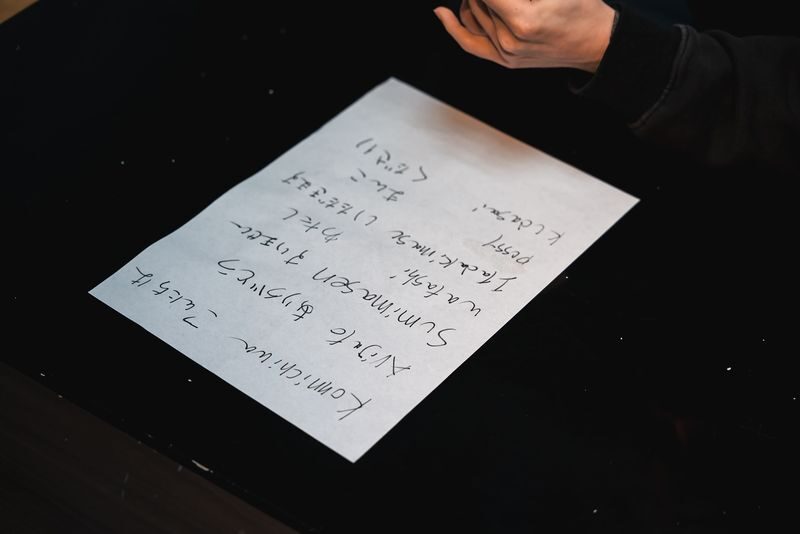 2 / 5
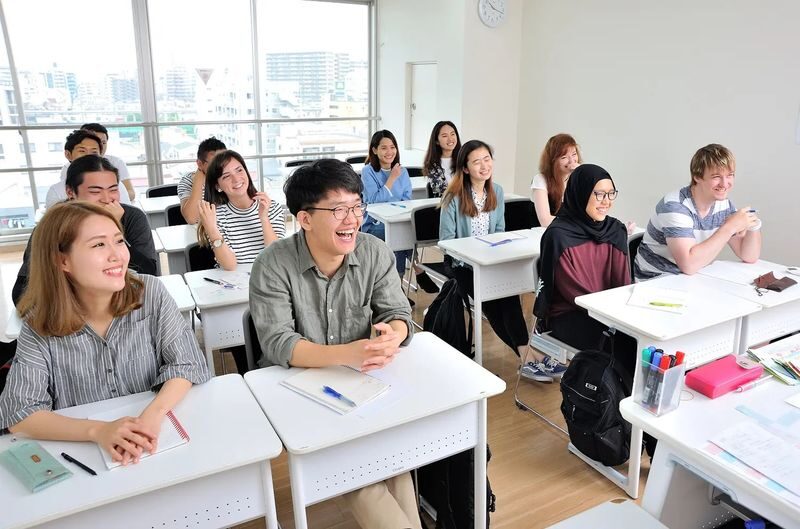 3 / 5
 4 / 5
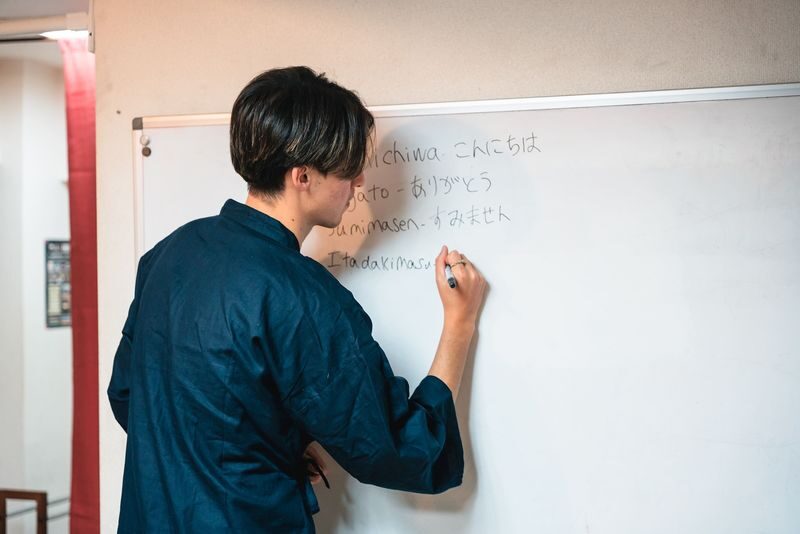 5 / 5
This class is most useful before you have settled into the rhythms of Tokyo. You do not need to aim for fluency. You need a few words that make small exchanges easier, and enough cultural context to know when a polite phrase or gesture matters.
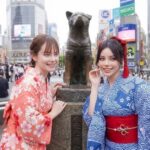
The lesson is designed around travel situations: ordering sushi or other food, buying souvenirs, and asking how to get somewhere such as Shibuya Crossing. That practical focus matters. A phrase you can use at a counter or station is more likely to stick than a long list of grammar rules.
The session also addresses expressions and gestures, so you are not learning words in isolation. A greeting, a polite request, or the familiar itadakimasu before a meal can help you take part in daily interactions with more confidence. The class is an introduction, though, not a promise that you will be able to manage every conversation in Japanese afterward.
👉 See our pick of the Our Picks For The 11 Best Workshops & Classes In Tokyo
Learning classroom Japanese and everyday speech
Sho is one instructor associated with this class, and the teaching approach described by participants is clear, patient, and easy to follow. One useful point he covers is the gap between classroom Japanese and natural street terminology. That distinction can save you from memorizing a phrase that is technically correct but less suited to the situation in front of you.
You can use the lesson to ask about language for the tasks that matter most to your trip. If you are traveling with a child, for instance, one family used the class to focus on phrases for food, trains, and shopping. The instructor was able to adapt the session to those needs, which suggests that questions and interests can shape the discussion.
The class is listed as a join-in group package, but some bookings have ended up as one-to-one or private lessons. That is not something you can count on when you book. Still, it points to a potentially useful format: a smaller session can leave more room to ask questions, while a group class may bring different beginner concerns into the room.
I would arrive with a few real questions ready. How do you ask for directions? What is a polite way to order? Which words are useful on a train or in a shop? The more specific your questions, the more you can turn a basic class into a practical travel briefing.
You can also read our reviews of more tours and experiences in Tokyo



The tea ceremony adds a lesson in manners
The class does more than teach phrases. It includes a traditional tea ceremony led by a local, with an introduction to etiquette and basic Japanese manners. That gives you a chance to connect language with conduct, which can be more memorable than hearing rules explained in a classroom alone.
The details provided do not spell out the tea ceremony’s steps, menu, or length. Treat it as a cultural introduction rather than a formal ceremony course. You will learn basic etiquette, but the class does not promise advanced instruction or a long, elaborate tea experience.
This pairing makes sense for a short travel class. Language helps you say something; etiquette helps you understand the tone and setting in which you say it. If you are new to Japan, that context can ease the small uncertainties that crop up around meals and polite exchanges.
A local perspective beyond the phrase list
The most useful part may be the opportunity to ask questions that go beyond the planned basics. Sho has shared advice on getting around Tokyo, tourist tips, and study-abroad questions. That kind of conversation can help you orient yourself, especially if this is one of your first activities in Japan.
One participant specifically recommended taking the class early in a trip, because it helped with confidence and getting bearings. I agree with the timing logic. A short lesson on everyday language is more useful before you have spent several days wishing you knew how to ask something. You can then put the phrases to work during the rest of your visit.
Still, keep the scope in mind. The class is not a guided tour of Tokyo, and transport around the city is not included. Any local advice comes as part of the lesson, not as a substitute for planning routes, checking station information, or arranging your own sightseeing.
Finding the classroom in Shibuya
The meeting point is 雑煮屋鳥居 at 2-8 Uguisudanicho, Shibuya, Tokyo 150-0032. Once you arrive, head down to the B1 floor; the entrance is to the right of a hair salon. That final detail is worth saving before you set out, since the venue is below street level.
The activity does not include transport or hotel pickup and drop-off, so you will need to make your own way to the address. No travel time or recommended route is specified. Check your route from your starting point and leave a little time to find the B1 entrance.
Admission to the Japanese classroom, English-speaking staff, tax, and pen and paper are included. Accommodation, meals, drinks, transport, personal expenses, and tips are not. In practical terms, you can bring your questions and use the provided writing materials, but plan your own food and travel arrangements.
What $23.65 buys you
The join-in Japanese lesson starts at $23.65. That is a modest price for an instructor-led introduction that combines useful phrases, local tips, and a tea ceremony with etiquette guidance. Its value depends on whether you will use the practical side of the class. If you want a formal tea ceremony or a detailed language course, this is not described as either.
There is no stated duration, so you cannot compare the price by the hour before booking. Nor are group size and the exact balance between language teaching and tea ceremony explained. Those gaps are worth weighing if you like to know precisely how much time you will spend on each part.
For a first-time visitor who wants a gentle start, the price can make sense. You are paying for a local instructor and an opportunity to ask questions, not for transport, meals, or a full-day outing. A class that helps you handle a few everyday situations with less hesitation may pay off across the rest of your Tokyo stay.



Who will get the most from this class
This lesson suits first-time visitors, beginner Japanese learners, and anyone who wants to feel more at ease with basic interactions. It can also work for a parent and child traveling together: participants aged 10 and older may join, and a father-son pair found the practical examples useful for their trip.
You do not need to arrive with the same level of Japanese as your companion. Casey has been praised for teaching at a casual pace and adjusting to different levels, while the class is generally presented as suitable for travelers seeking basic phrases. If you already know some Japanese, bring questions about natural wording or local usage rather than expecting an advanced course.
The activity may be less appealing if you prefer a tightly scripted schedule, a long lesson, or a formal tea ceremony with a clearly stated sequence. None of those features is promised. The strongest reason to book is the blend of beginner language and local context.
Booking details to keep in mind
Participants must be at least 10 years old. You receive a mobile voucher to present, and it is valid only for the date and time specified. Confirmation is expected within minutes; if it does not arrive, contact customer support.
Changes are allowed until 24 hours before the activity starts, subject to exceptions. Bookings made with Klook Pass, during presales, with a freebie, or using SG Culture Pass or Taiwan Culture Points cannot be changed. A booking also cannot be changed if the voucher has not yet been issued.
You can receive a full refund if you cancel at least 24 hours before the activity date, using destination local time. Check the conditions attached to your booking before making plans, especially if your schedule may shift.
Should you book this Japanese class?
Book it if you want a low-key, practical start to Tokyo, with simple phrases, a chance to ask local questions, and an introduction to tea ceremony manners. I would put it near the beginning of a trip, when advice on trains, food, and everyday etiquette can still shape how you get around.
Skip it if your main goal is intensive language study or a detailed tea ceremony program. The class is basic by design, and its length and group size are not specified. For the right expectations, though, it offers a useful bridge between reading about Japan and handling small moments in person.
Tokyo: Basic Japanese Language and Etiquette’s Class
“I am so happy to have one to one lesson. It is more like friend's sharing ! Thank you for teaching!”
FAQ
What is included in the class?
Admission to the Japanese classroom, English-speaking staff, tax, and pen and paper are included. Transport, accommodation, meals and beverages, personal expenses, and tips are not.
Where does the class meet?
It meets at 雑煮屋鳥居, 2-8 Uguisudanicho, Shibuya, Tokyo 150-0032. Go down to the B1 floor; the venue is to the right of a hair salon.
What will I learn?
You will learn simple Japanese phrases for travel situations such as ordering food, shopping, and asking directions. The class also covers gestures, local tips, and basic manners.
Is a tea ceremony part of the activity?
Yes. The class includes a traditional tea ceremony led by a local, with instruction in etiquette and basic Japanese manners.
How much does the activity cost?
The Japanese Lesson join-in group package starts at US$23.65. The stated price is a starting price.
What is the minimum age?
Participants must be at least 10 years old.
Is English-speaking help available?
Yes. English-speaking staff are included.
How do I present my booking?
Present your mobile voucher. It is valid only on the specified date and time, if a time is shown.
Can I change or cancel my booking?
Changes are allowed until 24 hours before the activity starts, with some booking-type exceptions. You can receive a full refund if you cancel at least 24 hours before the activity date, using destination local time.