Kintsugi gives broken pottery a new story by joining its pieces and highlighting the seams with gold. In this Shibuya workshop, you apply that idea to a small accessory, rather than spending months restoring a bowl. You choose ceramic fragments and make a keepsake with help from an instructor.
I like two things here: the craft makes a thoughtful break from city sightseeing, and the finished piece is yours to take home. Instructors Casey, Jay, and Mariko have each led sessions, with English-language help available.
One thing to know before you book: this is not a full pottery restoration class. You will make a small object from prepared ceramic pieces, and the venue can be tricky to find, so check the meeting details carefully before setting out.
- The important points at a glance
- Kintsugi in miniature, not a bowl restoration
- Choosing fragments and making your piece
- The explanation matters as much as the gold
- A calm craft break in Shibuya
- Finding 雑煮屋鳥居
- What the price buys you
- Who should book this workshop?
- FAQ
- What will I make in the workshop?
- Will I repair a broken bowl?
- Is a drink included?
- Where is the meeting point?
- Is the workshop suitable for children?
- Is English-language instruction available?
- What does the package cost?
- Can I cancel for a refund?
- The Best Of Tokyo!
- More Workshops & Classes in Tokyo
- More Tours in Tokyo
- More Tour Reviews in Tokyo
The important points at a glance
 1 / 8
 2 / 8
 3 / 8
 4 / 8
 5 / 8
 6 / 8
 7 / 8
 8 / 8
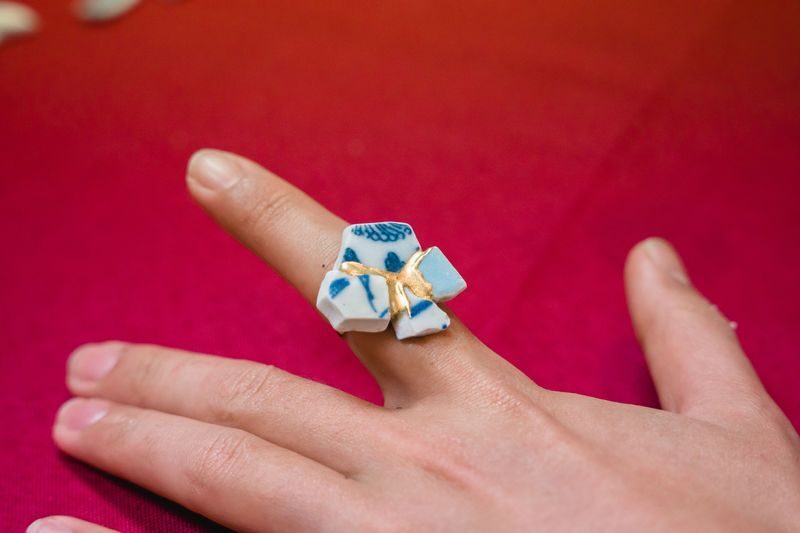
- Make a small finished piece: Projects can include a ring, hair tie, magnet, chopstick rest, or another small decoration.
- Learn the idea behind kintsugi: The workshop introduces the practice of repairing ceramics and treating their history as part of their beauty.
- Expect a modern, compact project: You will work with fragments, not restore a complete broken bowl.
- English-language help is included: Casey, Jay, and Mariko are among the instructors who have guided sessions.
- Plan for the location: The meeting point is 雑煮屋鳥居, at 2-8 Uguisudanicho, Shibuya. Some participants have found the entrance hard to spot, including stairs down to the venue.
- Check the price and drink details: The displayed starting prices differ, and a drink is not listed as included.

👉 See our pick of the Our Picks For The 11 Best Workshops & Classes In Tokyo
Kintsugi in miniature, not a bowl restoration
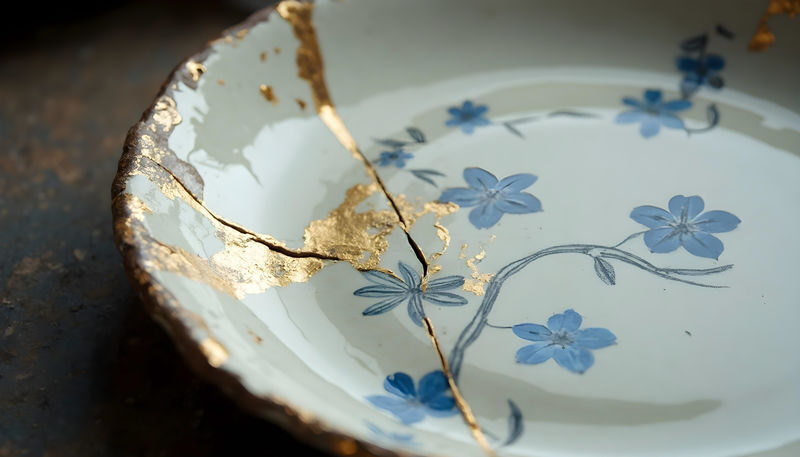
Traditional kintsugi repairs broken ceramics and makes the joins visible with gold. The idea is more than decoration: a crack need not make an object worthless, and a repair can become part of its history. That gives this workshop an appealing theme for a short Tokyo activity.
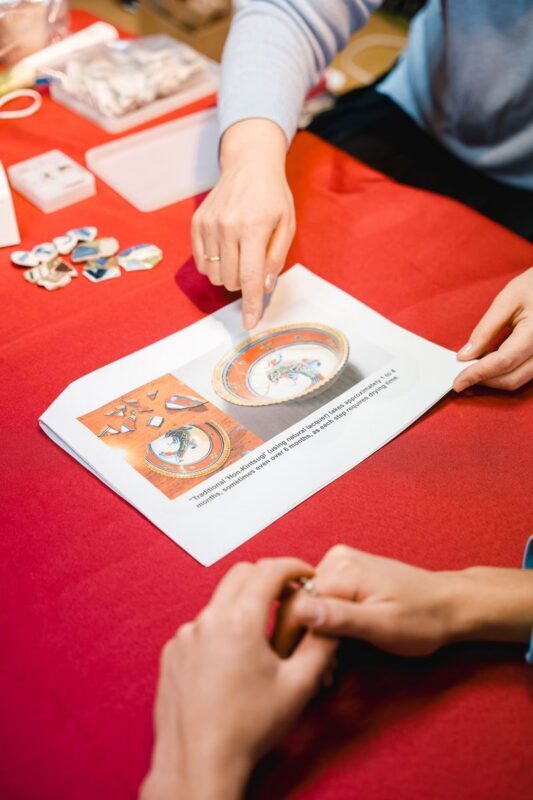
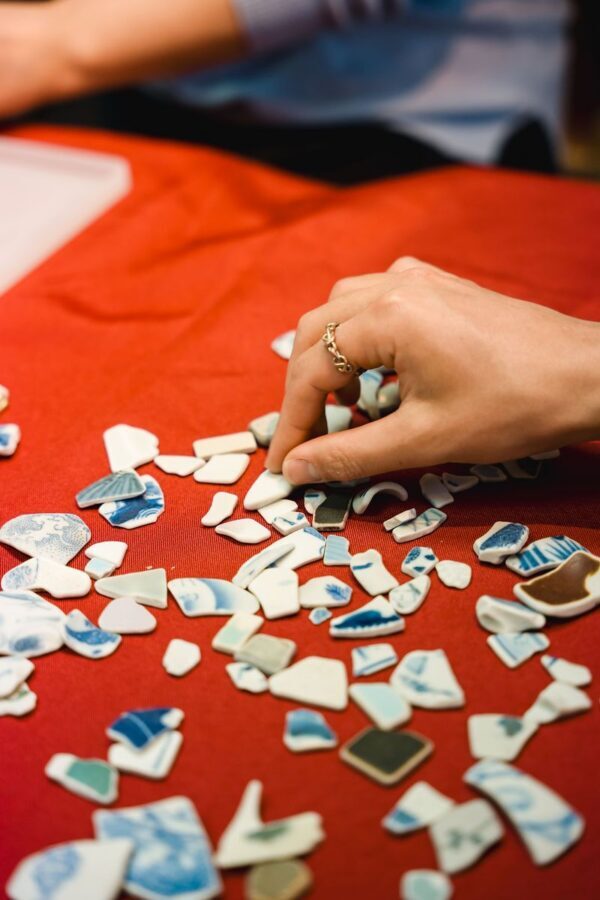
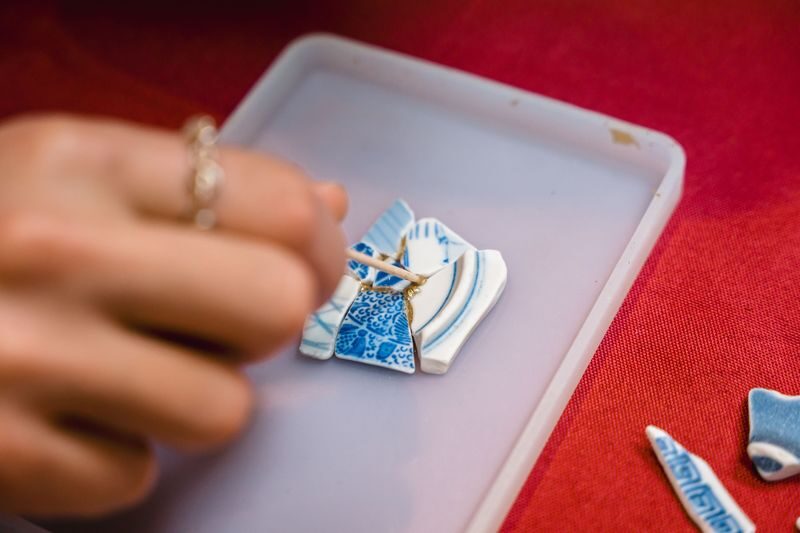
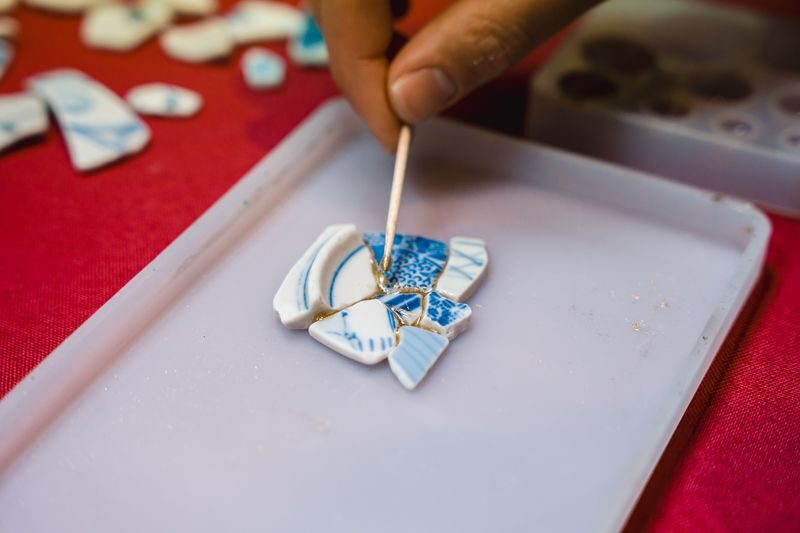
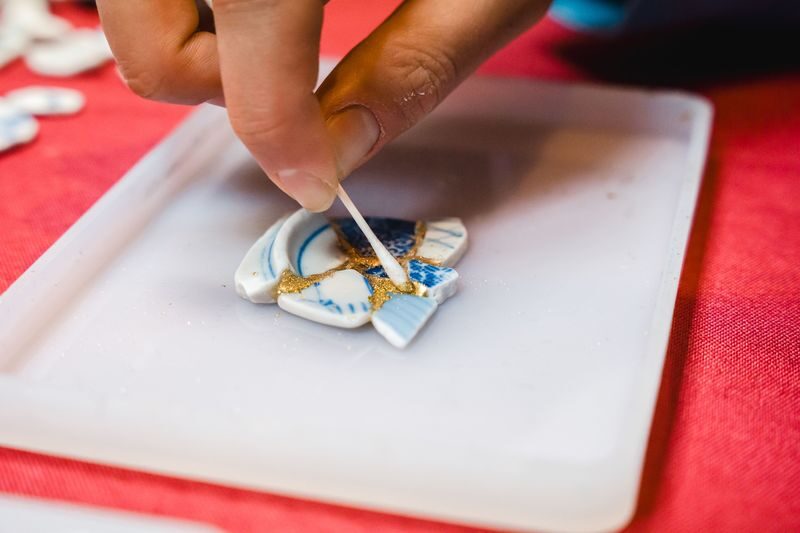
The practical version here is adapted for a small, take-home project. You select ceramic fragments and attach them to a base or fitting, then finish the piece with gold powder. The result can be worn or used as a small ornament. It is a manageable way to try the look and basic principles of kintsugi without committing to a long course.
Keep your expectations in line with that format. A traditional bowl repair can take months, so you should not expect to arrive with a broken dish and leave with a restored one. One participant hoping to make a bowl was surprised to find that the available projects were small. If restoring pottery is your main goal, this is not the right class.
You can also read our reviews of more tours and experiences in Tokyo

Choosing fragments and making your piece
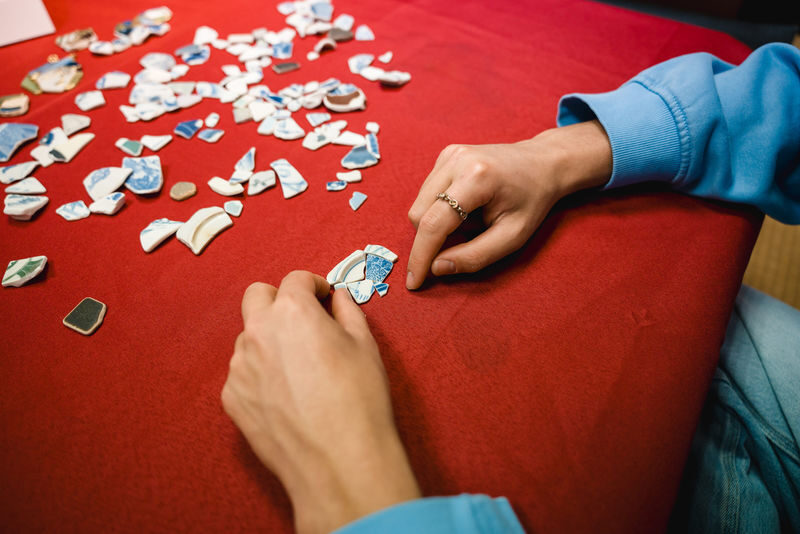
The hands-on part is the heart of the session. You work with broken ceramic pieces and decide how to arrange them into a small object. The same materials can lead to very different results: one person might make a ring, another a magnet or hair tie. That freedom gives the class a personal feel, even when everyone is following the same broad process.
The small scale is useful if you are new to craft work. You can focus on choosing fragments, assembling them, and applying the gold finish without having to manage a large object. It also suits children who can take part in a short, practical project. The minimum age is seven.
Some reported finished pieces have included a chopstick rest and a magnet. The workshop description also mentions rings, hair accessories, and decorative ornaments. Your precise choices may depend on the materials available on the day, so it is wise to think of these as examples rather than guaranteed options.
Once your piece is complete, it is wrapped for you to take home. That is a nice practical touch: you leave with a small reminder of the activity, not just a few photos and a new word in your travel vocabulary.
The explanation matters as much as the gold
A good instructor can make this more than a quick craft project. Sessions led by Casey, Jay, and Mariko have been described as friendly and helpful, and some include a short history of kintsugi alongside the practical steps. That context helps explain why the visible repair is central to the art, rather than a flaw to hide.
English-speaking staff are included, which matters when you are learning a process that involves several small decisions. The quality of the explanation appears to vary, though. Some participants have found the instruction clear and engaging; others have described a very brief introduction and difficulty communicating. If you are booking mainly for a detailed lesson in traditional technique, that uncertainty is worth weighing.
Think of the class as an introduction with a creative outcome, not formal training. You can pick up the basic idea, try the materials, and ask questions, but the available details do not promise a structured, in-depth course. If you want to continue learning after the workshop, treat this as a first taste rather than a complete education in kintsugi.
A calm craft break in Shibuya
Shibuya is known for its crowds and fast pace. A seated craft session offers a different kind of hour: you slow down, look closely at small pieces, and make something with your hands. That shift can be welcome between shopping, city walks, and other high-energy plans.
The workshop is associated with green tea, but do not assume a drink is included. Drinks are not listed among the inclusions, and one participant specifically found no tea served. Others ordered matcha or soft drinks during the class and found them affordable. If the tea is part of your reason for booking, confirm what is available rather than counting on it.
The session appears to be short enough to fit into a day of sightseeing. One account describes an hour passing quickly, though no fixed duration is provided here. Leave a little breathing room around your booking, especially if you have a tight schedule or need to find the venue.
Finding 雑煮屋鳥居
The meeting point is 雑煮屋鳥居, at 2-8 Uguisudanicho, Shibuya, Tokyo 150-0032. The venue is not always easy to spot: some participants describe a narrow stairway leading down. Give yourself time to check the address and look carefully for the entrance.
There has also been confusion around meeting-point information. One participant went to an earlier location and discovered that the venue had changed, then could not reach anyone in time. For a smoother arrival, check your latest confirmation and voucher before leaving, and do not rely on an old saved address or a general search result. Present your mobile voucher when you arrive.
Transport and hotel transfers are not included. You will need to make your own way to the meeting point, and personal expenses and tips are also outside the package.



What the price buys you
The activity is advertised from US$27.65, while the listed accessory-making package starts at US$39.50. Those figures do not match, so check the final price for your chosen date and package before paying. Taxes and English-speaking staff are included.
For the price, the value is in the guided making time, the introduction to kintsugi, and a finished object to take away. It is a fair choice if you want a hands-on activity and a small personal souvenir. It is less compelling if you expect a full restoration lesson, a large pottery piece, or a drink included in the cost.
The workshop also works well as a family activity for children aged seven and up. The project is practical and creative, and one family found it kept a ten-year-old engaged. As with any craft class, a child who enjoys making things is more likely to get something from it than one who would rather be moving around or sightseeing.
Who should book this workshop?
I would consider booking if you are curious about Japanese craft, enjoy making things, or want a quieter change of pace in Shibuya. It is especially suited to couples, friends, and families with children aged seven or older who are happy to make a small object and learn a little along the way.
I would skip it if your main aim is to repair a bowl, study traditional kintsugi in depth, or receive a guaranteed tea service. The project is small, the teaching style may vary, and the meeting details deserve a careful check. If those limits fit your expectations, the workshop offers a pleasant, hands-on way to take home a piece of your Tokyo visit.
Tokyo: Kintsugi Accessory Workshop in Shibuya
“This was a lovely craft session with Casey being an excellent host with brilliant English. We ordered a drink to enjoy during our class. Our host w…”
FAQ
What will I make in the workshop?
You will make a small accessory or decorative object using ceramic fragments and gold powder. Examples include a ring, hair tie, magnet, or chopstick rest.
Will I repair a broken bowl?
No. This workshop focuses on small accessories made from ceramic fragments. It is not a class for restoring a full bowl.
Is a drink included?
A drink is not listed as included. Some participants have ordered drinks during the class, but you should not assume one is part of the package.
Where is the meeting point?
The meeting point is 雑煮屋鳥居, at 2-8 Uguisudanicho, Shibuya, Tokyo 150-0032.
Is the workshop suitable for children?
Participants must be at least seven years old. The activity is not recommended for people with heart disease or asthma.
Is English-language instruction available?
English-speaking staff are included. Casey, Jay, and Mariko have led sessions.
What does the package cost?
The supplied prices show a starting price of US$27.65 and an accessory-making package from US$39.50. Check the price shown for your selected date and package.
Can I cancel for a refund?
You can receive a full refund if you cancel at least 24 hours before the activity date, using destination local time.