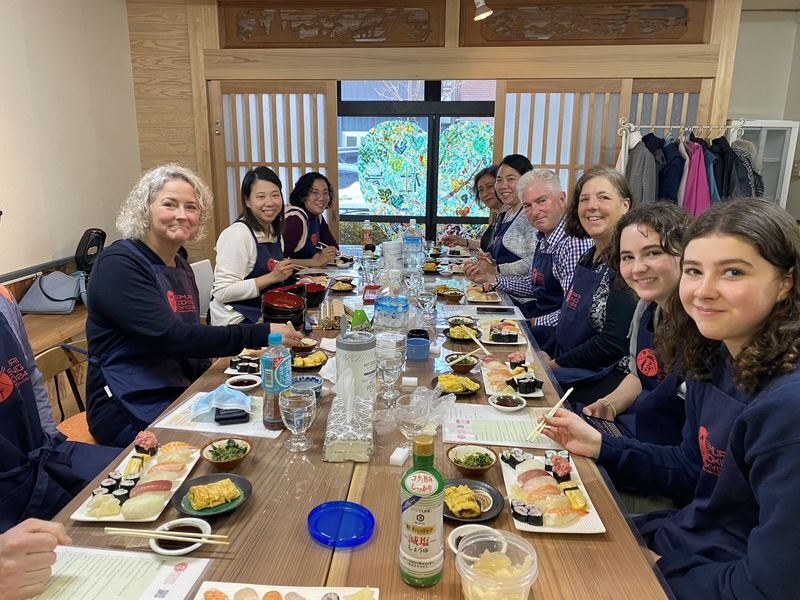
The best part of this Tokyo class is that sushi is only the beginning. You learn how to season the rice, shape nigiri and make rolls, then move on to dashi and Japanese side dishes. I like that the lesson explains the small choices behind the flavor, and that you sit down to eat what you have made.
I also like the practical touch: recipes are included, and Toshi has shared tips on where to buy ingredients in Japan. One consideration is the price, from $104.89 for 2.5 hours. That is a worthwhile spend if you want a hands-on meal and instruction, but less compelling if you mainly want a quick sushi demonstration.
- Sushi from the basics: Prepare rice and seasonings, then make nigiri and sushi rolls with fresh ingredients.
- More than fish and rice: The class also covers dashi and Japanese side dishes. A class has included miso soup, sesame spinach and Japanese omelette.
- A meal you make yourself: The experience ends with the chance to eat the food you prepared.
- Personal instruction: Toshi and Hiroshi have taught the class, with patient guidance and advice about sourcing ingredients.
- Dietary needs can be accommodated: Vegetarian, vegan, halal-certified, gluten-intolerance, kosher and pescetarian requests are listed. Tell the organizer in advance.
- A small-group feel is possible, not guaranteed: One class had only two students, but no standard group size is specified.
- Start with rice, the quiet star of sushi
- Shape nigiri and roll sushi by hand
- Make dashi and complete the meal
- Learn from Toshi and Hiroshi
- Find the class near Honjo-azumabashi Station
- Decide if the price earns its place
- Make dietary requests before you arrive
- Who will get the most from this class
- Should you book this Tokyo sushi class?
- FAQ
- How long is the cooking class?
- What will I learn to make?
- Where does the class meet?
- What is included in the price?
- Are dietary requirements accommodated?
- What is the minimum age?
- How early should I arrive?
- Is transport included?
- The Best Of Tokyo!
- More Cooking Classes in Tokyo
- More Tours in Tokyo
- More Tour Reviews in Tokyo
Start with rice, the quiet star of sushi
 1 / 9
 2 / 9
 3 / 9
 4 / 9
 5 / 9
 6 / 9
 7 / 9
 8 / 9
 9 / 9
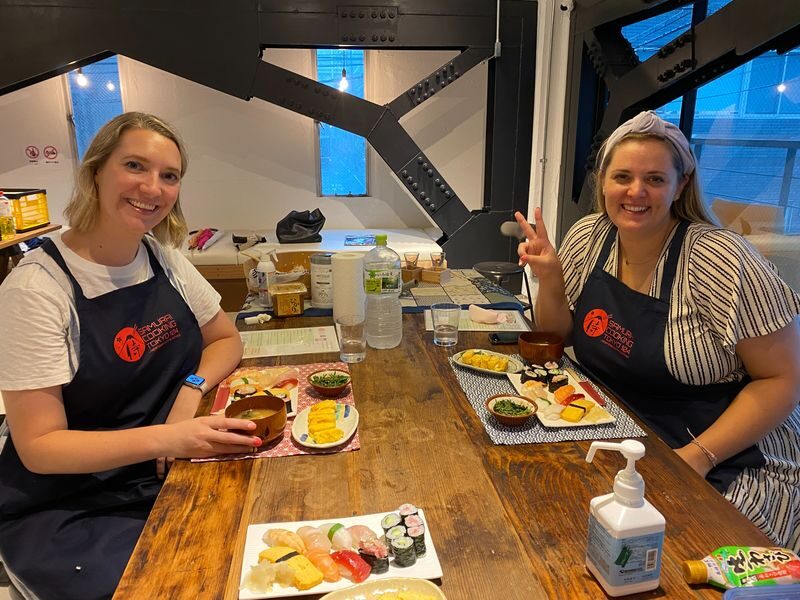
Sushi depends on more than fresh fish and a neat hand. The rice has to be prepared and seasoned properly, and this class gives that often-overlooked foundation its due. You begin with ingredients and learn Japanese techniques for turning plain rice into the base for sushi.
That focus is useful even if you never make sushi at home again. Once you understand that the rice is seasoned rather than treated as a neutral filler, the balance of a sushi meal makes more sense. The instructor explains how the flavor is built, so you can pay attention to the details instead of simply copying a shape.
The class is listed as 2.5 hours, long enough to work through several parts of a meal rather than spend the whole session on one roll. The exact pace and sequence are not specified, so think of the time as a guided cooking session, not a minute-by-minute demonstration schedule.
👉 See our pick of the Our Picks For The 11 Best Workshops & Classes In Tokyo
Shape nigiri and roll sushi by hand
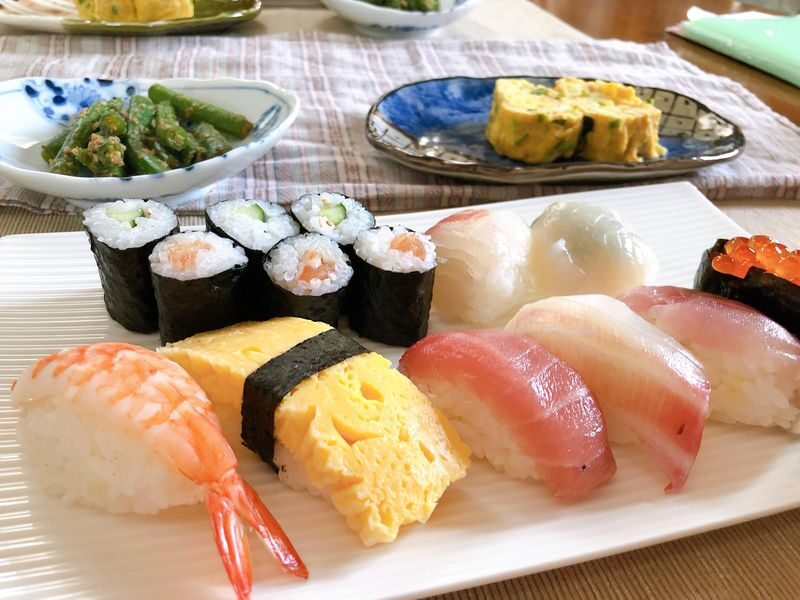
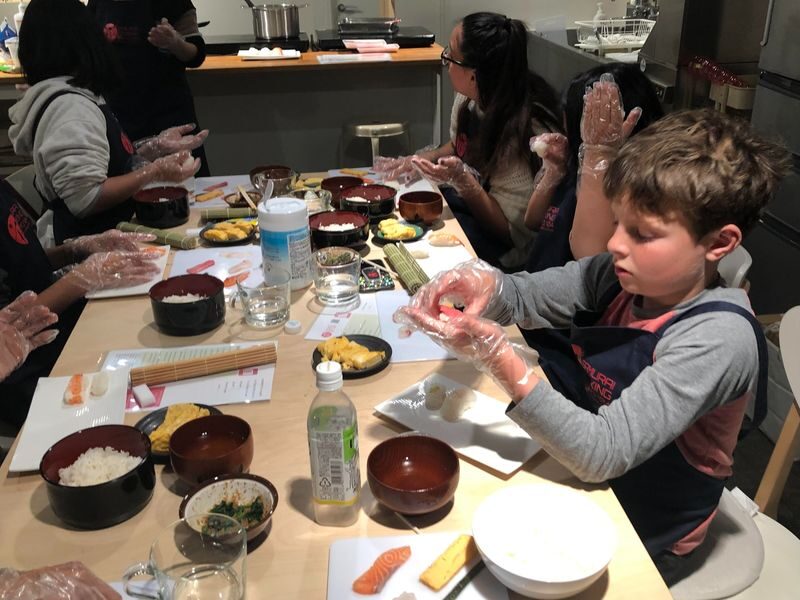
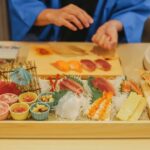
After the rice, you get to the hands-on part: making nigiri and sushi rolls. Nigiri asks for a light touch and a sense of proportion. Rolls call for a different kind of care, as you bring the ingredients together and shape them into something you can cut and serve.
You are not just watching an instructor prepare a finished plate. The stated aim is to start from raw ingredients and learn the proper Japanese way to prepare them. That makes the class a good fit if you want to understand the work behind the familiar restaurant dish, even if your first pieces are not perfectly even.
Fresh ingredients are included, along with guidance in English or Japanese. No specific fish, fillings or sushi-roll styles are named, so avoid booking with a particular ingredient in mind unless you confirm it with the organizer. The useful promise is the technique, not a guaranteed menu of exact toppings.
You can also read our reviews of more cooking classes in Tokyo



Make dashi and complete the meal
Sushi is the headline, but dashi gives the lesson a wider view of Japanese cooking. This stock is a core ingredient in dishes such as miso soup, and preparing it helps connect the sushi lesson to the subtle seasoning that runs through a broader meal.
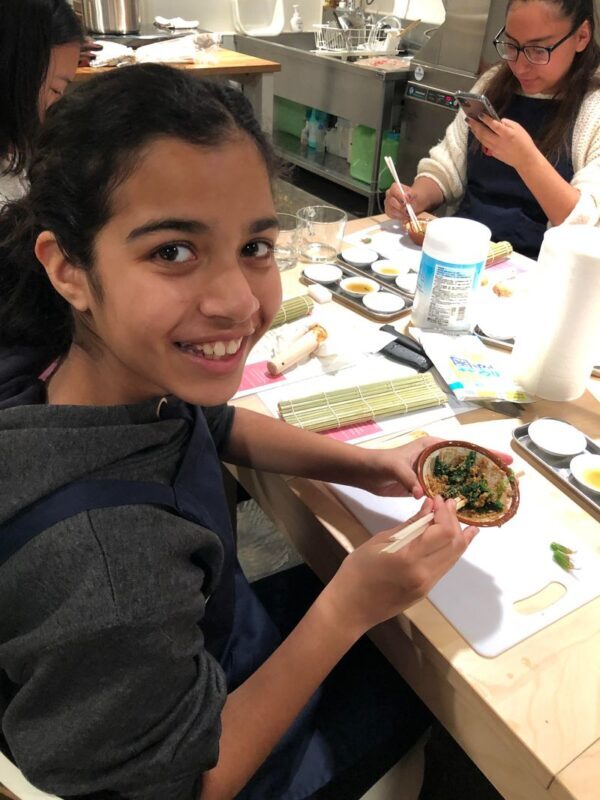
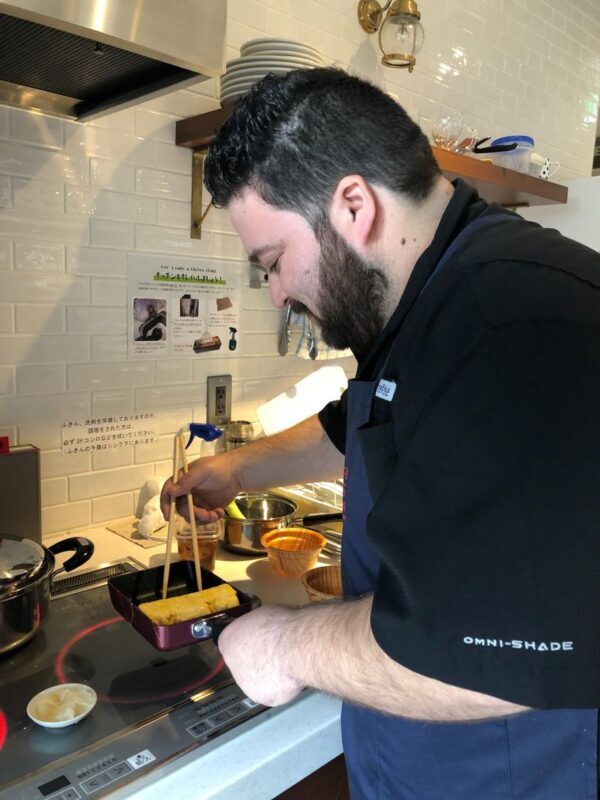
Side dishes add another practical layer. One class has included miso soup, sesame spinach and Japanese omelette, all made from scratch alongside sushi. Those dishes are not stated as a fixed menu for every session, but they show how the class can extend beyond a single specialty and give you several techniques to try again at home.
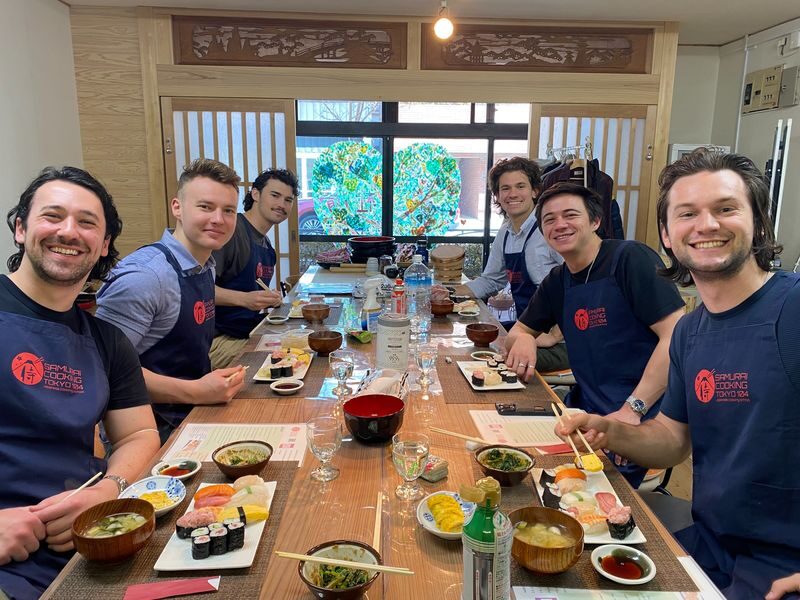
The finished meal is part of the appeal. You get to eat what you have prepared, which makes the lesson more than a demonstration and helps you judge the seasoning and texture while the food is fresh. In one class, the instructors joined the meal as well. That kind of shared table can make a cooking class feel more like an exchange than a formal lesson, though it is not a guaranteed feature.
Learn from Toshi and Hiroshi
Toshi and Hiroshi have led the class, and the available account describes them as patient and kind. They also accommodated dietary requirements and offered practical advice about where to buy ingredients to take home. That last point is especially handy if you want to keep cooking after your Tokyo visit.
One student and her teenage son were the only participants in their session, which gave them plenty of direct instruction. That is a lovely possibility, but it should not be treated as a promise of a private class. The standard group size is not provided, so book for the cooking lesson itself rather than counting on individual attention at that level.
The instructors speak English and Japanese. For an activity built around techniques, ingredients and subtle seasoning, being able to ask questions matters. You can clarify what a step is doing, rather than leave with a recipe that tells you what to do but not why.
Find the class near Honjo-azumabashi Station
The meeting area is in Sumida City, near Honjo-azumabashi Station on the Toei Asakusa Line. The address provided is 2 Chome-2 Higashikomagata, Sumida City, Tokyo 130-0005, but the detailed venue location is supplied on the voucher after booking confirmation. Check that information before setting off, and arrive 10 minutes before the start.
Transport is not included, so plan your own route to the venue. The class is valid only on the date and time booked, which makes punctuality important. You receive a mobile voucher, and confirmation is expected within 48 hours. If it does not arrive, contact customer support rather than assuming the booking is settled.
The location is a practical consideration, not a sightseeing stop in itself. You are booking for the cooking, so allow enough time to reach the meeting point without rushing in just as the lesson begins.
Decide if the price earns its place
The class starts at $104.89 for 2.5 hours. That is not a bargain meal, but the price covers ingredients, instruction, recipes and a certificate in Japanese. You also prepare several dishes and eat the food you make, which gives the session more value than a short sushi-rolling demonstration.
I would judge the price by what you want from the experience. If you are curious about Japanese cooking and want techniques you can take home, the rice lesson, dashi preparation and side dishes make the cost easier to justify. If your priority is simply eating sushi, you can spend far less at a restaurant.
A certificate is a nice keepsake, though the recipes and practical advice are more useful after the trip. In particular, tips on finding ingredients can help you turn a pleasant class into a skill you actually use. Just remember that no specific menu or group size is guaranteed by the details available.
You can also read our reviews of more tours and experiences in Tokyo


Make dietary requests before you arrive
The class can accommodate several dietary needs, including vegetarian, vegan, halal-certified, gluten intolerance, kosher and pescetarian diets. You need to inform the organizer in advance. Do not wait until you arrive to mention an allergy, restriction or ingredient you cannot eat.
For a vegan request, the class offers vegan sushi and a vegan alternative to tamagoyaki, the Japanese rolled omelette. Kosher and pescetarian diets are also specifically noted as possible. Since the exact menu can vary, confirm your needs clearly when booking so the host has time to prepare.
The minimum age is four. Children aged 4 to 11 must be with a paying adult, and those aged 12 or older pay the adult rate. This can work well for a family that wants to cook together, especially if the children are happy to follow instructions and handle food preparation.
Who will get the most from this class
This is a strong choice for curious cooks, sushi fans and visitors who want an activity with something to take home beyond photographs. You learn several connected skills, from rice seasoning to dashi, and the recipes give you a starting point for repeating them later.
It also suits a parent and teenager looking for a shared activity. A 14-year-old has taken part, and the age rules allow children from four with a paying adult. Younger children may need more help, but the class is not restricted to adults.
It may not suit someone who wants a broad tour of Tokyo or a guaranteed private lesson. The experience takes place at a cooking venue, transport is not included, and the group size is not specified. Its strength is focused, hands-on instruction rather than city sightseeing.
Should you book this Tokyo sushi class?
Book it if you want to learn how sushi rice, nigiri, rolls and dashi come together, and if you will value a full meal you prepared yourself. Toshi and Hiroshi’s patient teaching, practical ingredient advice and willingness to accommodate dietary needs add real appeal.
Skip it if you are mainly looking for a low-cost lunch or need a fixed menu and guaranteed one-to-one instruction. For everyone else, this is a thoughtful way to spend half a day learning food skills that connect sushi to everyday Japanese cooking.
Tokyo Sushi and Cooking Class (2.5 Hours)
“Me and my 14 yea old son went for this wonderful class and got to learn how to make sushi, miso soup, sesame spinach and even Japanese omelette – a…”
FAQ
How long is the cooking class?
The class lasts 2.5 hours.
What will I learn to make?
You will learn to prepare sushi rice and seasonings, make nigiri and sushi rolls, and prepare dashi and Japanese side dishes. One class has included miso soup, sesame spinach and Japanese omelette.
Where does the class meet?
It meets in Sumida City near Honjo-azumabashi Station on the Toei Asakusa Line. The detailed venue location is provided on your voucher after booking confirmation.
What is included in the price?
Ingredients, recipes, an English- or Japanese-speaking guide, and a certificate in Japanese are included.
Are dietary requirements accommodated?
Yes. Vegetarian, vegan, halal-certified, gluten-intolerance, kosher and pescetarian requirements are listed as possible. Inform the organizer in advance. Vegan participants can make vegan sushi and a vegan alternative to tamagoyaki.
What is the minimum age?
Participants must be at least four years old. Children aged 4 to 11 must be accompanied by a paying adult. Children aged 12 and older are charged the adult rate.
How early should I arrive?
Arrive at the classroom 10 minutes before the starting time.
Is transport included?
No. Transport and other personal expenses are not included.