Mount Fuji changes the mood of this day trip with the weather: from a close-up at the 5th Station to a classic pagoda-and-peak view at Arakurayama. You’ll also visit Lake Kawaguchi and Lake Yamanaka, with the route shifting to match the season.
I like two things in particular: the itinerary gives you several different angles on Fuji, rather than one viewpoint, and the final stop lets you choose between a lake cruise and a hot spring. The trade-off is a long day with limited time at each stop, and clouds can hide the mountain altogether.
- Key points to know before you go
- A Fuji day built around changing views
- Arakurayama’s pagoda, or Fuji’s 5th Station
- Lake Kawaguchi’s flowers and autumn color
- Lake Yamanaka: boat ride or hot spring
- The bus schedule and the real return-time risk
- Guides, language, and what your fare covers
- Who will get the most from this day trip?
- FAQ
- How long is the Mount Fuji day trip?
- Where can I meet the tour?
- Which Mount Fuji viewpoint will I visit?
- What is the seasonal Lake Kawaguchi stop?
- Are the boat ride and onsen included?
- Are meals included in the tour price?
- Can children join the tour?
- The Best Of Fujiyoshida!
- More Boat Tours & Cruises in Fujiyoshida
- More Tours in Fujiyoshida
- More Tour Reviews in Fujiyoshida
Key points to know before you go
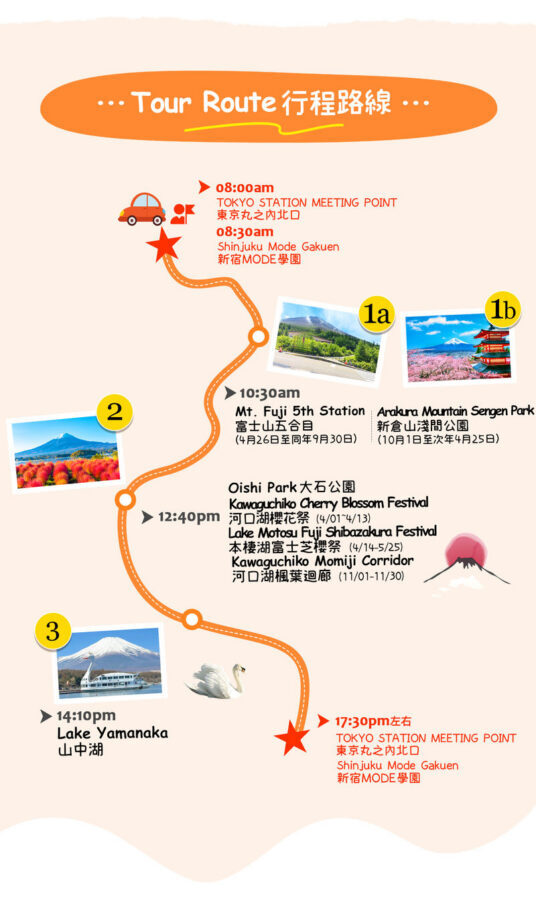

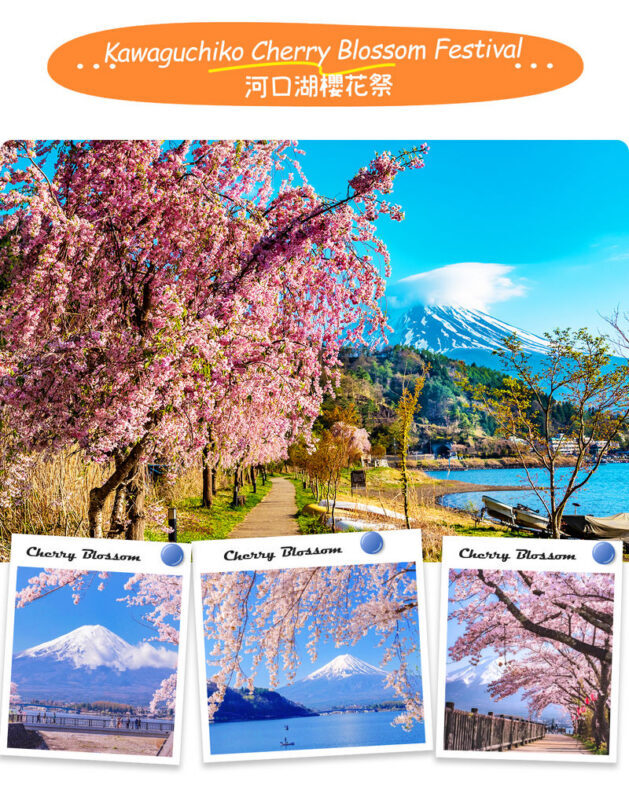
- The first stop changes by season: Arakurayama Sengen Park runs from October 1 to April 25; the 5th Station is scheduled from April 26 to September 30.
- Lake Kawaguchi has a seasonal alternative: Oishi Park is the usual stop, with cherry blossoms, shibazakura, or autumn leaves on specified dates.
- Expect short visits: Most stops allow about an hour, and the 5th Station visit is about 40 minutes.
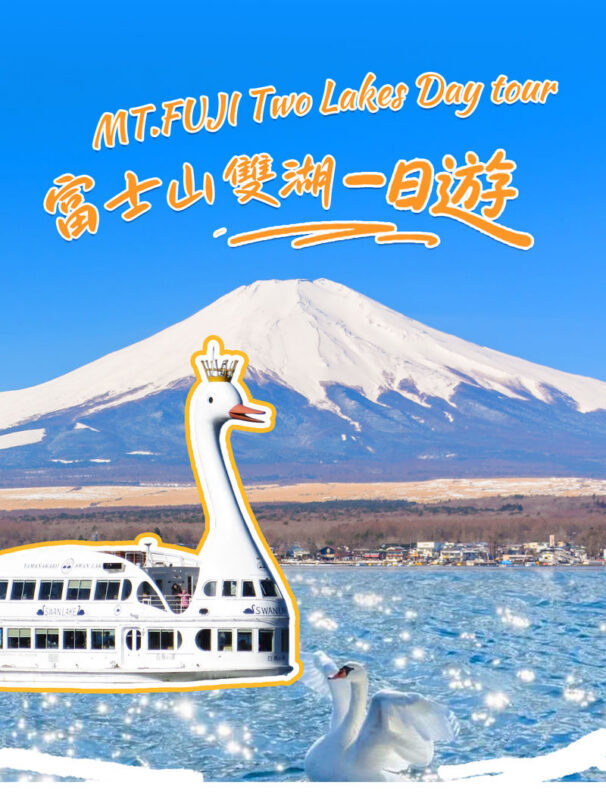
- Lake Yamanaka offers a choice: Pay separately for a swan-shaped boat ride or for entry to Benifuji no Yu hot spring.
- Plan for extra costs: Meals, drinks, festival entry, the boat, and the onsen are not included in the base fare.
- The return time is only an estimate: Traffic, weather, and itinerary changes can make the ride back much later than planned.

👉 See our pick of the 8 Most Highly Rated Private Driver Services In Fujiyoshida
A Fuji day built around changing views
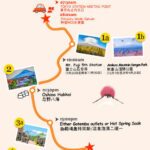
This is a bus day for seeing a lot, not lingering in one place. In about nine and a half hours, the route links Tokyo with a mountain viewpoint, a Lake Kawaguchi stop, and Lake Yamanaka. Your exact first and second stops depend on the calendar, and the guide may adjust the order or shorten a visit for weather, traffic, capacity, or the legal limit on vehicle use.
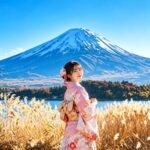
That variety is the tour’s main appeal. Fuji looks different from close range, across a lake, or framed by a pagoda and a town below. The changing scenery can make the day feel more rewarding than a single photo stop, provided you are comfortable with a brisk schedule and some time on the bus.
At a starting price of $49.29, the tour can be good value if you want transport between several spread-out sights without organizing buses or train connections yourself. But treat that as the base cost, not a full-day spend. You will need to budget for any paid attractions, food, and drinks.
You can also read our reviews of more boat tours in Fujiyoshida
Arakurayama’s pagoda, or Fuji’s 5th Station
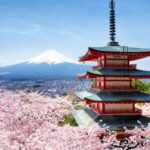
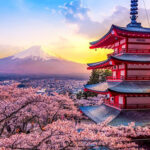
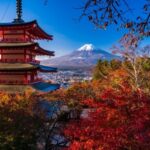
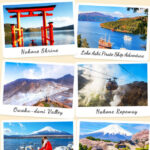
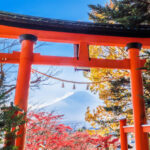
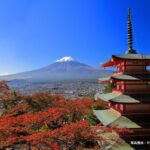
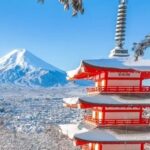
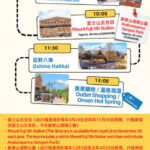
From October 1 through April 25, the morning stop is Arakurayama Sengen Park. The main draw is the well-known view of Chureito Pagoda, Mount Fuji, and Fujiyoshida in one frame. It is a striking combination of mountain, town, and traditional architecture, and the season changes the details: spring blossoms, summer greenery, autumn color, or winter snow.
The climb is part of the visit. Reaching the viewpoint involves 397 steps, so this stop is not just a quick hop off the bus. An hour gives you time to make the climb and take in the view, but it does not leave much room to wander slowly. If stairs are a concern, factor that in before booking.
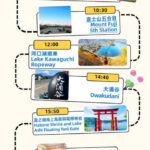
From April 26 through September 30, the first stop switches to Mount Fuji’s 5th Station, about 2,305 meters above sea level. Here you are closer to the mountain, with a very different sense of scale from the distant panorama at Arakurayama. On a clear day, the view can extend toward Lake Kawaguchi and the surrounding mountains; in cloud, you may see mist instead of a grand Fuji vista.
The scheduled visit is about 40 minutes, shorter than the Arakurayama stop. Pack an extra layer: one visitor found the 5th Station much colder than the lowlands. Weather can change what you see, and the park or operator may change outdoor plans for safety. A cloudy day may still offer shops or a shrine to explore, but do not count on seeing the peak.
Lake Kawaguchi’s flowers and autumn color
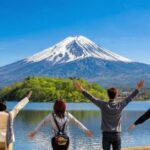
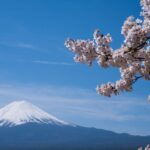
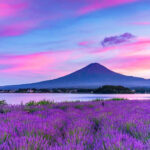
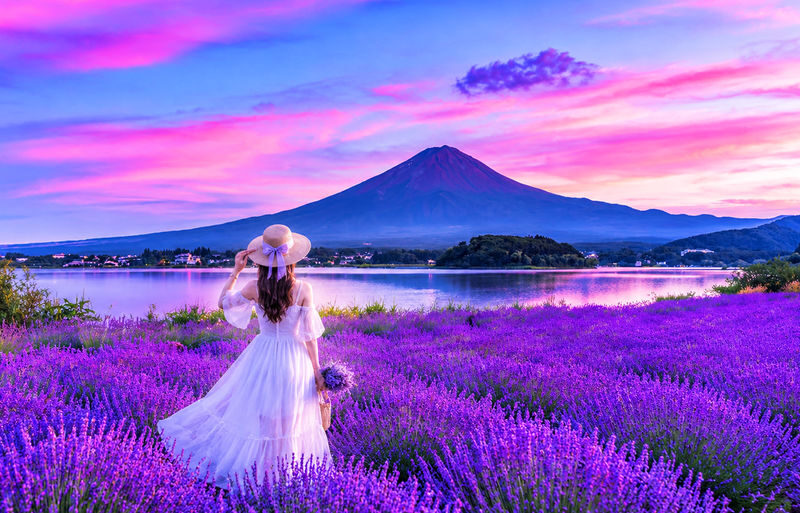
Around midday, the itinerary gives you about an hour at one Lake Kawaguchi-area attraction. Outside the special seasonal dates, that is Oishi Park, known for lakeside views and flowers that change through the year. The appeal is the pairing of the lake and Fuji, with the park’s seasonal planting adding a foreground for photos.
On the specified spring dates, the route goes to the Kawaguchiko Cherry Blossom Festival, scheduled for March 28 to April 12, 2026. The lakeside blossom display is a strong reason to choose a spring departure, but bloom timing depends on weather. The calendar sets the planned visit, not a guarantee that every tree will be at its best.
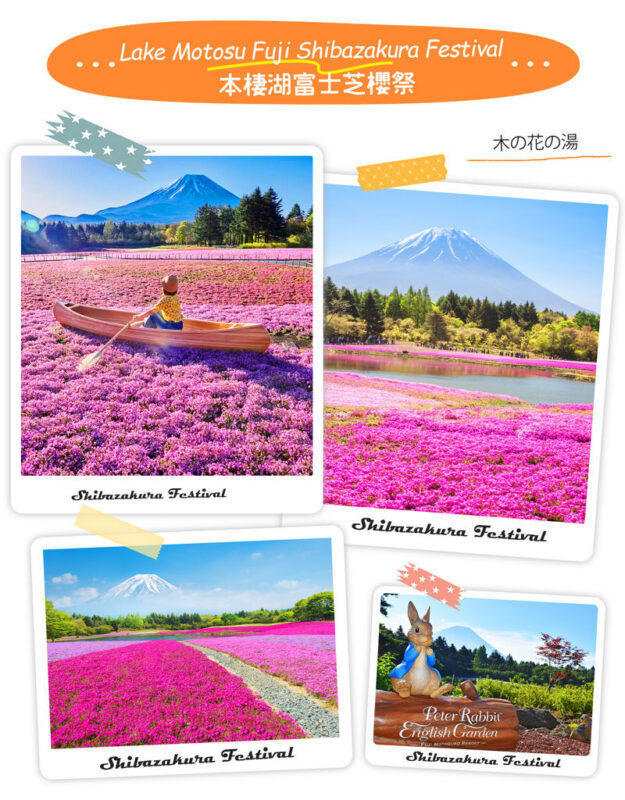
From April 13 to May 22, 2026, the seasonal stop is the Fuji Shibazakura Festival near Lake Motosu. The moss phlox flowers create broad patches of color beneath the mountain, and the festival is described as having about 800,000 plants. Festival admission is not included, so check the extra fee and bring enough money for it. A visitor who went during the flower season wished for more time there; the one-hour stop can feel short if you want to walk the grounds and take photos at an unhurried pace.
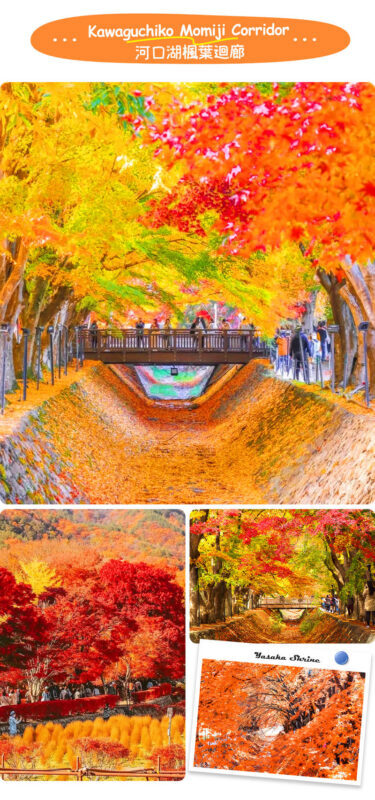
The autumn option is the Kawaguchiko Maple Corridor, scheduled from November 1 to November 30, 2026. Red leaves beside the lake and a snow-capped Fuji can make this a memorable combination, though fall color is as weather-dependent as blossoms. If the seasonal attraction does not meet your expectations, the tour does not offer a refund for that reason.
Lake Yamanaka: boat ride or hot spring
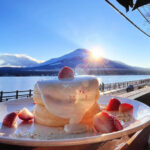
The last planned stop is Lake Yamanaka, with about 70 minutes for your choice of activity. You can pay for a ride on a swan-shaped sightseeing boat, or head to Benifuji no Yu, an onsen with a view of Mount Fuji when conditions allow. Neither option is included in the tour price.
The boat is the more active choice and comes with a complimentary bag of feed for swans or fish while supplies last. It is not refundable if the feed runs out. The hot spring offers a quieter finish after a day of getting on and off a bus, but bring money for admission and allow time to change and enjoy the facilities within the stop’s time limit.
You can also stay by the lake rather than choosing either paid activity. One visitor simply sat by the water and saw Fuji emerge from the clouds after missing it at earlier stops. That is a useful reminder: the mountain may appear and disappear during the day, so keep looking up rather than deciding the weather has settled.
The bus schedule and the real return-time risk
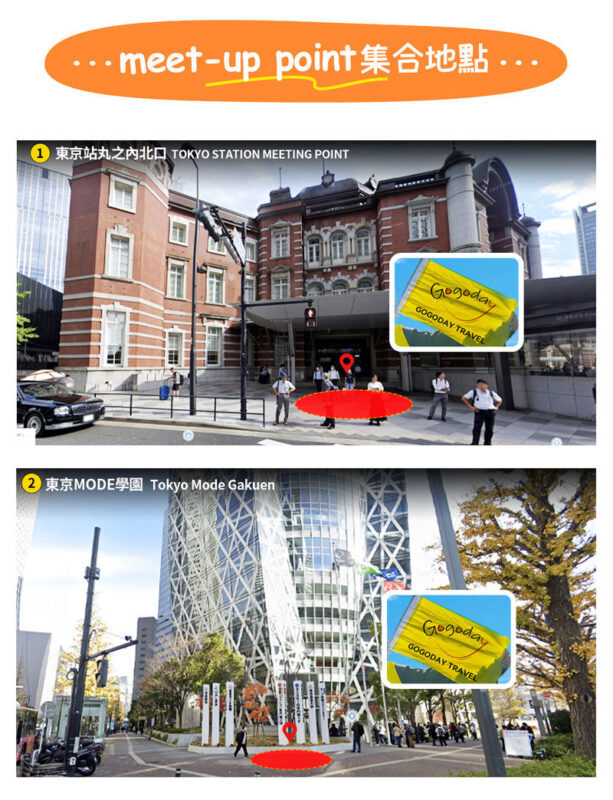
The tour offers two central Tokyo meeting points: Tokyo Station’s Marunouchi North Exit at 8:00 a.m., or the Shinjuku LOVE sculpture area at 8:30 a.m. Arrive at least 10 minutes early, and confirm the correct location in the operator’s message the night before. Changing your meeting point at the last minute can leave you without a seat and without a refund if you miss the bus.
The expected return window is 5:15 to 6:00 p.m., but it is not a firm arrival time. The drive is long, and traffic can stretch the day considerably. Some outings have run hours late, while vehicle trouble has also been reported. Do not schedule a timed dinner, show, or train connection for that evening.
Vehicle type depends on the group size and cannot be chosen in advance. The listed passenger capacity is 48, but the tour may use different vehicles. Space and comfort can vary, and some visitors have found smaller vehicles cramped. If you have a seating request, put it in your booking notes; the operator will try to accommodate it, but seats are generally assigned on a first-come basis.
The itinerary may be reordered or shortened due to traffic, weather, capacity, or the Japanese rule that vehicle use cannot exceed 10 hours. That flexibility can help the day keep moving, but it also means you should not assume every stop will happen exactly as listed.
You can also read our reviews of more tours and experiences in Fujiyoshida
Guides, language, and what your fare covers
The standard shared-tour option is listed with a Mandarin-speaking guide, though other language options and private or small-group packages are available. Check the exact package before paying. This is especially important if you need explanations in English: guide language and fluency can vary, and the tour may include people speaking other languages in the same vehicle.
Guides named Anna, Yong, William, and Mr Kousei have been praised for friendly service, clear meeting instructions, helpful explanations, and photo assistance. That kind of practical help matters on a fast-moving day: a guide who gives precise return times and points out where to meet can reduce stress at each stop. Still, individual guide quality is not something you can guarantee when booking.
The base package includes round-trip bus transport from the meeting point, a sightseeing tour, and a Chinese-speaking guide. It does not include meals, beverages, festival admission, onsen entry, boat tickets, or other personal expenses. Bring cash as a precaution, since some visitors have faced cash-only payments for optional costs, and confirm meal arrangements rather than assuming lunch is covered. A few people have also been unhappy with the food options or prices when a group meal was arranged.
If you are considering a hotel pickup, read the package details closely. A small-group hotel pickup option is available, but it is a different package from the standard meeting-point tour. Luggage is limited to one piece per person and must be declared when booking.
Who will get the most from this day trip?
I would choose this tour if you want a straightforward way to see several Fuji-area highlights in one day and are happy to trade free time for transport convenience. It suits first-time visitors, photo-minded visitors, and anyone who would rather let a guide coordinate the route than piece together regional connections.
It is less suited to you if you want a slow day, need guaranteed mountain views, or dislike fixed departure times. A clear forecast helps, but no schedule can make Fuji appear through clouds. If your priority is a long visit at the Shibazakura festival, for example, a more focused outing may suit you better than a multi-stop route.
For booking flexibility, the stated cancellation terms allow a full refund when you cancel at least 24 hours before the activity date. The operator may also cancel for extreme weather or other unforeseen events, with a reschedule or refund offered. Read the terms for your selected package before booking.
Mt. Fuji | Kawaguchiko Seasonal Limited-Time Views of Mt. Fuji & Lake Yamanaka Onsen/Cruise Day Trip | Departs from Tokyo/Shinjuku
“Good tour, good service. The tour guild, Mr Kousei , he was very kind. I will introduce with my friends when they go to Japan.”
FAQ
How long is the Mount Fuji day trip?
The listed duration is about 9.5 hours. The schedule gives an estimated return between 5:15 and 6:00 p.m., but traffic and weather can delay arrival, so leave the evening open.
Where can I meet the tour?
You can choose Tokyo Station’s Marunouchi North Exit, with an 8:00 a.m. departure, or the Shinjuku LOVE sculpture area, with an 8:30 a.m. departure. Arrive 10 minutes early and check the message sent the evening before.
Which Mount Fuji viewpoint will I visit?
From October 1 to April 25, the planned first stop is Arakurayama Sengen Park. From April 26 to September 30, it is Mount Fuji’s 5th Station. Weather, capacity, and other conditions can lead to changes.
What is the seasonal Lake Kawaguchi stop?
Oishi Park is the usual stop outside seasonal events. The planned alternatives are the Kawaguchiko Cherry Blossom Festival from March 28 to April 12, 2026, the Fuji Shibazakura Festival from April 13 to May 22, 2026, and the Maple Corridor from November 1 to November 30, 2026.
Are the boat ride and onsen included?
No. The swan-shaped boat ride and admission to Benifuji no Yu are optional and paid separately. The tour also does not include festival admission.
Are meals included in the tour price?
No. Meals and beverages are excluded. Bring money for food and any optional activities, and check meal arrangements before departure.
Can children join the tour?
Children aged 3 and older pay the adult rate. Children aged 0 to 2 can join free if they do not occupy a separate seat, but infants and children must still be included in the passenger headcount.