Edo Castle’s grand stone walls and broad moats still shape the heart of Tokyo, even though its famous main tower is gone. This two-hour walk helps you read the site: its gates, guard posts, and surviving ruins tell the story of the shoguns who once ruled Japan from here.
I like two things in particular: the route gives you a close look at the castle’s imposing defenses, and a good guide can connect those stones to the political changes that turned Edo into modern Tokyo. Guides named Midori, Toshi, Yuki, Yukari, Nana, and Tatsu have been praised for patient, friendly explanations and thoughtful help.
The trade-off is that you are touring castle grounds, not a restored castle interior. Some stops are open-air and can be appreciated on your own, so the tour’s value rests heavily on how much context your guide adds.
- Otemon Gate and the guardhouse introduce the castle’s defenses and the samurai who protected its inner grounds.
- The East Gardens offer a quieter change of pace, with traditional garden features and seasonal plants.
- Edo Castle’s stone ruins mark the site of the former main keep, destroyed by fire.
- Fujimi-yagura is a surviving three-story turret, a rare original structure on the route.
- The two-hour format fits neatly into a Tokyo morning, with a 10 a.m. start and return to the same meeting point.
- The price starts at $14.55, making this a low-cost way to add historical context to a walk you could also do independently.
- What this walk reveals about Edo Castle
- Starting at Wadakura Fountain Park
- Otemon Gate and the samurai guard posts
- A slower pause in the East Gardens
- The main keep’s stone base and Fujimi-yagura
- How much the guide adds
- Who should book this two-hour walk
- Should you book it?
- FAQ
- How long is the Imperial Palace and Edo Castle walking tour?
- Where is the meeting point?
- What places are included on the walking route?
- What is included in the price?
- Is there an age limit?
- Can I get a refund if I cancel?
- The Best Of Tokyo!
- More Walking Tours in Tokyo
- More Tours in Tokyo
- More Tour Reviews in Tokyo
What this walk reveals about Edo Castle
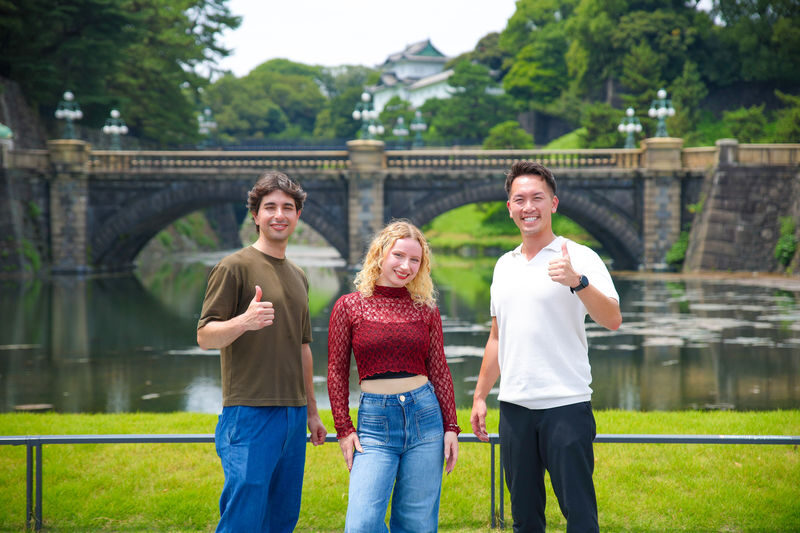
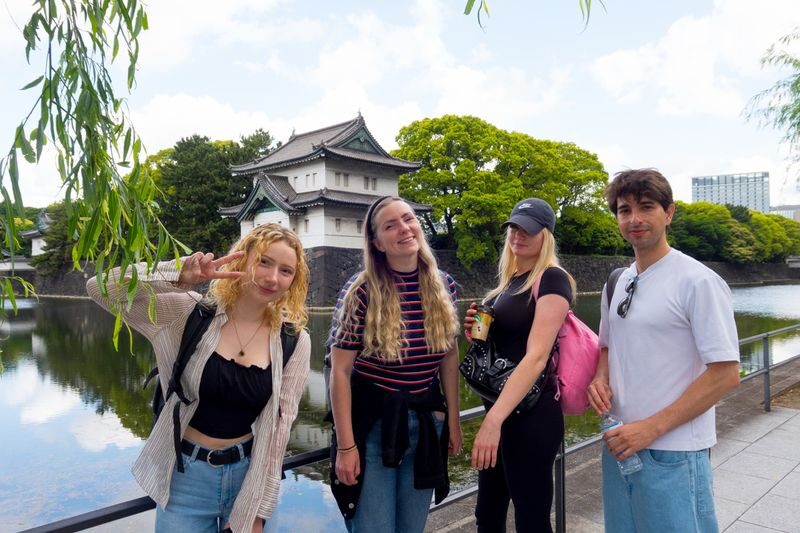
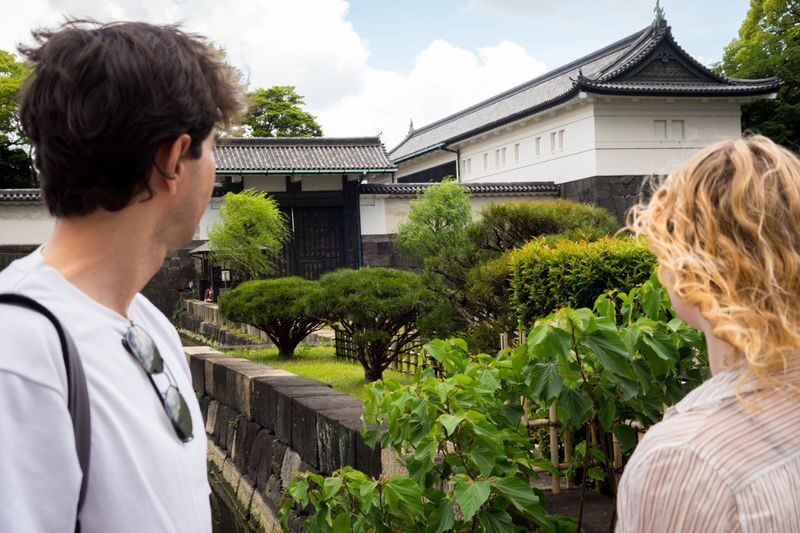
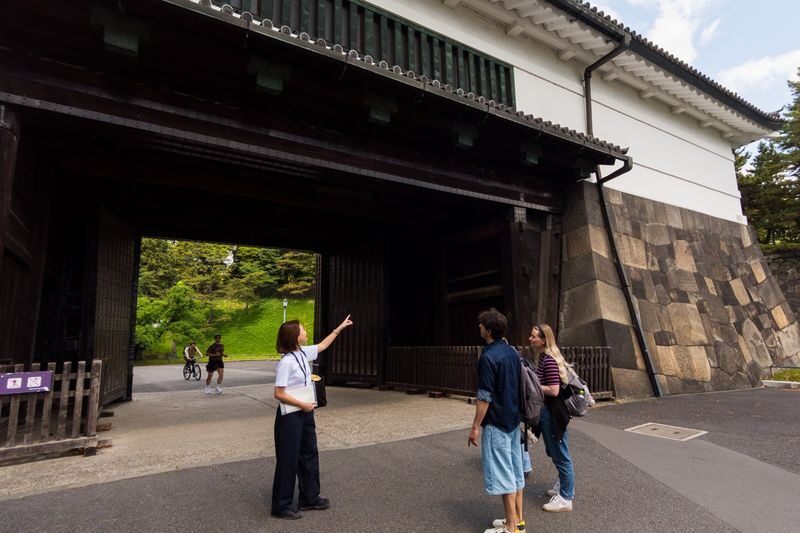
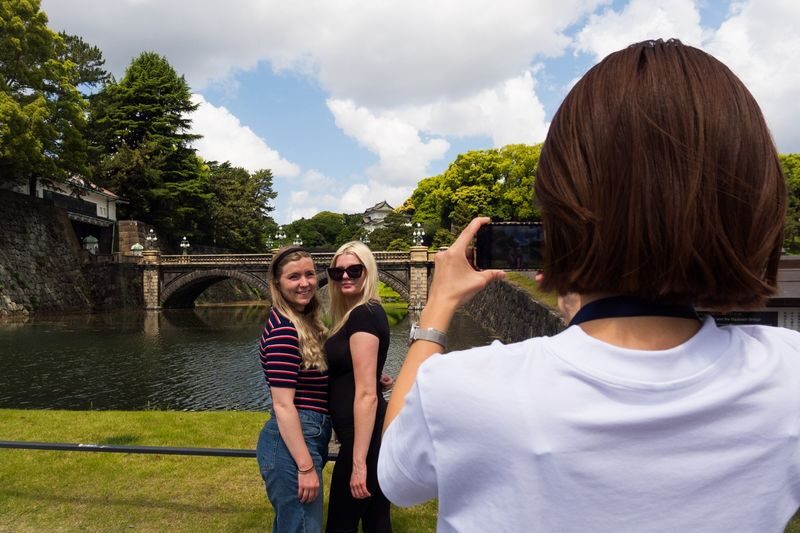
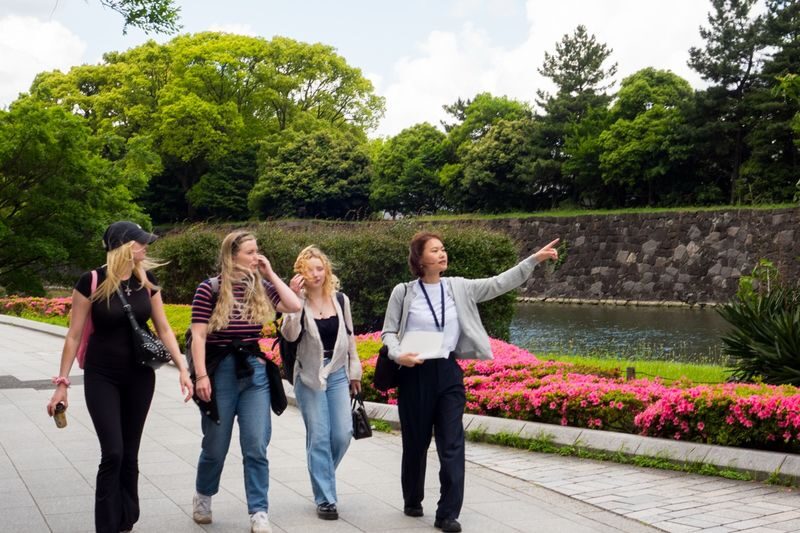

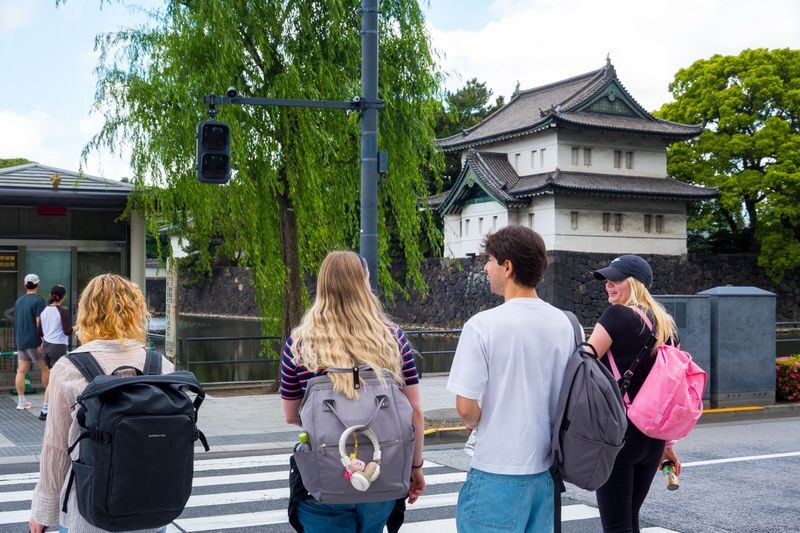
The Imperial Palace sits on the former grounds of Edo Castle, the seat of the Tokugawa shogunate. The palace remains an important imperial site, while the castle that once occupied these grounds is mostly gone. What you see instead are traces of its scale and defenses: massive stone walls, wide moats, gates, guardhouses, and a few surviving structures.
That difference matters when you decide whether to book. If you expect furnished castle rooms, an elaborate interior, or a reconstructed keep, this is not that experience. The appeal is the open-air setting and the chance to understand how the castle was built and used.
A guide can make the remains easier to interpret. A moat is more than a pretty stretch of water when you understand how it helped protect the shogun’s stronghold. A broad gate becomes more than a photo stop when you hear about the guards and the strategic design behind it.
The walk also traces the site’s shift from shogun rule to the Meiji era and the imperial grounds of today. That change gives the tour a useful frame: you are not only seeing old fortifications, but also following a major turn in Japan’s political story.

👉 See our pick of the Our Picks For The 11 Best Workshops & Classes In Tokyo
Starting at Wadakura Fountain Park
The group meets at 10 a.m. outside Starbucks Coffee at Kokyo Gaien Wadakura Fountain Park, at 3-1 Kokyogaien, Chiyoda City. Plan to arrive 10 minutes early. The walk returns to this same spot at noon, so you can continue sightseeing nearby without arranging transport back.
The meeting point is practical, but it is worth checking the map before you set out. The grounds around the Imperial Palace are broad, and a late arrival cannot be refunded. Transport to the meeting point is not included, so factor that into your morning plans.
The route begins near Wadakura Fountain Park, a calm starting point for a tour focused on a busy city’s historic core. From there, the walk moves toward the old castle entrances and defenses. The schedule may change with weather or traffic, so treat the listed sequence as a plan rather than a promise.
You can also read our reviews of more walking tours in Tokyo


Otemon Gate and the samurai guard posts
Otemon Gate was the grand main entrance to the former Edo Castle. Its size and fortified design help you picture the careful controls around access to the shogun’s domain. The guide discusses the samurai guards and the gate’s strategic purpose, giving this first major stop a clear link between architecture and power.
The route continues to Hyakunin Bansho, or the Hundred-Man Guardhouse. Its name points to the large body of samurai associated with guarding this part of the castle. This is a good place to think about the site not as a single royal residence, but as a guarded stronghold with layers of protection.
These stops are among the strongest reasons to choose a guided walk. The physical details are visible, but their purpose may not be obvious if you are walking alone. A clear explanation helps you connect the walls, entrances, and guard posts into a working system.
Still, the amount you learn can depend on the guide. Guides named Midori and Toshi have been praised for detailed, patient explanations, while Yuki, Yukari, Nana, and Tatsu have also been singled out for friendly, attentive tours. If you value history, pay attention to the guide’s explanations rather than treating the walk as a string of photo stops.
A slower pause in the East Gardens
The East Gardens offer a change from the stern geometry of gates and walls. Here, the route shifts into a traditional Japanese garden setting, with seasonal flora and a pond described as part of the peaceful grounds once used by the shogun’s family.
This contrast is part of the site’s appeal. A castle needed hard defenses, but its residents also lived within the grounds. The gardens help you imagine a more private and domestic side of the shogun’s world, even as the surrounding walls remind you how carefully that world was protected.
The garden stop is also a chance to take in the pace of the walk. This is not a long hike, but it covers a substantial historic site on foot, with time for explanations and photos. Wear shoes you are comfortable walking in, and bring weather-appropriate clothing for an outdoor tour.
The tour information does not promise a particular flower display or garden condition. Seasonal plants change, and weather can affect the route. Think of the gardens as a restful section of the walk rather than a guaranteed seasonal spectacle.
The main keep’s stone base and Fujimi-yagura
At the Edo Castle ruins, you stand on or near the huge stone base of the main keep. The tower that once rose above it was the tallest castle tower in Japan, but a great fire destroyed it. The surviving foundation makes the loss tangible: the site gives you the scale of what stood here without rebuilding the structure for display.
That can be a powerful stop if you are comfortable imagining what is missing. It can also disappoint if your idea of a castle visit means entering a complete building. The ruins are chiefly stonework and open space, not rooms, exhibits, or a restored tower.
Fujimi-yagura offers a different kind of encounter. This three-story turret is described as a rare original structure that survived major fires and earthquakes. Its name means Mt. Fuji View Guardhouse, a reminder that these towers served practical and visual roles within the castle grounds.
Together, the ruins and turret give you two kinds of evidence: the monumental scale of what was destroyed and a surviving piece of the original castle. They also make strong photo stops, alongside the bridges, gates, garden views, and city skyline featured along the route.
How much the guide adds
The tour costs from $14.55, a modest fee for a two-hour guided walk in central Tokyo. You are paying for an English-speaking professional guide and a structured route through the former castle grounds, not for transport, meals, or drinks. Those costs remain yours.
At this price, the tour can be worthwhile if you want the castle’s history explained as you go. It can be less compelling if you are happy reading signs, taking your time, and finding your own route. The grounds are a public sightseeing area, and the main attractions are visible without a guide.
The strongest guide experiences appear to combine clear historical detail with a personal, attentive manner. Midori has been praised for patience and thorough explanations; Toshi for thoughtful help; Yuki for detailed history; and Yukari, Nana, and Tatsu for friendly, engaging tours. That is useful to know, but guide names and assignments can vary, so you should not book expecting a particular person.
There is also some variation in pacing and depth. A slow walk with limited explanation can feel like poor value, especially if you already know the basics or are comfortable self-guiding. The best match is someone curious about the Edo period who wants a person to connect the visible remains to the shogun-era social and political system.



Who should book this two-hour walk
I would choose this tour if you want a compact introduction to Edo Castle and the Imperial Palace grounds, especially early in a Tokyo visit. It gives you a useful framework for later sightseeing and leaves you with time for museums, cafés, or another nearby stop. The guides also offer local tips for what to see next.
It suits history-minded visitors who enjoy outdoor walking and do not need a castle interior to feel that a site is worthwhile. Families can join, as there is no age limit, but infants and children must be included in the passenger headcount when booking.
It may not suit you if you want a full-day history tour, a reconstructed castle experience, or a guaranteed visit inside palace buildings. The tour is two hours, and its focus is the grounds and surviving remains. The route is not a transport tour, and no meals or drinks are provided.
The scheduled return is at noon at the same fountain park meeting point. That makes it easy to plan the rest of your day, though you should leave some flexibility because weather or traffic can alter the schedule. The voucher is valid only for the specified date and time, and cancellation at least 24 hours before the activity date, in Tokyo local time, qualifies for a full refund.
Should you book it?
Book this walk if you want the moats, gates, guardhouse, gardens, and castle ruins to make sense as parts of one story. At a starting price of $14.55, it is a fair-value introduction, provided you see the guide’s interpretation as the main product and not a ticket into a castle.
Skip it if you would rather explore at your own pace or expect a complete keep with rooms to tour. The grounds remain rewarding on their own, but the guided version is at its best when you want context, questions answered, and a little help choosing what to see next.
Tokyo: Imperial Palace & Shogun Castle Walking Tour
“Midori was excellent! She was very patient, very knowledgeable, explained in details and very accommodating. I was very happy and will recommend he…”
FAQ
How long is the Imperial Palace and Edo Castle walking tour?
The tour is scheduled from 10 a.m. to noon, for a total of two hours. The schedule may change depending on weather or traffic.
Where is the meeting point?
Meet outside Starbucks Coffee at Kokyo Gaien Wadakura Fountain Park, 3-1 Kokyogaien, Chiyoda City, Tokyo. The tour returns to the same location.
What places are included on the walking route?
The route includes Wadakura Fountain Park, Otemon Gate, Hyakunin Bansho Guardhouse, the East Gardens of the Imperial Palace, the Edo Castle ruins, and Fujimi-yagura.
What is included in the price?
The tour includes an English-speaking professional guide and a guided tour inside the attraction. Transport, meals, beverages, and personal expenses are not included.
Is there an age limit?
There is no age limit. Infants and children must be included in the passenger headcount.
Can I get a refund if I cancel?
A full refund is available if you cancel at least 24 hours before the activity date, using Tokyo local time.